
通过将呼气末二氧化碳(EtCO)值整合到终止复苏规则(TOR规则,一种扩展的TOR规则)中来判断终止复苏的可用性:初步分析。
Usability of EtCO values in the decision to terminate resuscitation by integrating them into the TOR rule (an extended TOR rule): A preliminary analysis.
作者信息
Kudu Emre, Danış Faruk, Karaca Mehmet Ali, Erbil Bülent
机构信息
Department of Emergency Medicine, Marmara University Pendik Training and Research Hospital, İstanbul, Turkey.
Department of Emergency Medicine, Bolu Izzet Baysal Training and Research Hospital, Bolu, Turkey.
出版信息
Heliyon. 2023 Sep 13;9(9):e19982. doi: 10.1016/j.heliyon.2023.e19982. eCollection 2023 Sep.
OBJECTIVE
End tidal carbon dioxide (EtCO) is measured to confirm the placement of an endotracheal tube and evaluate the efficacy of cardiopulmonary resuscitation (CPR), and as an assistive tool for terminating CPR. However, there are no highly accurate or definitive recommendations for its use when deciding on the termination of CPR. We aimed to merge EtCO values with existing termination of resuscitation (TOR) rules to obtain a more accurate combination for terminating resuscitation.
METHODS
This observational, prospective study included non-traumatic adult patients who were admitted to a tertiary university hospital Emergency Medicine Department due to cardiac arrest. EtCO cutoff values (at 5, 10, and 20 min) were integrated into currently used TOR parameters (arrest was not witnessed, no bystander CPR was provided, no return of spontaneous circulation (ROSC) after full advanced life support care in the field, and no shock was delivered) and the extended TOR rule was created. These extended TOR rules were compared at three different times (5, 10, and 20 min) for specificity and positive predictive value for ROSC.
RESULTS
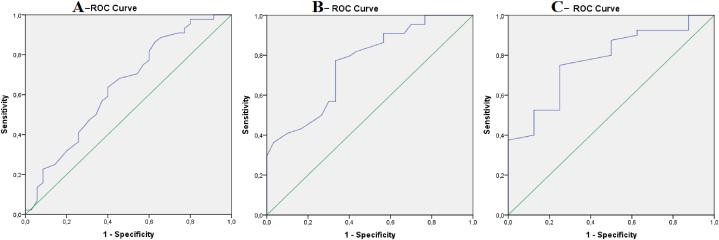
We included a total of 86 cases. The cutoff value of EtCO from ROC analysis was 19.5, 23.5, and 20.5 mmHg at 5, 10, and 20 min, respectively. "The extended TOR rule created with the 20-min EtCO2 cutoff (20.5 mmHg) was the most accurate in detecting ROSC (-) patients. The specificity was 100% (95% CI 63.1-100.0) sensitivity was 20.0% (95% CI 9.1-35.7), positive predictive value was 100% and negative predictive value was 20.0% (95% CI 17.6-22.6) for ROSC (-) patients. The parameters of this rule were as follows: arrest was not witnessed, no bystander CPR was provided, no ROSC after full advanced life support care in the field, no shock was delivered, and EtCO value at 20 min of resuscitation <20.5 mmHg.
CONCLUSIONS
Integration of EtCO values into the classically used TOR criteria increases the specificity to 100% without a significant decrease in sensitivity. These results need to be validated in larger groups before this rule is used clinically. EtCO seems to be a beneficial tool in establishing new TOR rules.
目的
测量呼气末二氧化碳(EtCO)以确认气管内导管的位置、评估心肺复苏(CPR)的效果,并作为终止CPR的辅助工具。然而,在决定终止CPR时,对于其使用并没有高度准确或明确的建议。我们旨在将EtCO值与现有的复苏终止(TOR)规则相结合,以获得更准确的终止复苏组合。
方法
这项观察性前瞻性研究纳入了因心脏骤停入住三级大学医院急诊科的非创伤性成年患者。将EtCO截止值(在5、10和20分钟时)整合到当前使用的TOR参数(未目睹骤停、未进行旁观者CPR、在现场进行全面高级生命支持护理后无自主循环恢复(ROSC)以及未进行电击)中,并创建扩展的TOR规则。在三个不同时间点(5、10和20分钟)比较这些扩展的TOR规则对ROSC的特异性和阳性预测值。
结果
我们共纳入86例病例。ROC分析得出的EtCO截止值在5、10和20分钟时分别为19.5、23.5和20.5 mmHg。“使用20分钟EtCO2截止值(20.5 mmHg)创建的扩展TOR规则在检测无ROSC患者方面最为准确。对于无ROSC患者,特异性为100%(95%CI 63.1 - 100.0),敏感性为20.0%(95%CI 9.1 - 35.7),阳性预测值为100%,阴性预测值为20.0%(95%CI 17.6 - 22.6)。该规则的参数如下:未目睹骤停、未进行旁观者CPR、在现场进行全面高级生命支持护理后无ROSC、未进行电击以及复苏20分钟时的EtCO值<20.5 mmHg。
结论
将EtCO值整合到经典使用的TOR标准中可使特异性提高到100%,而敏感性没有显著降低。在该规则用于临床之前,这些结果需要在更大的群体中进行验证。EtCO似乎是建立新的TOR规则的有益工具。

 Zotero 插件