Department of Pathology, University of California, San Francisco, CA 94143.
Department of Pharmaceutical Chemistry, University of California, San Francisco, CA 94143.
Proc Natl Acad Sci U S A. 2023 Oct 17;120(42):e2303774120. doi: 10.1073/pnas.2303774120. Epub 2023 Oct 10.
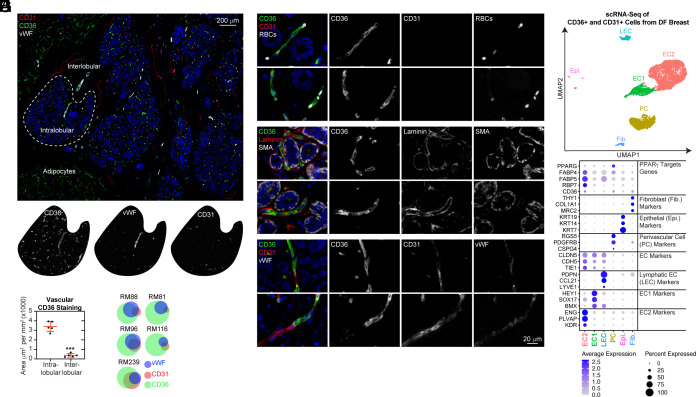
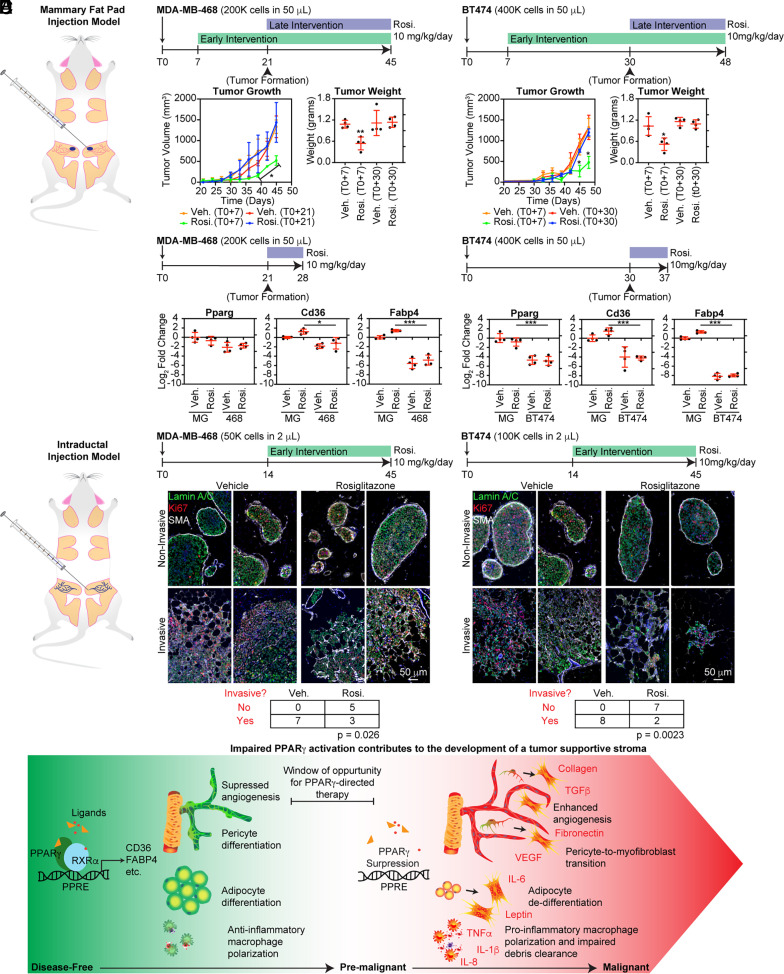
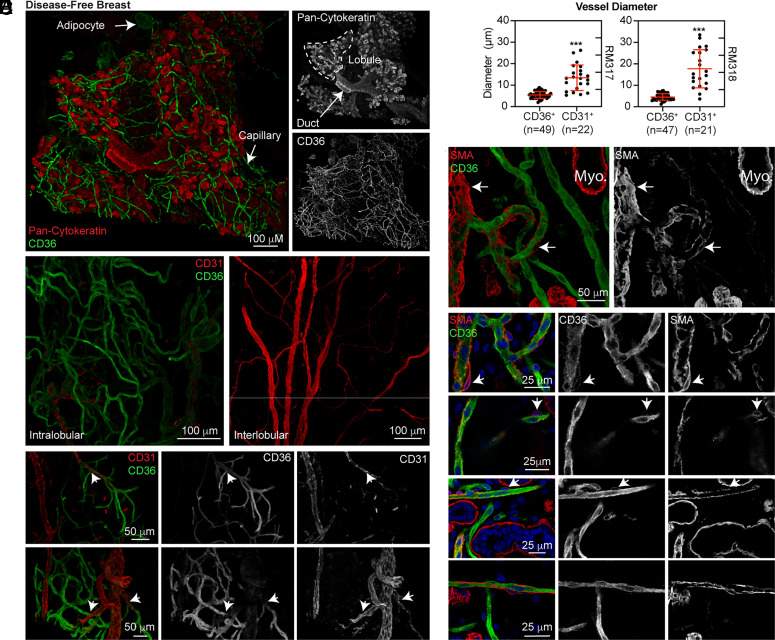
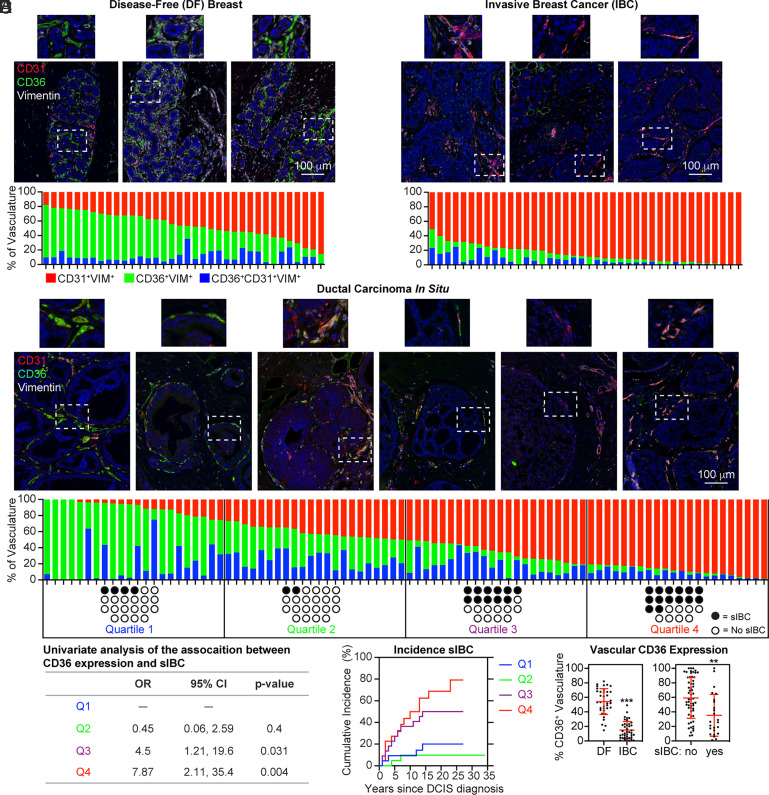
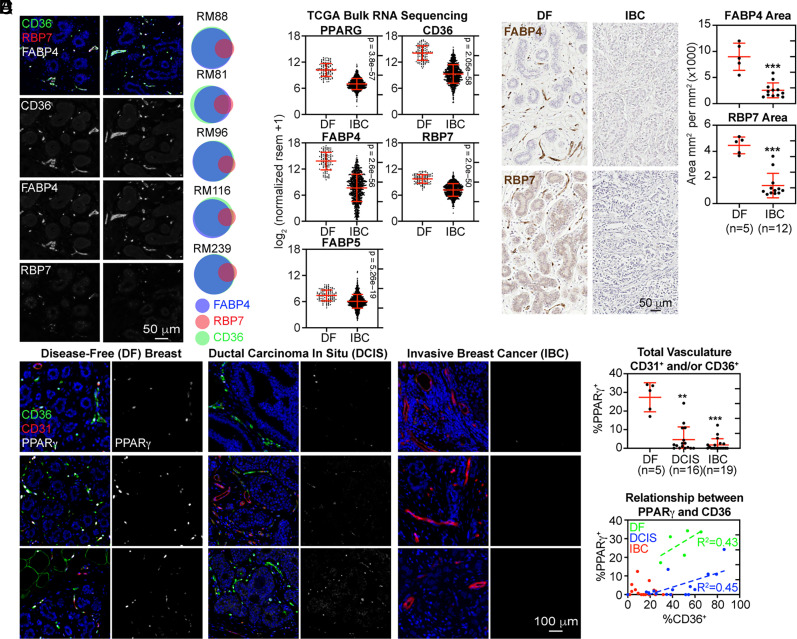
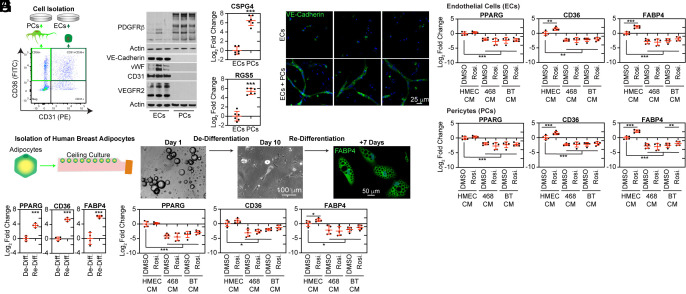
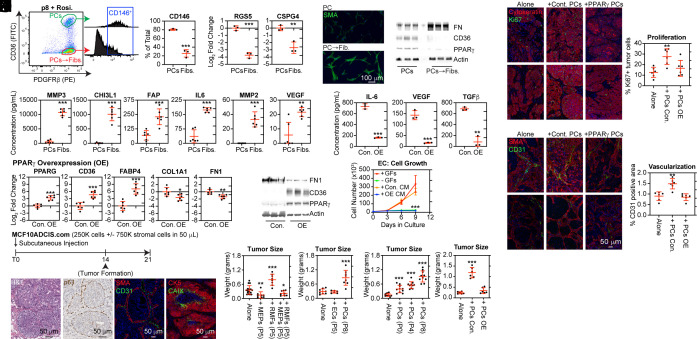
Although robustly expressed in the disease-free (DF) breast stroma, CD36 is consistently absent from the stroma surrounding invasive breast cancers (IBCs). In this study, we primarily observed CD36 expression in adipocytes and intralobular capillaries within the DF breast. Larger vessels concentrated in interlobular regions lacked CD36 and were instead marked by the expression of CD31. When evaluated in perilesional capillaries surrounding ductal carcinoma in situ, a nonobligate IBC precursor, CD36 loss was more commonly observed in lesions associated with subsequent IBC. Peroxisome proliferator-activated receptor γ (PPARγ) governs the expression of CD36 and genes involved in differentiation, metabolism, angiogenesis, and inflammation. Coincident with CD36 loss, we observed a dramatic suppression of PPARγ and its target genes in capillary endothelial cells (ECs) and pericytes, which typically surround and support the stability of the capillary endothelium. Factors present in conditioned media from malignant cells repressed PPARγ and its target genes not only in cultured ECs and pericytes but also in adipocytes, which require PPARγ for proper differentiation. In addition, we identified a role for PPARγ in opposing the transition of pericytes toward a tumor-supportive myofibroblast phenotype. In mouse xenograft models, early intervention with rosiglitazone, a PPARγ agonist, demonstrated significant antitumor effects; however, following the development of a palpable tumor, the antitumor effects of rosiglitazone were negated by the repression of PPARγ in the mouse stroma. In summary, PPARγ activity in healthy tissues places several stromal cell types in an antitumorigenic state, directly inhibiting EC proliferation, maintaining adipocyte differentiation, and suppressing the transition of pericytes into tumor-supportive myofibroblasts.
尽管在无疾病(DF)的乳腺基质中强烈表达,但 CD36 始终不存在于浸润性乳腺癌(IBC)周围的基质中。在这项研究中,我们主要观察到 DF 乳腺中脂肪细胞和小叶内毛细血管中的 CD36 表达。集中在小叶间区域的较大血管缺乏 CD36,而是由 CD31 的表达标记。在评估周围原位导管癌(非强制性 IBC 前体)的病变毛细血管时,在与随后的 IBC 相关的病变中更常见到 CD36 缺失。过氧化物酶体增殖物激活受体 γ(PPARγ)调控 CD36 的表达及其参与分化、代谢、血管生成和炎症的基因。与 CD36 缺失一致,我们观察到毛细血管内皮细胞(EC)和周细胞中 PPARγ 及其靶基因的显著抑制,这些细胞通常包围和支持毛细血管内皮的稳定性。恶性细胞条件培养基中存在的因子不仅在培养的 EC 和周细胞中,而且在脂肪细胞中抑制 PPARγ 及其靶基因,脂肪细胞需要 PPARγ 才能正常分化。此外,我们确定了 PPARγ 在阻止周细胞向肿瘤支持性肌成纤维细胞表型转化中的作用。在小鼠异种移植模型中,早期用罗格列酮(一种 PPARγ 激动剂)干预显示出显著的抗肿瘤作用;然而,在可触及肿瘤形成后,由于小鼠基质中 PPARγ 的抑制,罗格列酮的抗肿瘤作用被否定。总之,健康组织中的 PPARγ 活性使几种基质细胞处于抗肿瘤状态,直接抑制 EC 增殖,维持脂肪细胞分化,并抑制周细胞向肿瘤支持性肌成纤维细胞的转化。