Department of Anesthesiology, Guangxi Medical University Cancer Hospital, Nanning, Guangxi Zhuang Autonomous Region, China.
Guangxi Key Laboratory for Basic Science and Prevention of Perioperative Organ Dysfunction, Nanning, Guangxi Zhuang Autonomous Region, China.
PLoS One. 2023 Oct 11;18(10):e0287296. doi: 10.1371/journal.pone.0287296. eCollection 2023.
Ropivacaine is a long-acting local anesthetic that is used to treat postoperative pain. Adjuvant use of dexmedetomidine in regional anesthesia may prolong the duration of analgesia. The objective of this systematic review and meta-analysis was to investigate the duration and effect of ropivacaine alone vs. ropivacaine in combination with dexmedetomidine for postoperative analgesia.
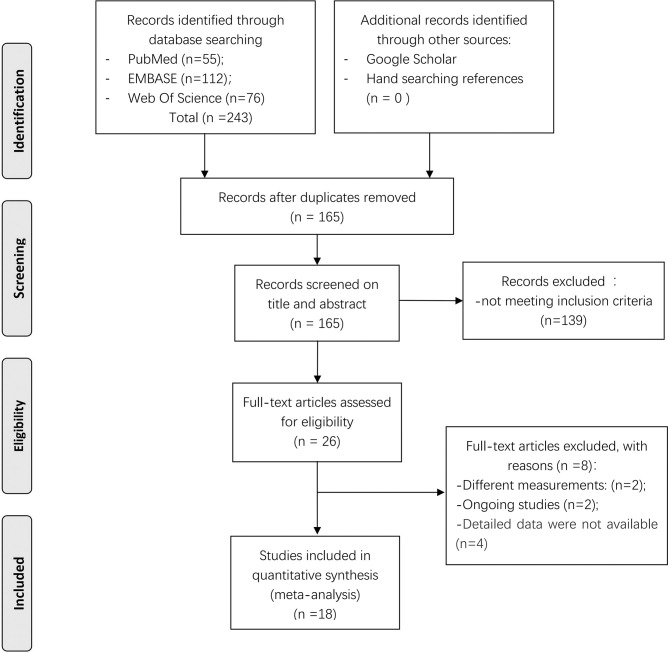
The PubMed, EMBASE, Web of Science, and Google Scholar databases were searched for randomized controlled trials (RCTs) of ropivacaine alone or ropivacaine in combination with dexmedetomidine for regional anesthesia. The primary outcome was duration of analgesia, defined as the time from onset of the block to the time of the first analgesic request or initial pain report. Secondary outcomes were duration of sensory block, duration of motor block, consumption of sufentanil for analgesia, length of hospital stay, and incidence of postoperative nausea and vomiting.
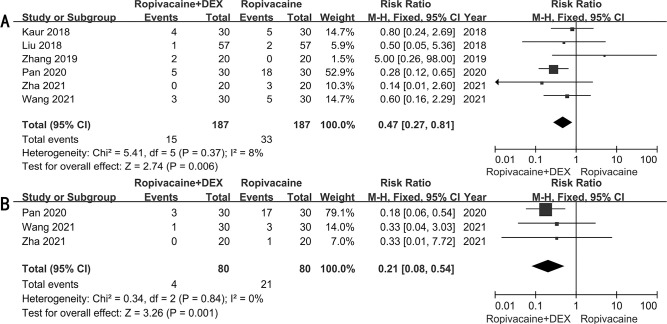
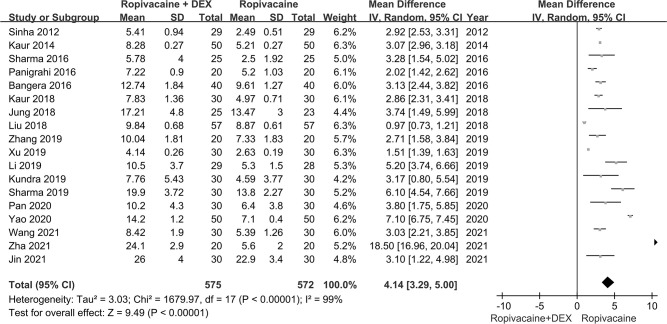
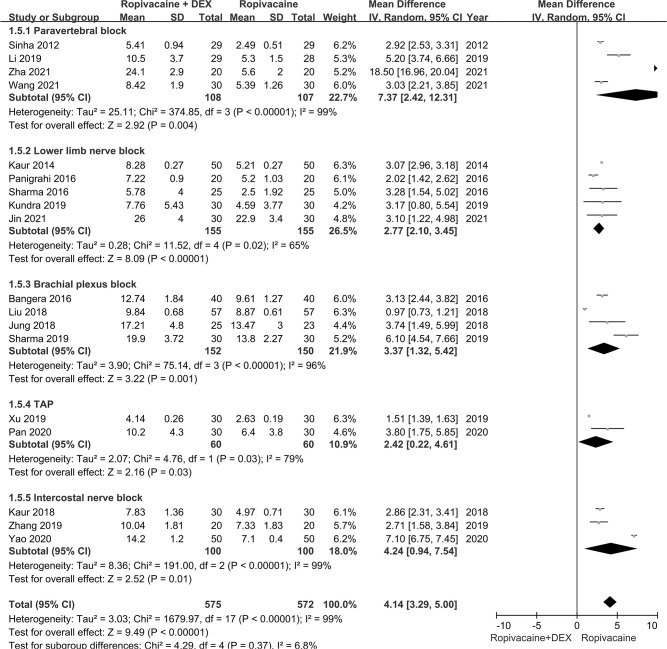
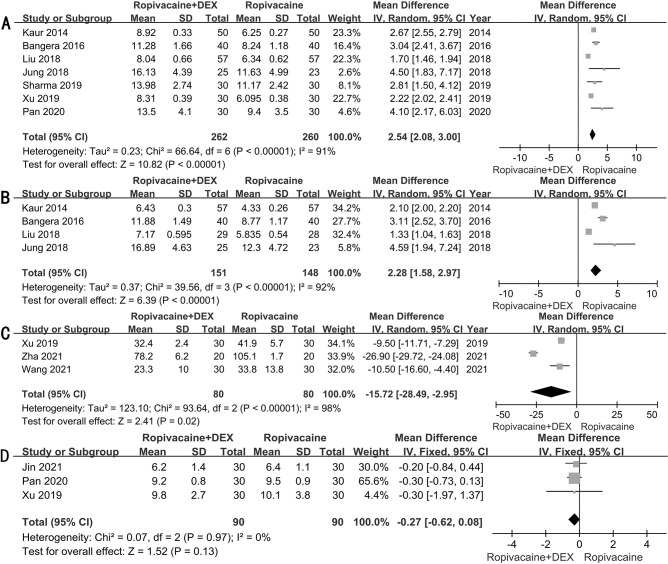
Eighteen studies with 1148 patients were included. Overall quality of the RCTs, as assessed by the Jadad scale, was high. The meta-analysis demonstrated that ropivacaine combined with dexmedetomidine significantly prolonged the duration of postoperative analgesia from local anesthetics compared to ropivacaine alone (WMD: 4.14h; 95%CI: 3.29~5.0h; P<0.00001; I2 = 99%). There was evidence of high heterogeneity between studies. The duration of sensory and motor block was significantly increased, and consumption of sufentanil for analgesia and the incidence of postoperative nausea and vomiting were significantly reduced in patients who received ropivacaine combined with dexmedetomidine compared to ropivacaine alone. There was no significant difference in length of hospital stay.
Compared to ropivacaine alone, ropivacaine combined with dexmedetomidine significantly prolonged the duration of postoperative analgesia and sensory and motor block, and reduced consumption of sufentanil for analgesia and the incidence of postoperative nausea and vomiting, across an array of surgeries.
罗哌卡因是一种长效局部麻醉剂,用于治疗术后疼痛。在区域麻醉中辅助使用右美托咪定可能会延长镇痛持续时间。本系统评价和荟萃分析的目的是研究罗哌卡因单独使用与罗哌卡因联合右美托咪定用于术后镇痛的持续时间和效果。
检索了 PubMed、EMBASE、Web of Science 和 Google Scholar 数据库中的随机对照试验(RCT),以评估罗哌卡因单独使用或与右美托咪定联合用于区域麻醉的效果。主要结局是镇痛持续时间,定义为阻滞开始至首次请求镇痛或初始疼痛报告的时间。次要结局包括感觉阻滞持续时间、运动阻滞持续时间、舒芬太尼用于镇痛的消耗量、住院时间和术后恶心呕吐的发生率。
纳入了 18 项研究共 1148 例患者。根据 Jadad 量表评估,这些 RCT 的整体质量较高。荟萃分析表明,与罗哌卡因单独使用相比,罗哌卡因联合右美托咪定显著延长了术后镇痛的持续时间(WMD:4.14h;95%CI:3.29~5.0h;P<0.00001;I2=99%)。研究之间存在高度异质性。与罗哌卡因单独使用相比,接受罗哌卡因联合右美托咪定的患者感觉和运动阻滞的持续时间显著增加,舒芬太尼用于镇痛的消耗量和术后恶心呕吐的发生率显著降低,而住院时间无显著差异。
与罗哌卡因单独使用相比,罗哌卡因联合右美托咪定可显著延长术后镇痛和感觉运动阻滞的持续时间,并减少术后镇痛所需的舒芬太尼用量和术后恶心呕吐的发生率,适用于多种手术。