Roche Pharmaceutical Research and Early Development, Neuroscience and Rare Diseases, Roche Innovation Center Basel, Basel, Switzerland.
Roche Pharmaceutical Research and Early Development, Large Molecule Research, Roche Innovation Center Munich, Munich, Germany.
MAbs. 2023 Jan-Dec;15(1):2261509. doi: 10.1080/19420862.2023.2261509. Epub 2023 Oct 12.
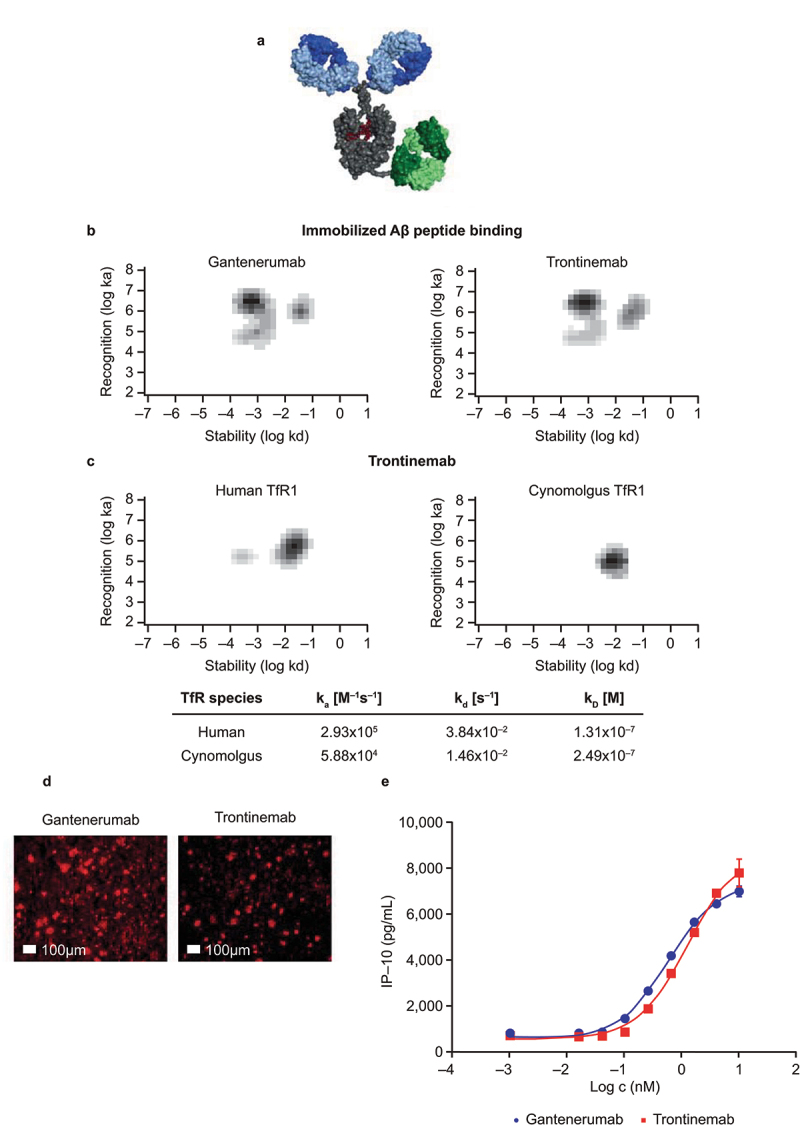
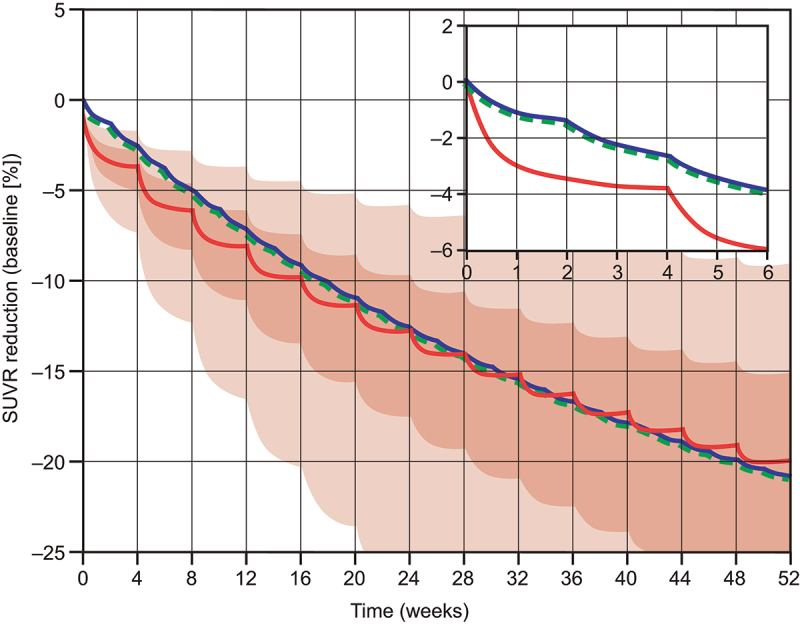
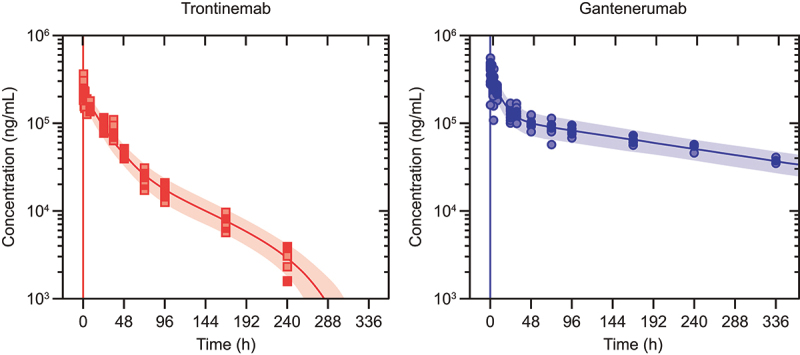
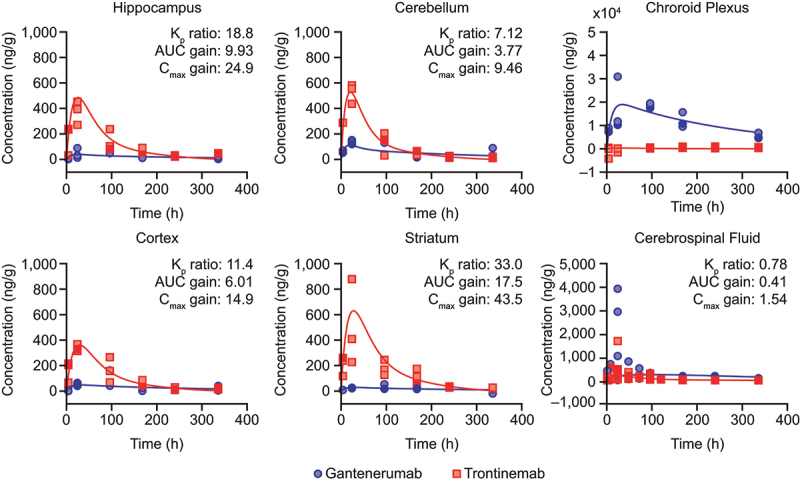
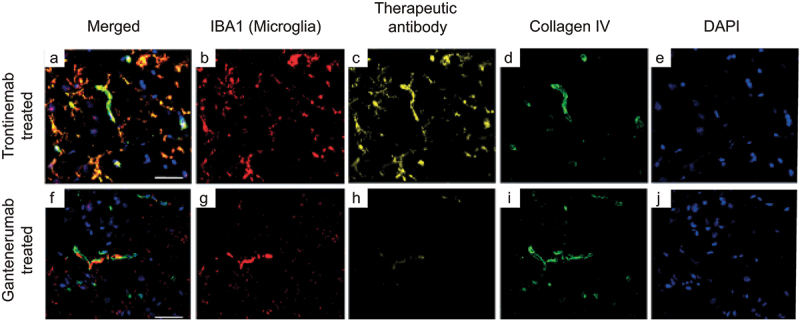
There are few treatments that slow neurodegeneration in Alzheimer's disease (AD), and while therapeutic antibodies are being investigated in clinical trials for AD treatment, their access to the central nervous system is restricted by the blood-brain barrier. This study investigates a bispecific modular fusion protein composed of gantenerumab, a fully human monoclonal anti- amyloid-beta (Aβ) antibody under investigation for AD treatment, with a human transferrin receptor 1-directed Brainshuttle™ module (trontinemab; RG6102, INN trontinemab). , trontinemab showed a similar binding affinity to fibrillar Aβ and Aβ plaques in human AD brain sections to gantenerumab. A single intravenous administration of trontinemab (10 mg/kg) or gantenerumab (20 mg/kg) to non-human primates (NHPs, ), was well tolerated in both groups. Immunohistochemistry indicated increased trontinemab uptake into the brain endothelial cell layer and parenchyma, and more homogeneous distribution, compared with gantenerumab. Brain and plasma pharmacokinetic (PK) parameters for trontinemab were estimated by nonlinear mixed-effects modeling with correction for tissue residual blood, indicating a 4-18-fold increase in brain exposure. A previously developed clinical PK/pharmacodynamic model of gantenerumab was adapted to include a brain compartment as a driver of plaque removal and linked to the allometrically scaled above model from NHP. The new brain exposure-based model was used to predict trontinemab dosing regimens for effective amyloid reduction. Simulations from these models were used to inform dosing of trontinemab in the first-in-human clinical trial.
用于治疗阿尔茨海默病 (AD) 的神经退行性变的方法寥寥无几,虽然针对 AD 治疗的治疗性抗体正在临床试验中进行研究,但由于血脑屏障的存在,它们进入中枢神经系统的能力受到限制。本研究调查了一种双特异性模块化融合蛋白,该蛋白由 gantenerumab 组成,gantenerumab 是一种正在研究用于 AD 治疗的完全人源单克隆抗淀粉样蛋白-β(Aβ)抗体,与人类转铁蛋白受体 1 定向 Brainshuttle™ 模块(trontinemab;RG6102,INN trontinemab)。结果表明,trontinemab 与人 AD 大脑切片中的纤维状 Aβ 和 Aβ 斑块具有相似的结合亲和力。在非人类灵长类动物(NHPs,)中单次静脉注射 trontinemab(10mg/kg)或 gantenerumab(20mg/kg),两组均耐受良好。免疫组织化学分析表明,与 gantenerumab 相比,trontinemab 进入脑内皮细胞层和实质的摄取增加,分布更加均匀。通过非线性混合效应模型估计 trontinemab 的脑和血浆药代动力学(PK)参数,并对组织残留血液进行校正,表明脑暴露增加了 4-18 倍。先前开发的 gantenerumab 临床 PK/药效学模型进行了改编,纳入了脑区作为斑块清除的驱动因素,并与来自 NHP 的按比例缩放的上述模型相关联。新的基于脑暴露的模型用于预测 trontinemab 的有效减少淀粉样蛋白的剂量方案。来自这些模型的模拟用于告知首次人体临床试验中 trontinemab 的给药剂量。