Department of Endocrinology and Metabolism, Nanfang Hospital, Southern Medical University, Guangzhou, China.
Department of Endocrinology and Metabolism, The Second Affiliated Hospital of Nanchang University, Nanchang, China.
In Vitro Cell Dev Biol Anim. 2023 Oct;59(9):684-696. doi: 10.1007/s11626-023-00803-0. Epub 2023 Oct 13.
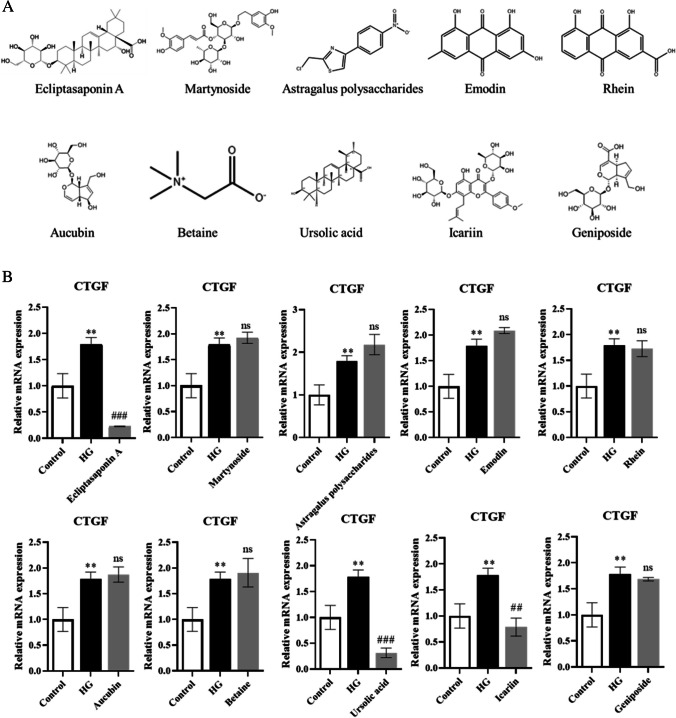
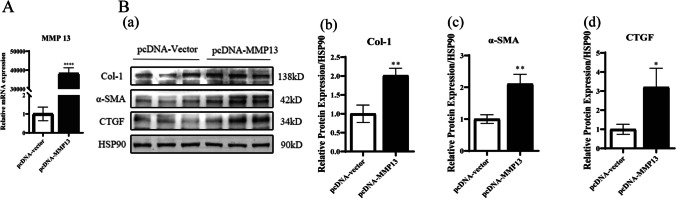
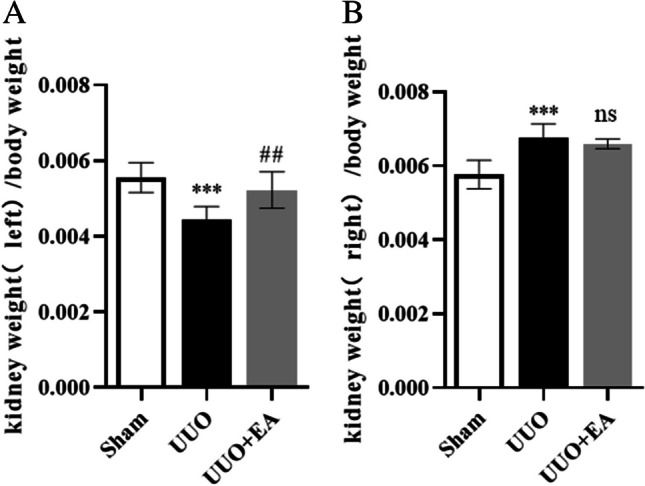
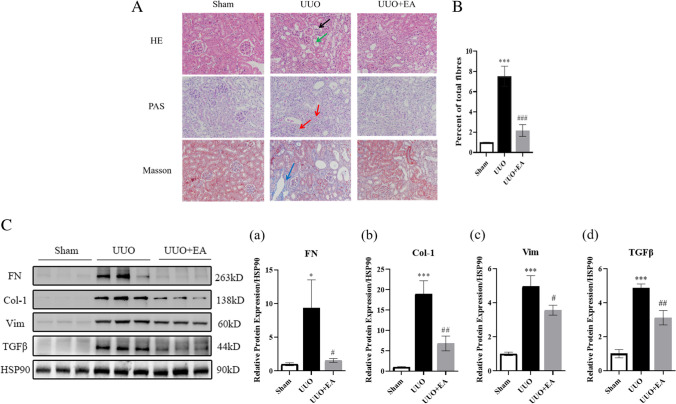
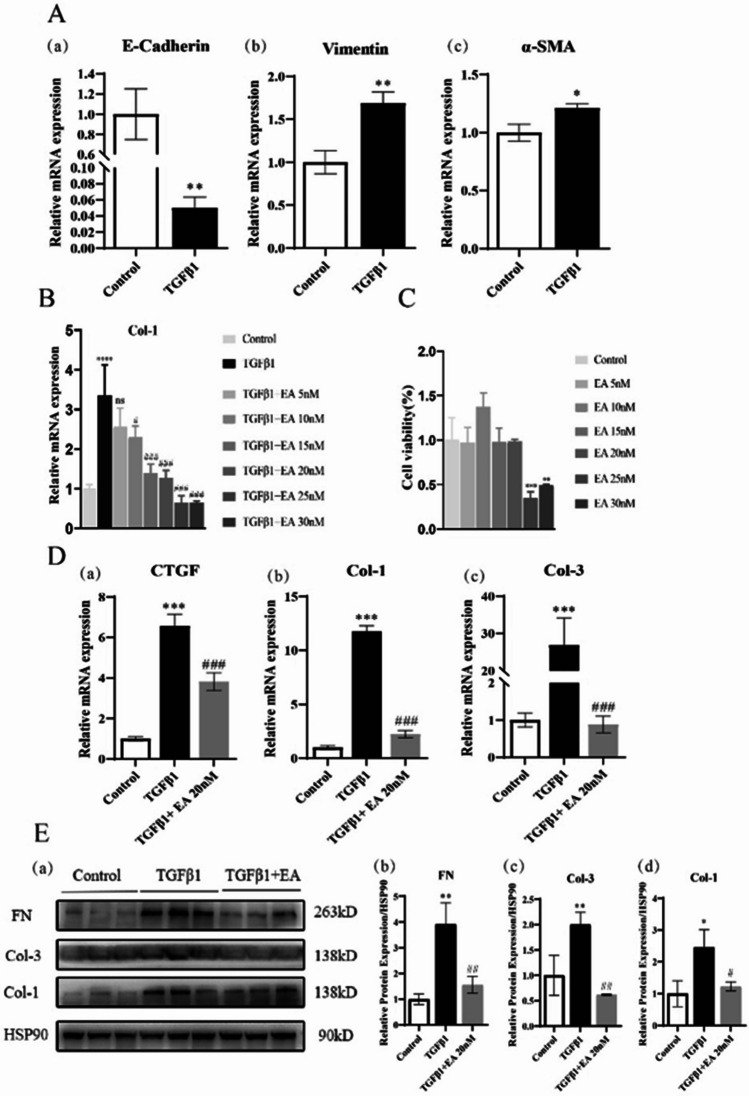
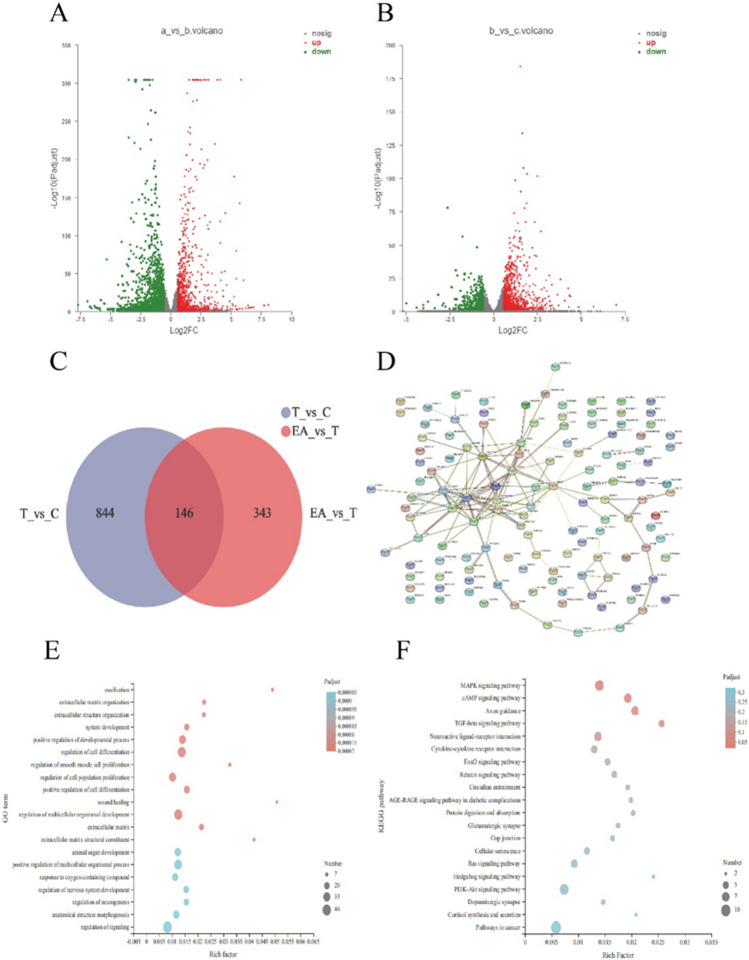
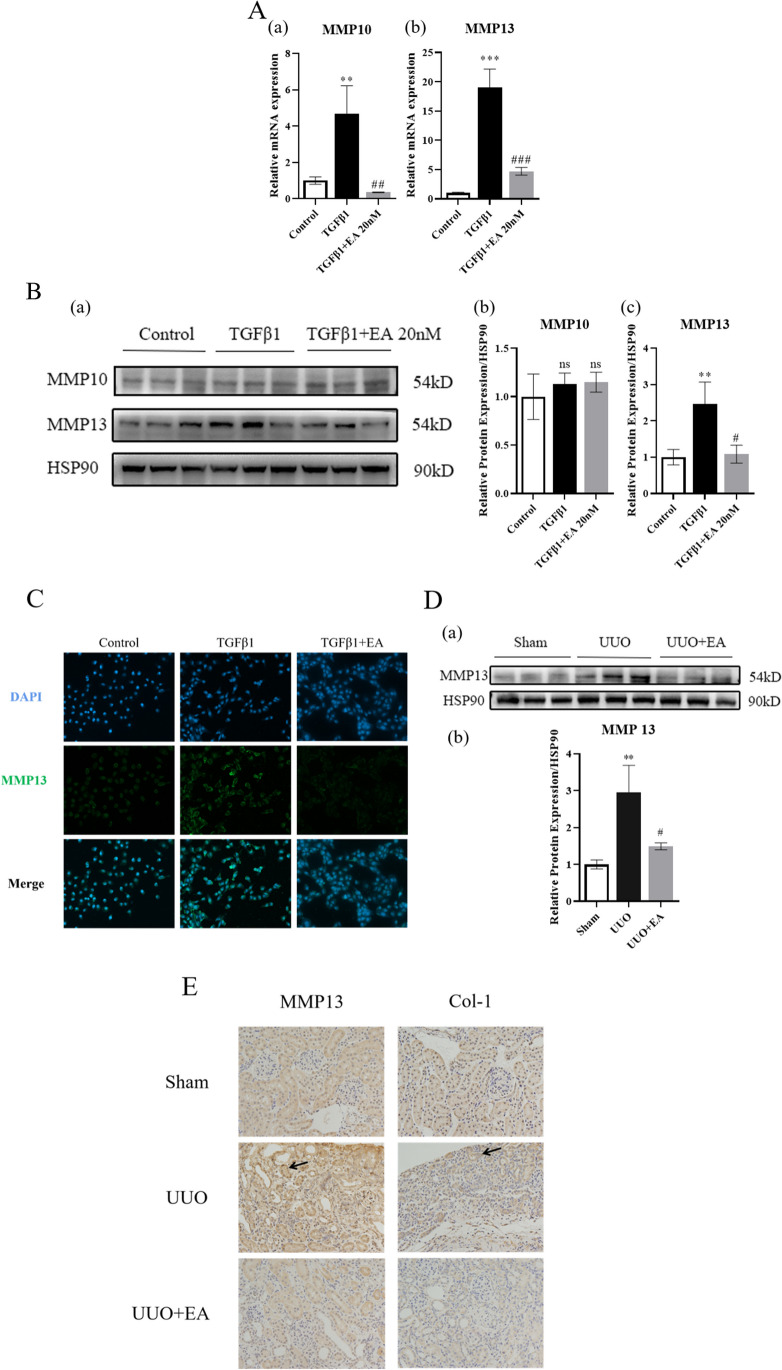
Renal fibrosis is the most common manifestation of end-stage renal disease (ESRD), including diabetic kidney disease (DKD), but there is no effective treatment in renal fibrosis. Natural products are a rich source of clinical drug research and have been used in the clinical research of various diseases. In this study, we searched for traditional Chinese medicine monomers that attenuate fibrosis and assessed their effect on the fibrosis marker connective tissue growth factor (CTGF) in cells which we found ecliptasaponin A. Subsequently, we evaluated the effect of ecliptasaponin A on renal fibrosis in the classic renal fibrosis unilateral ureteral obstruction (UUO) mouse model and found that ecliptasaponin A could reduce the renal collagen fiber deposition and renal extracellular matrix (ECM) protein expression in UUO mice. In vitro, ecliptasaponin A can inhibit ECM protein expression in human kidney-2 (HK-2) cells induced by transforming growth factor-beta1 (TGFβ1). To further clarify the mechanism of ecliptasaponin A in attenuating renal fibrosis, we performed transcriptome sequencing of HK-2 cells treated with TGFβ1 and ecliptasaponin A. The functions and pathways were mainly enriched in the extracellular matrix and TGFβ signalling pathway. Matrix metalloproteinase 10 (MMP10) and matrix metalloproteinase 13 (MMP13) are the main differentially expressed genes in extracellular matrix regulation. Then, we measured MMP10 and MMP13 in the cells and found that ecliptasaponin A had a significant inhibitory effect on MMP13 expression but not on MMP10 expression. Furthermore, we overexpressed MMP13 in HK-2 cells treated with TGFβ1 and found that MMP13 promoted HK-2 cell injury. Our findings suggest that ecliptasaponin A can attenuate renal fibrosis, which may provide a new method for treating renal fibrosis clinically.
肾纤维化是终末期肾病(ESRD)的最常见表现,包括糖尿病肾病(DKD),但肾纤维化尚无有效治疗方法。天然产物是临床药物研究的丰富来源,已应用于各种疾病的临床研究。在这项研究中,我们搜索了减轻纤维化的中药单体,并评估了它们对纤维化标志物结缔组织生长因子(CTGF)的作用,我们发现了旱莲皂苷 A。随后,我们评估了旱莲皂苷 A 在经典肾纤维化单侧输尿管梗阻(UUO)小鼠模型中的肾纤维化作用,发现旱莲皂苷 A 可减少 UUO 小鼠的肾胶原纤维沉积和肾细胞外基质(ECM)蛋白表达。在体外,旱莲皂苷 A 可抑制转化生长因子-β1(TGFβ1)诱导的人肾-2(HK-2)细胞 ECM 蛋白表达。为了进一步阐明旱莲皂苷 A 减轻肾纤维化的机制,我们对 TGFβ1 和旱莲皂苷 A 处理的 HK-2 细胞进行了转录组测序。功能和途径主要富集在细胞外基质和 TGFβ 信号通路中。基质金属蛋白酶 10(MMP10)和基质金属蛋白酶 13(MMP13)是细胞外基质调节的主要差异表达基因。然后,我们在细胞中测量了 MMP10 和 MMP13,发现旱莲皂苷 A 对 MMP13 表达有显著抑制作用,但对 MMP10 表达没有抑制作用。此外,我们在 TGFβ1 处理的 HK-2 细胞中转染 MMP13,发现 MMP13 促进了 HK-2 细胞损伤。我们的研究结果表明,旱莲皂苷 A 可以减轻肾纤维化,这可能为临床上治疗肾纤维化提供一种新方法。