TCR2 Therapeutics, Inc., 100 Binney Street, Suite 710, Cambridge, MA, 02142, USA.
Adaptimmune, Philadelphia, PA, USA.
Cancer Immunol Immunother. 2023 Dec;72(12):4195-4207. doi: 10.1007/s00262-023-03556-7. Epub 2023 Oct 18.
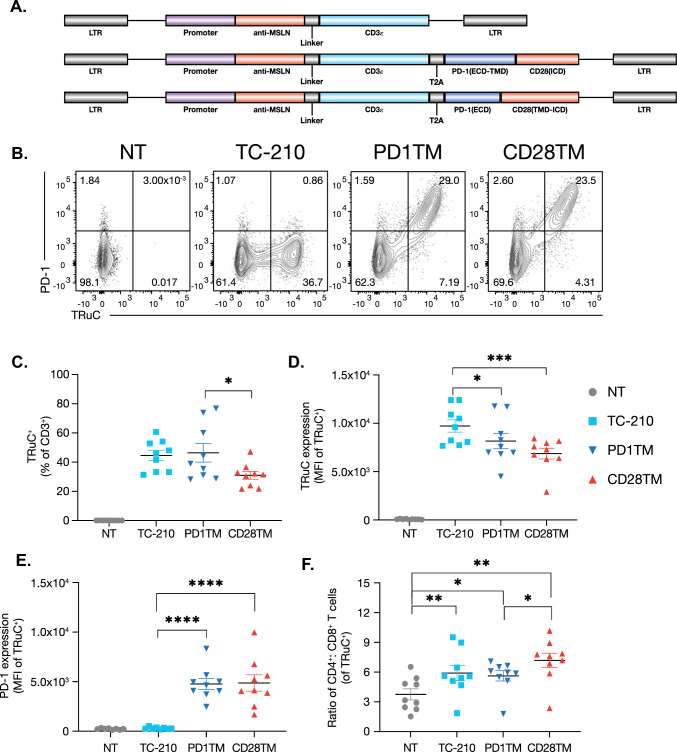
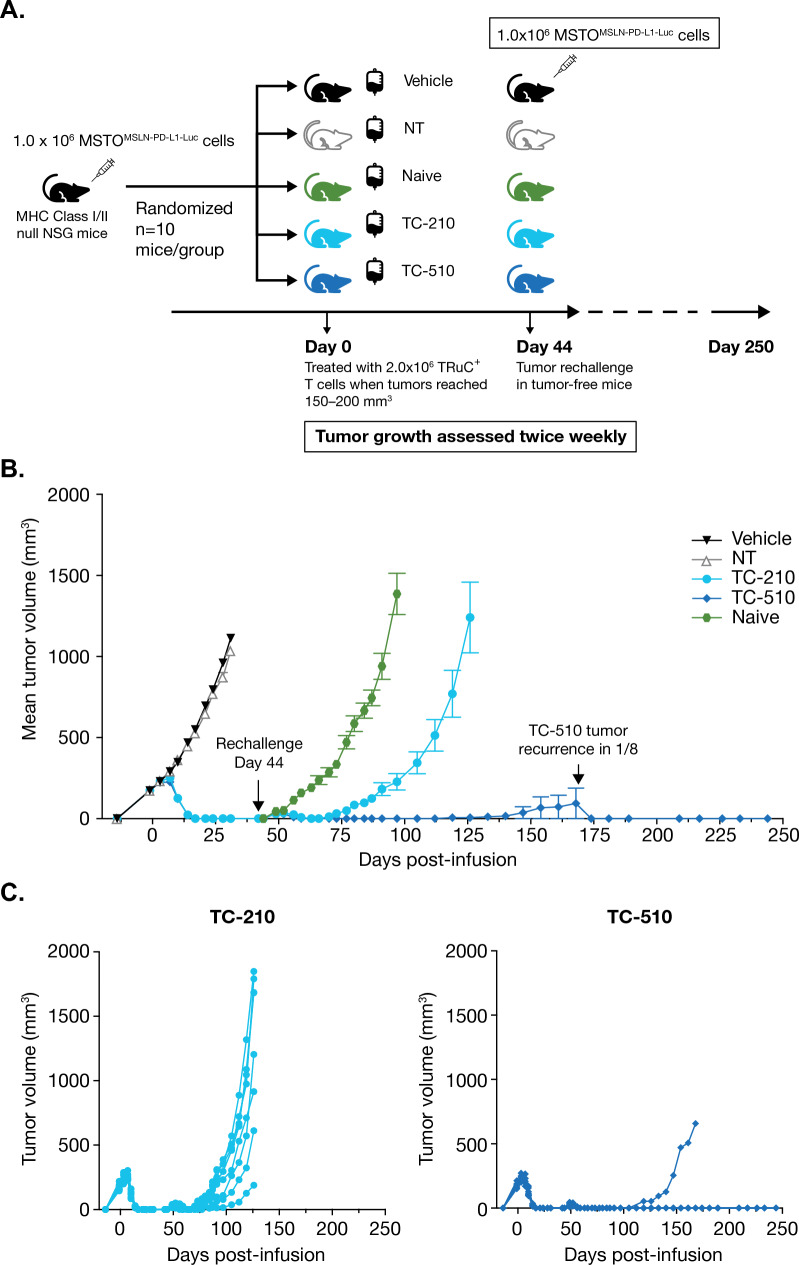
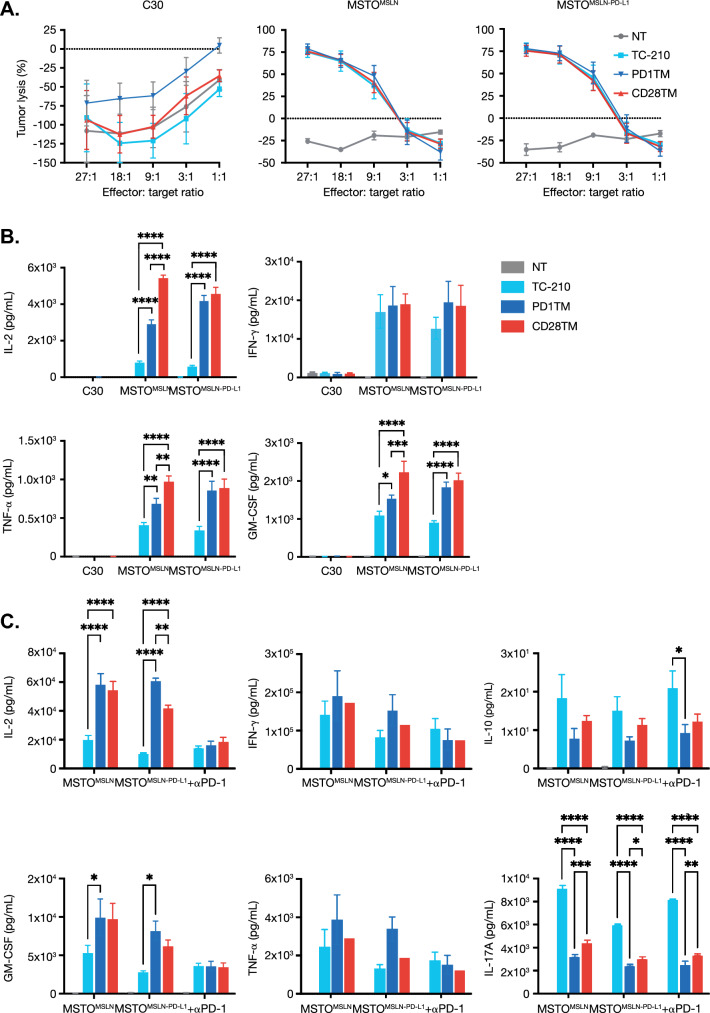
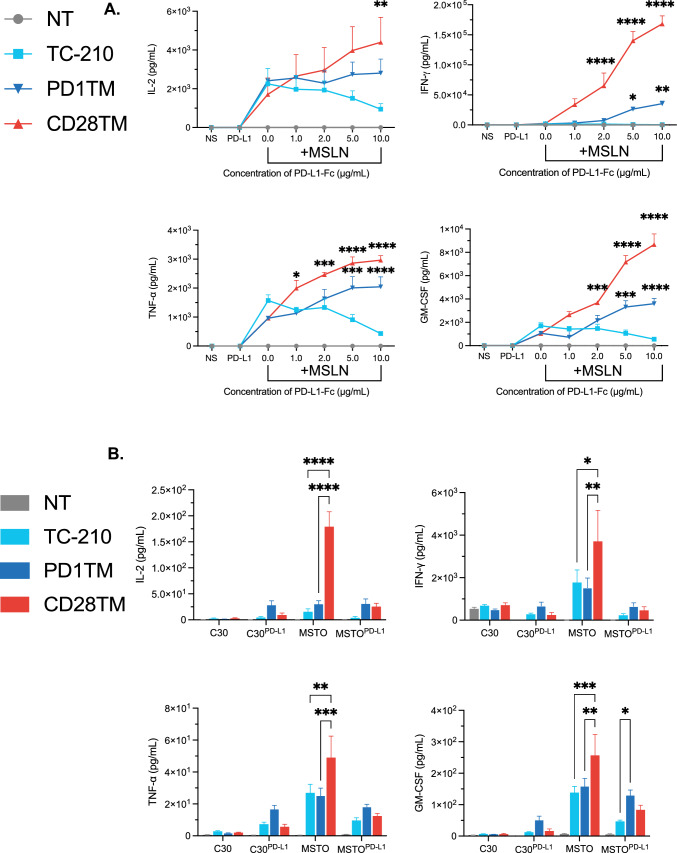
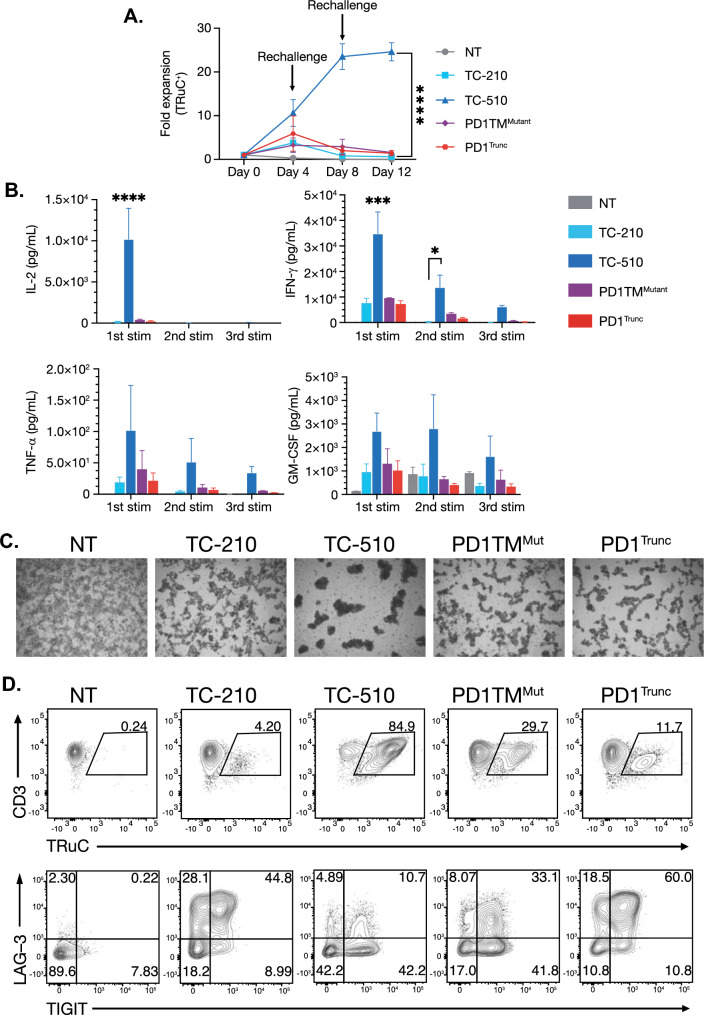
T cells expressing a mesothelin (MSLN)-specific T cell receptor fusion construct (TRuC), called TC-210, have demonstrated robust antitumor activity in preclinical models of mesothelioma, ovarian cancer, and lung cancer. However, they are susceptible to suppression by the programmed cell death protein 1 (PD-1)/programmed cell death protein ligand 1 (PD-L1) axis and lack intrinsic costimulatory signaling elements. To enhance the function of anti-MSLN TRuC-T cells, chimeric switch receptors (CSRs) have been designed to co-opt the immunosuppressive PD-1/PD-L1 axis and to deliver a CD28-mediated costimulatory signal. Here, we report that coexpression of the PD1-CD28 CSR in TRuC-T cells enhanced T cell receptor signaling, increased proinflammatory effector cytokines, decreased anti-inflammatory cytokines, and sustained effector function in the presence of PD-L1 when compared with TC-210. Anti-MSLN TRuC-T cells engineered to coexpress PD1-CD28 CSRs comprising the ectodomain of PD-1 and the intracellular domain of CD28 linked by the transmembrane domain of PD-1 were selected for integration into an anti-MSLN TRuC-T cell therapy product called TC-510. In vitro, TC-510 showed significant improvements in persistence and resistance to exhaustion upon chronic stimulation by tumor cells expressing MSLN and PD-L1 when compared with TC-210. In vivo, TC-510 showed a superior ability to provide durable protection following tumor rechallenge, versus TC-210. These data demonstrate that integration of a PD1-CD28 CSR into TRuC-T cells improves effector function, resistance to exhaustion, and prolongs persistence. Based on these findings, TC-510 is currently being evaluated in patients with MSLN-expressing solid tumors.
表达间皮素 (MSLN)-特异性 T 细胞受体融合构建体 (TRuC) 的 T 细胞,称为 TC-210,在间皮瘤、卵巢癌和肺癌的临床前模型中显示出强大的抗肿瘤活性。然而,它们容易受到程序性细胞死亡蛋白 1 (PD-1)/程序性死亡蛋白配体 1 (PD-L1) 轴的抑制,并且缺乏内在的共刺激信号元件。为了增强抗 MSLN TRuC-T 细胞的功能,设计了嵌合开关受体 (CSR) 以共同利用免疫抑制性 PD-1/PD-L1 轴并传递 CD28 介导的共刺激信号。在这里,我们报告说,与 TC-210 相比,TRuC-T 细胞中 PD1-CD28 CSR 的共表达增强了 T 细胞受体信号,增加了促炎效应细胞因子,减少了抗炎细胞因子,并在存在 PD-L1 的情况下维持了效应功能。为了将共表达 PD1-CD28 CSR 的抗 MSLN TRuC-T 细胞工程改造为抗 MSLN TRuC-T 细胞治疗产品,称为 TC-510,选择了包含 PD-1 的胞外结构域和 CD28 的细胞内结构域的 PD1-CD28 CSRs,通过 PD-1 的跨膜结构域连接。在体外,与 TC-210 相比,TC-510 在表达 MSLN 和 PD-L1 的肿瘤细胞慢性刺激下表现出显著提高的持久性和对衰竭的抵抗力。在体内,与 TC-210 相比,TC-510 在肿瘤再挑战后具有提供持久保护的优越能力。这些数据表明,将 PD1-CD28 CSR 整合到 TRuC-T 细胞中可以改善效应功能、抗衰竭能力并延长持久性。基于这些发现,TC-510 目前正在表达 MSLN 的实体瘤患者中进行评估。