Zaki Mohammed T, Rowles Lewis S, Adjeroh Donald A, Orner Kevin D
Wadsworth Department of Civil and Environmental Engineering, West Virginia University, Morgantown, West Virginia 26505, United States.
Department of Civil Engineering and Construction, Georgia Southern University, Statesboro, Georgia 30458, United States.
ACS ES T Eng. 2023 Sep 29;3(10):1424-1467. doi: 10.1021/acsestengg.3c00043. eCollection 2023 Oct 13.
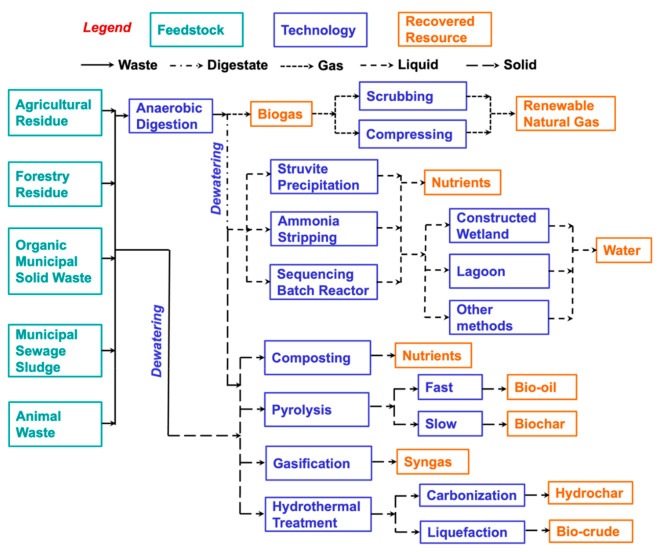
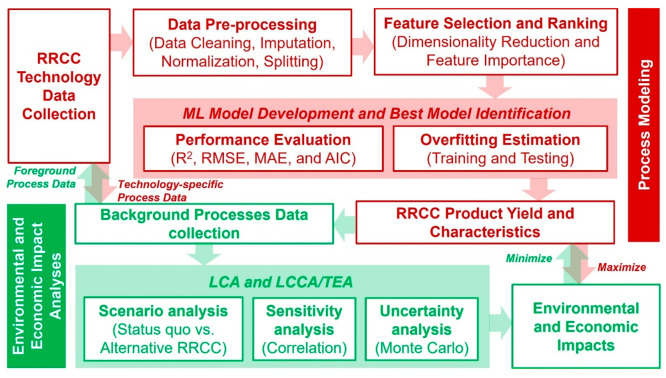
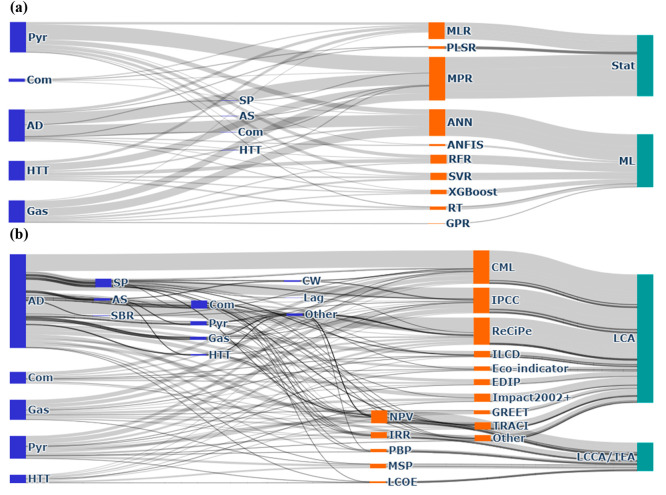
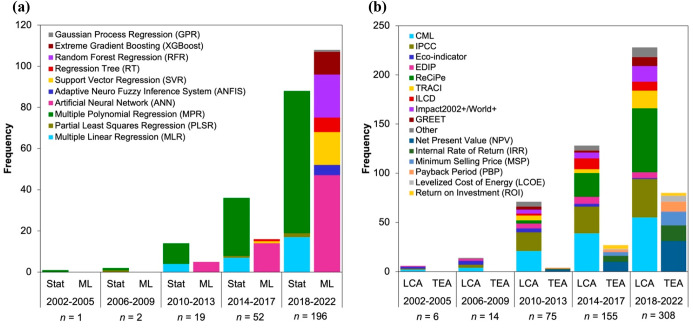
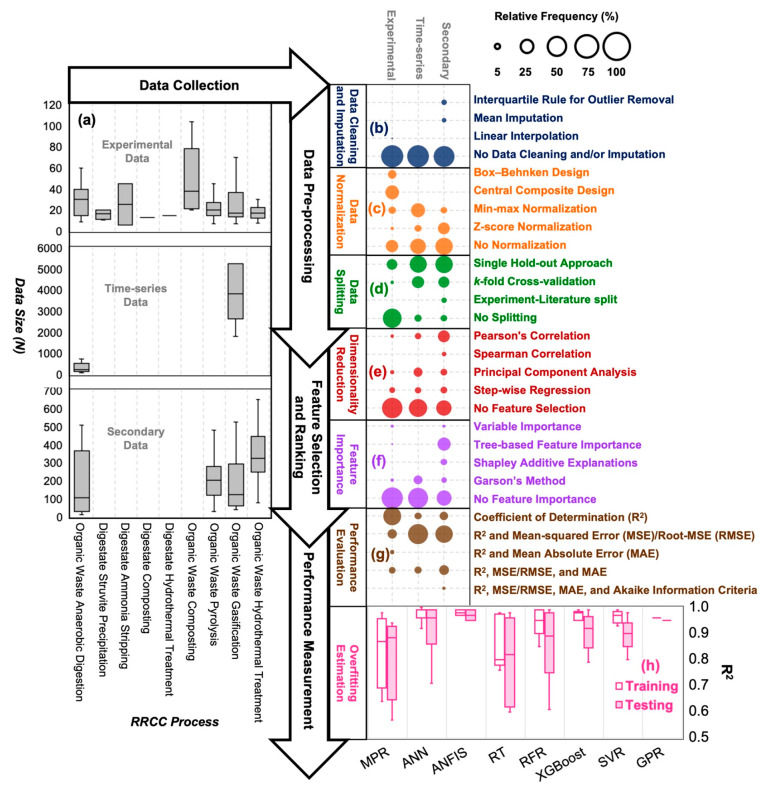
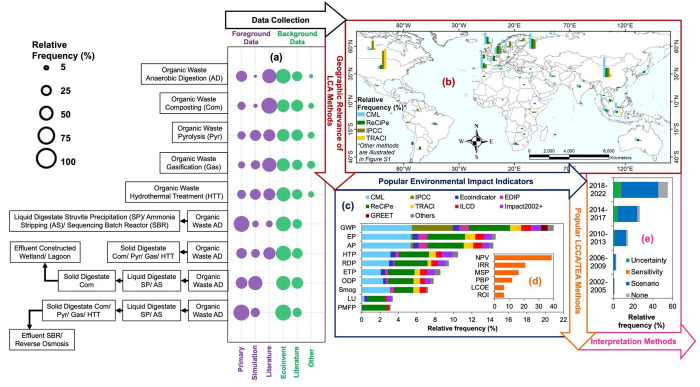
Municipal and agricultural organic waste can be treated to recover energy, nutrients, and carbon through resource recovery and carbon capture (RRCC) technologies such as anaerobic digestion, struvite precipitation, and pyrolysis. Data science could benefit such technologies by improving their efficiency through data-driven process modeling along with reducing environmental and economic burdens via life cycle assessment (LCA) and techno-economic analysis (TEA), respectively. We critically reviewed 616 peer-reviewed articles on the use of data science in RRCC published during 2002-2022. Although applications of machine learning (ML) methods have drastically increased over time for modeling RRCC technologies, the reviewed studies exhibited significant knowledge gaps at various model development stages. In terms of sustainability, an increasing number of studies included LCA with TEA to quantify both environmental and economic impacts of RRCC. Integration of ML methods with LCA and TEA has the potential to cost-effectively investigate the trade-off between efficiency and sustainability of RRCC, although the literature lacked such integration of techniques. Therefore, we propose an integrated data science framework to inform efficient and sustainable RRCC from organic waste based on the review. Overall, the findings from this review can inform practitioners about the effective utilization of various data science methods for real-world implementation of RRCC technologies.
城市和农业有机废物可以通过资源回收和碳捕获(RRCC)技术进行处理,以回收能源、养分和碳,这些技术包括厌氧消化、鸟粪石沉淀和热解。数据科学可以通过数据驱动的过程建模提高这些技术的效率,并分别通过生命周期评估(LCA)和技术经济分析(TEA)减轻环境和经济负担,从而使这些技术受益。我们批判性地回顾了2002年至2022年期间发表的616篇关于在RRCC中使用数据科学的同行评审文章。尽管随着时间的推移,机器学习(ML)方法在RRCC技术建模中的应用急剧增加,但所审查的研究在各个模型开发阶段都存在显著的知识差距。在可持续性方面,越来越多的研究将LCA与TEA结合起来,以量化RRCC的环境和经济影响。将ML方法与LCA和TEA相结合,有可能经济高效地研究RRCC效率与可持续性之间的权衡,尽管文献中缺乏这种技术整合。因此,我们基于该综述提出了一个综合数据科学框架,以指导从有机废物中实现高效且可持续的RRCC。总体而言,本次综述的结果可以让从业者了解如何有效利用各种数据科学方法来实际应用RRCC技术。