Department of Pharmaceutical Sciences, Philadelphia College of Pharmacy, Saint Joseph's University, Philadelphia, PA, USA.
Department of Pharmaceutical Sciences, Philadelphia College of Pharmacy, Saint Joseph's University, Philadelphia, PA, USA; Department of Radiation Oncology, Perelman School of Medicine, University of Pennsylvania, Philadelphia, PA, USA.
Biochem Pharmacol. 2023 Nov;217:115851. doi: 10.1016/j.bcp.2023.115851. Epub 2023 Oct 17.
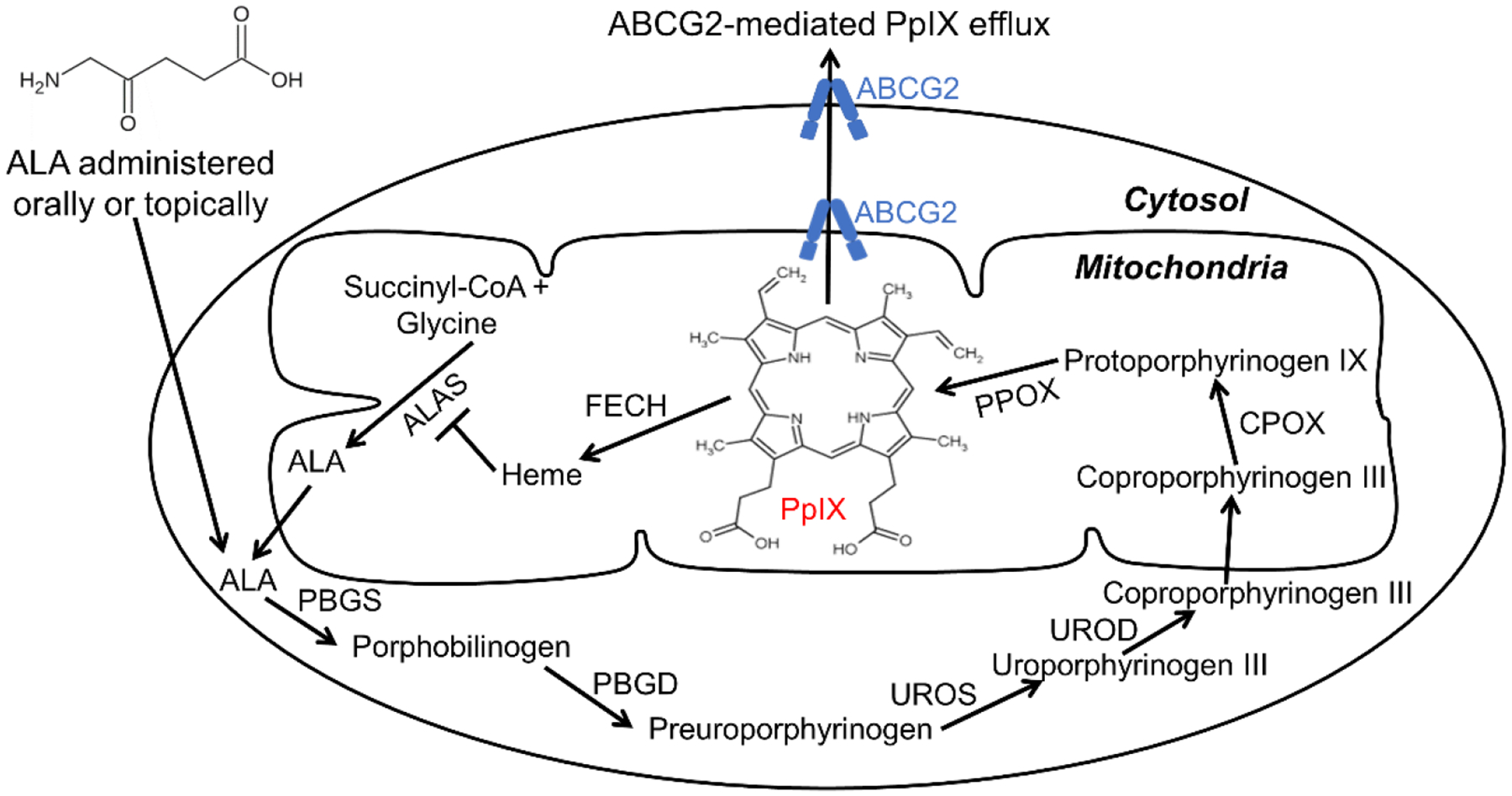
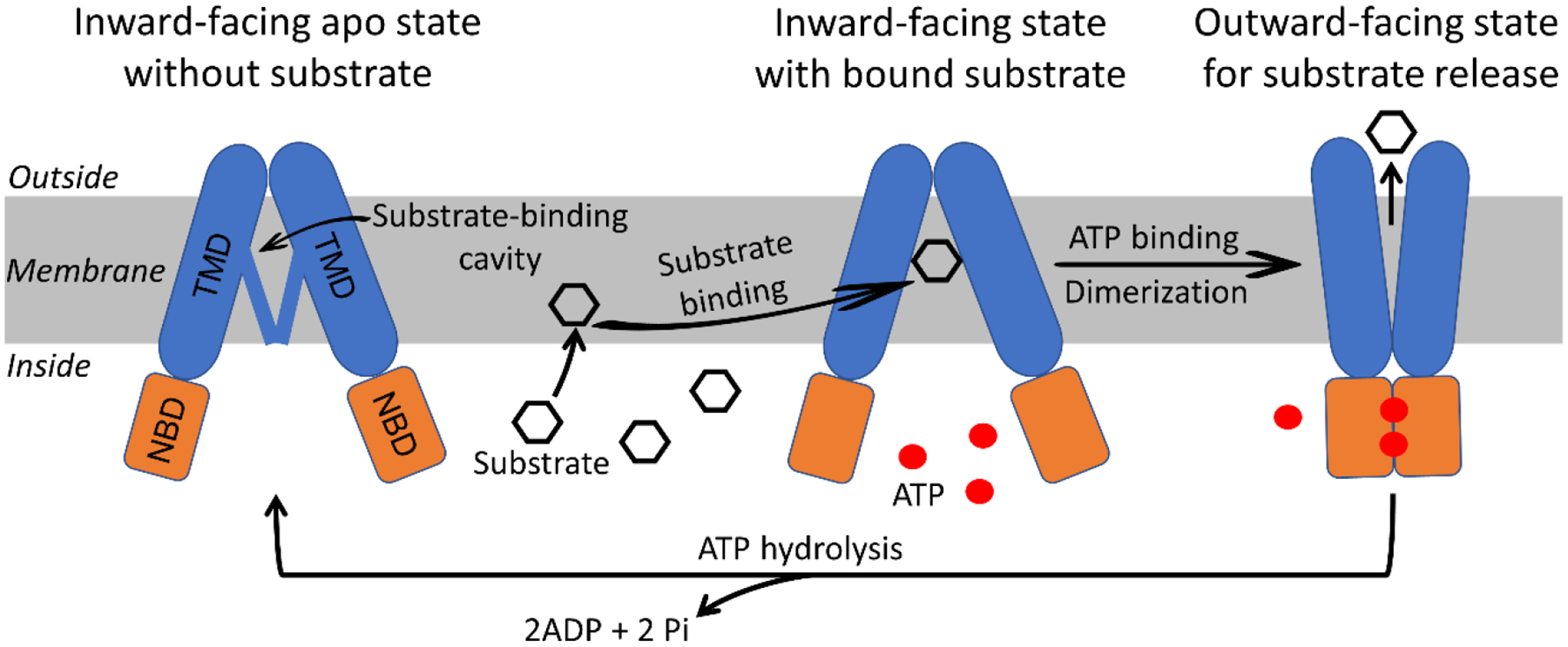
5-Aminolevulinic acid (ALA) has been approved by the U. S. FDA for fluorescence-guided resection of high-grade glioma and photodynamic therapy (PDT) of superficial skin precancerous and cancerous lesions. As a prodrug, ALA administered orally or topically is metabolized in the heme biosynthesis pathway to produce protoporphyrin IX (PpIX), the active drug with red fluorescence and photosensitizing property. Preferential accumulation of PpIX in tumors after ALA administration enables the use of ALA for PpIX-mediated tumor fluorescence diagnosis and PDT, functioning as a photo-theranostic agent. Extensive research is currently underway to further enhance ALA-mediated PpIX tumor disposition for better tumor visualization and treatment. Particularly, the discovery of PpIX as a specific substrate of ATP binding cassette subfamily G member 2 (ABCG2) opens the door to therapeutic enhancement with ABCG2 inhibitors. Studies with human tumor cell lines and human tumor samples have demonstrated ABCG2 as an important biological determinant of reduced ALA-PpIX tumor accumulation, inhibition of which greatly enhances ALA-PpIX fluorescence and PDT response. These studies strongly support targeting ABCG2 as an effective therapeutic enhancement approach. In this review, we would like to summarize current research of ABCG2 as a drug efflux transporter in multidrug resistance, highlight previous works on targeting ABCG2 for therapeutic enhancement of ALA, and provide future perspectives on how to translate this ABCG2-targeted therapeutic enhancement strategy from bench to bedside.
5-氨基酮戊酸(ALA)已获得美国食品药品监督管理局(FDA)批准,可用于引导切除高级别脑胶质瘤和光动力疗法(PDT)治疗浅层皮肤癌前病变和癌性病变。作为前体药物,ALA 经口服或局部给药后,在血红素生物合成途径中代谢,生成原卟啉 IX(PpIX),这是一种具有红色荧光和光敏特性的活性药物。ALA 给药后 PpIX 在肿瘤中的优先积累使 ALA 能够用于 PpIX 介导的肿瘤荧光诊断和 PDT,从而发挥光治疗诊断剂的作用。目前正在进行广泛的研究,以进一步增强 ALA 介导的 PpIX 肿瘤处置,以更好地实现肿瘤可视化和治疗。特别是,发现 PpIX 是 ATP 结合盒亚家族 G 成员 2(ABCG2)的特异性底物,为使用 ABCG2 抑制剂进行治疗增强开辟了道路。用人类肿瘤细胞系和人类肿瘤样本进行的研究表明,ABCG2 是减少 ALA-PpIX 肿瘤蓄积的重要生物学决定因素,抑制 ABCG2 可极大增强 ALA-PpIX 荧光和 PDT 反应。这些研究强烈支持将 ABCG2 作为一种有效的治疗增强方法进行靶向治疗。在这篇综述中,我们将总结 ABCG2 作为多药耐药性中药物外排转运蛋白的研究现状,重点介绍针对 ABCG2 进行治疗增强以提高 ALA 疗效的前期工作,并就如何将这种针对 ABCG2 的治疗增强策略从实验室转化为临床提供未来展望。