Department of Anesthesiology and Pain Medicine, Samsung Medical Center, Sungkyunkwan University School of Medicine, 81 Irwon-ro, Gangnam-gu, Seoul, 06351, Korea.
Biomedical Statistics Center, Research Institute for Future Medicine, Samsung Medical Center, Seoul, Korea.
BMC Anesthesiol. 2023 Oct 20;23(1):348. doi: 10.1186/s12871-023-02310-x.
A simulated education, prior to surgery about postoperative nasal stuffiness and ease of breathing through the mouth may help patients tolerate discomfort after nasal surgery. This study aimed to investigate the effect of preoperative simulated education on immediate postoperative opioid requirements in patients undergoing elective nasal surgery.
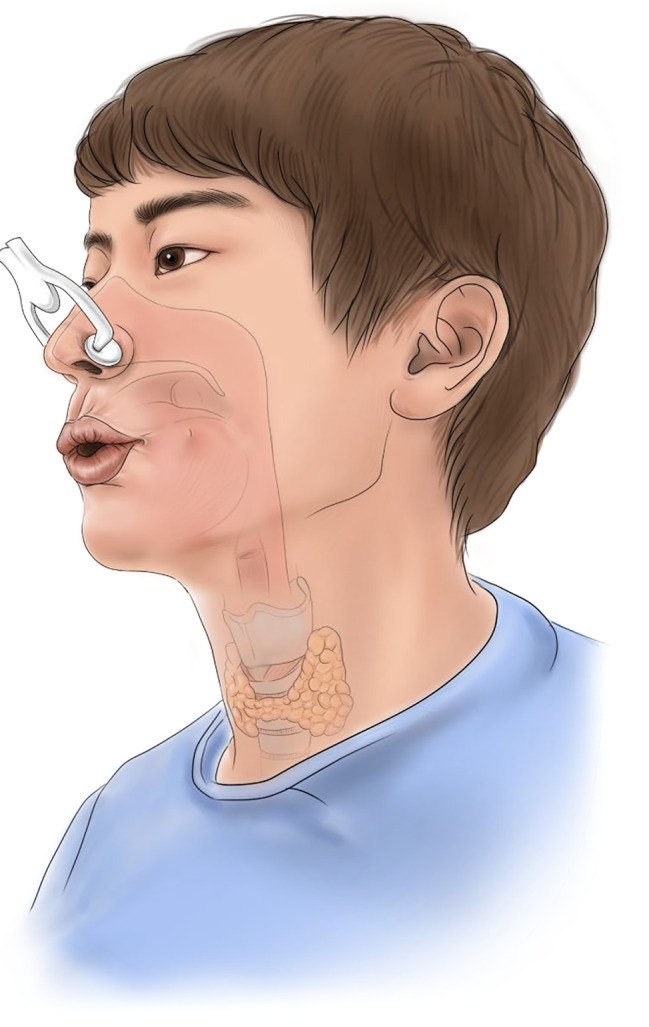
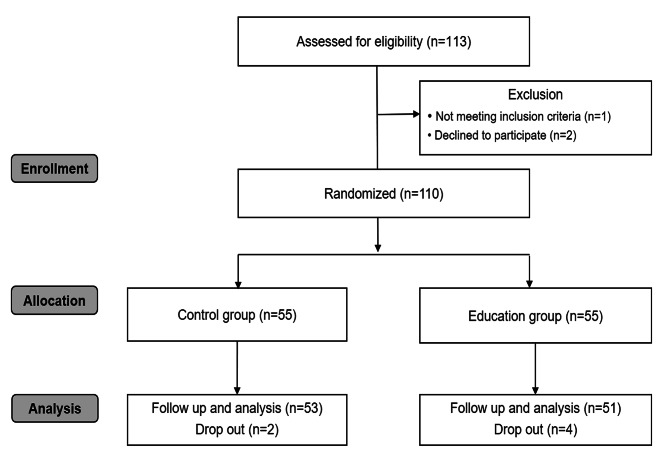
This randomized controlled trial of 110 patients undergoing nasal surgery randomly allocated patients into either a control (group C) or an education group (group E). One day before surgery, patients in group E were intensively trained to breathe through the mouth by using a nasal clip, with informative explanations about inevitable nasal obstruction and discomfort following surgery. Patients in group C were provided with routine preoperative information. Total intravenous anesthesia (TIVA) with propofol and remifentanil was used for anesthesia. No further opioid was used for analgesia intraoperatively. The primary outcome was index opioid (fentanyl) requirements at the post-anesthesia recovery unit (PACU). Secondary outcomes were emergence agitation, pain scores at the PACU, and postoperative recovery using the Quality of Recovery-15 (QoR15-K).
The rate of opioid use in the PACU was 51.0% in the group E and 39.6% in the group C (p = 0.242). Additional request for analgesics other than index opioid was not different between the groups. Emergence agitation, postoperative pain severity, and QoR15-K scores were comparable between the groups.
Preoperative education with simulated mouth breathing in patients undergoing nasal surgery did not reduce opioid requirements.
KCT0006264; 16/09/2021; Clinical Research Information Services ( https://cris.nih.go.kr ).
手术前进行模拟教育,告知患者术后鼻腔堵塞和经口呼吸的舒适度,可能有助于患者耐受鼻手术后的不适。本研究旨在探讨术前模拟教育对择期鼻手术患者术后即刻阿片类药物需求的影响。
本随机对照试验纳入了 110 例行鼻手术的患者,随机分为对照组(C 组)和教育组(E 组)。E 组患者在手术前一天接受强化训练,使用鼻夹经口呼吸,并接受关于术后不可避免的鼻腔阻塞和不适的信息性解释。C 组患者接受常规术前信息。使用丙泊酚和瑞芬太尼的全凭静脉麻醉(TIVA)用于麻醉。术中不再使用其他阿片类药物进行镇痛。主要结局是麻醉后恢复室(PACU)的芬太尼指数(阿片类药物)需求。次要结局是 PACU 时的苏醒躁动、疼痛评分以及使用 15 项质量恢复量表(QoR15-K)的术后恢复情况。
E 组 PACU 中阿片类药物使用率为 51.0%,C 组为 39.6%(p=0.242)。两组之间对芬太尼以外的其他阿片类药物的额外镇痛需求无差异。苏醒躁动、术后疼痛严重程度和 QoR15-K 评分在两组之间无差异。
在接受鼻手术的患者中进行术前模拟经口呼吸教育并未降低阿片类药物需求。
KCT0006264;2021 年 9 月 16 日;临床研究信息服务( https://cris.nih.go.kr )。