Institute for Diabetes and Obesity, Helmholtz Diabetes Center, Helmholtz Zentrum München, German Research Center for Environmental Health (GmbH), 85764 Neuherberg, Germany; German Center for Diabetes Research (DZD), 85764 Neuherberg, Germany; Department of Metabolism and Nutritional Programming, Van Andel Institute, Grand Rapids, MI 49506, USA; Department of Epigenetics, Van Andel Institute, Grand Rapids, MI 49506, USA.
Institute for Diabetes and Obesity, Helmholtz Diabetes Center, Helmholtz Zentrum München, German Research Center for Environmental Health (GmbH), 85764 Neuherberg, Germany; German Center for Diabetes Research (DZD), 85764 Neuherberg, Germany.
Cell Rep. 2023 Oct 31;42(10):113305. doi: 10.1016/j.celrep.2023.113305.
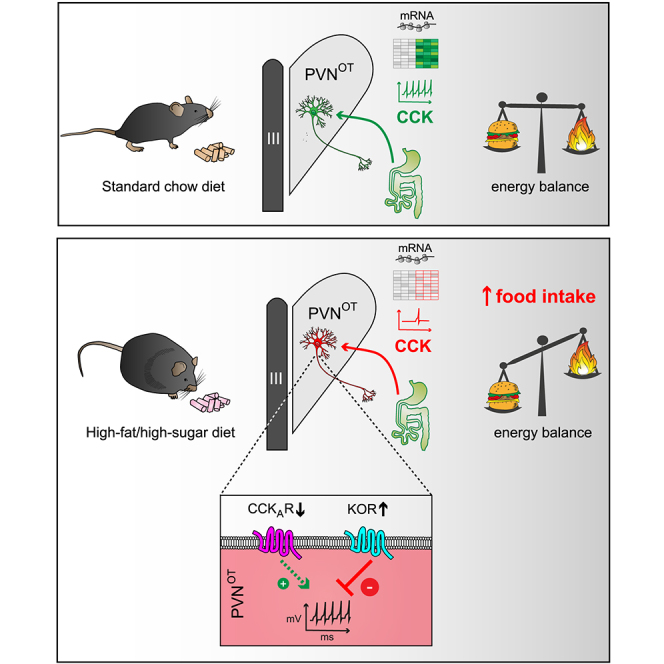
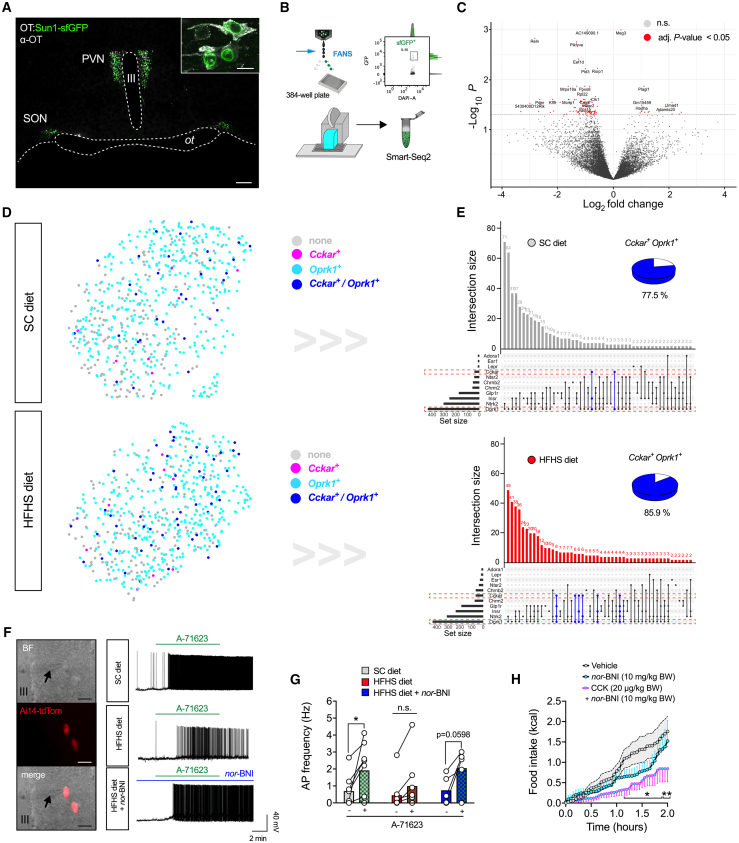
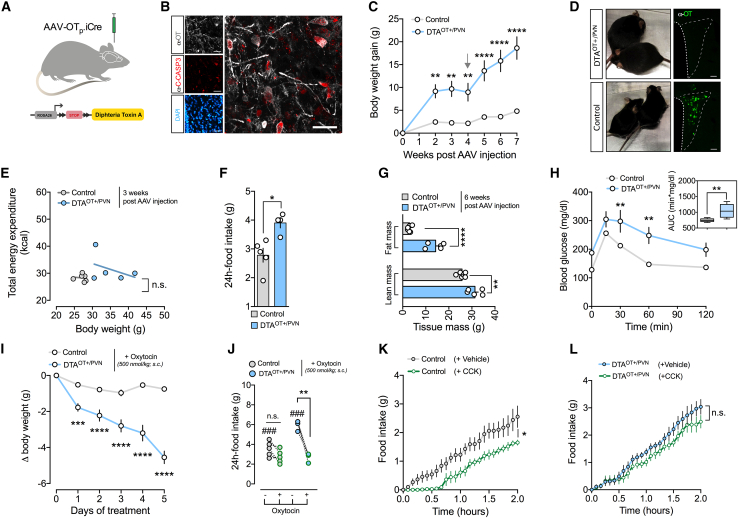
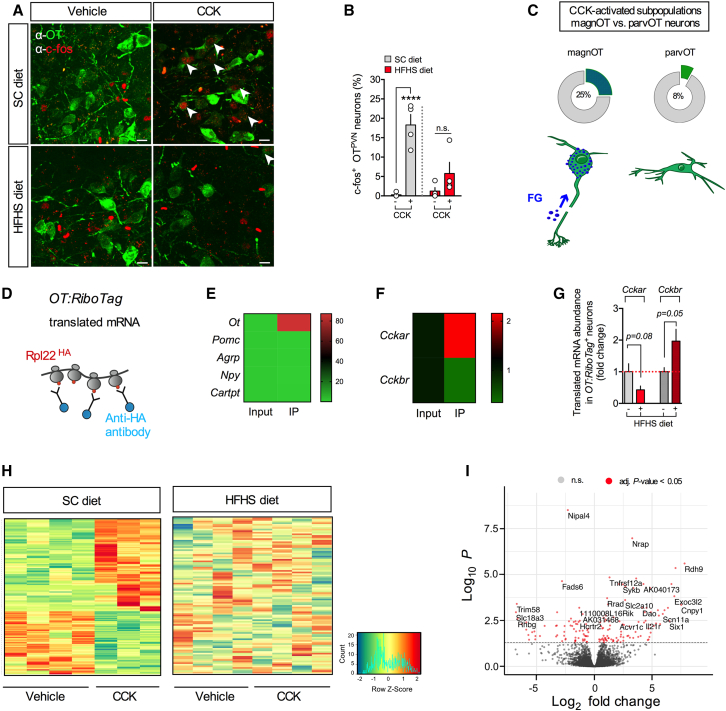
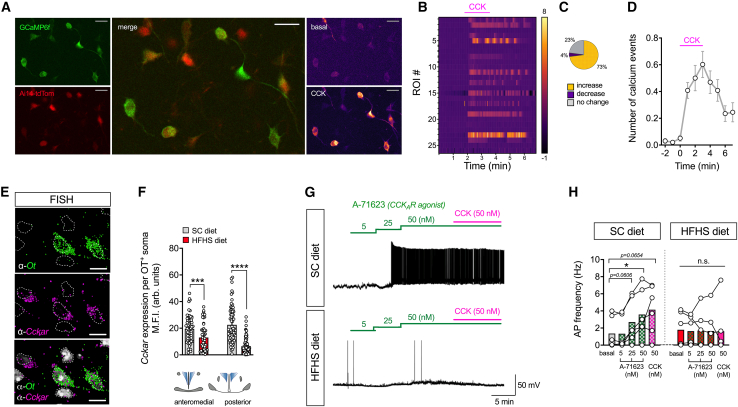
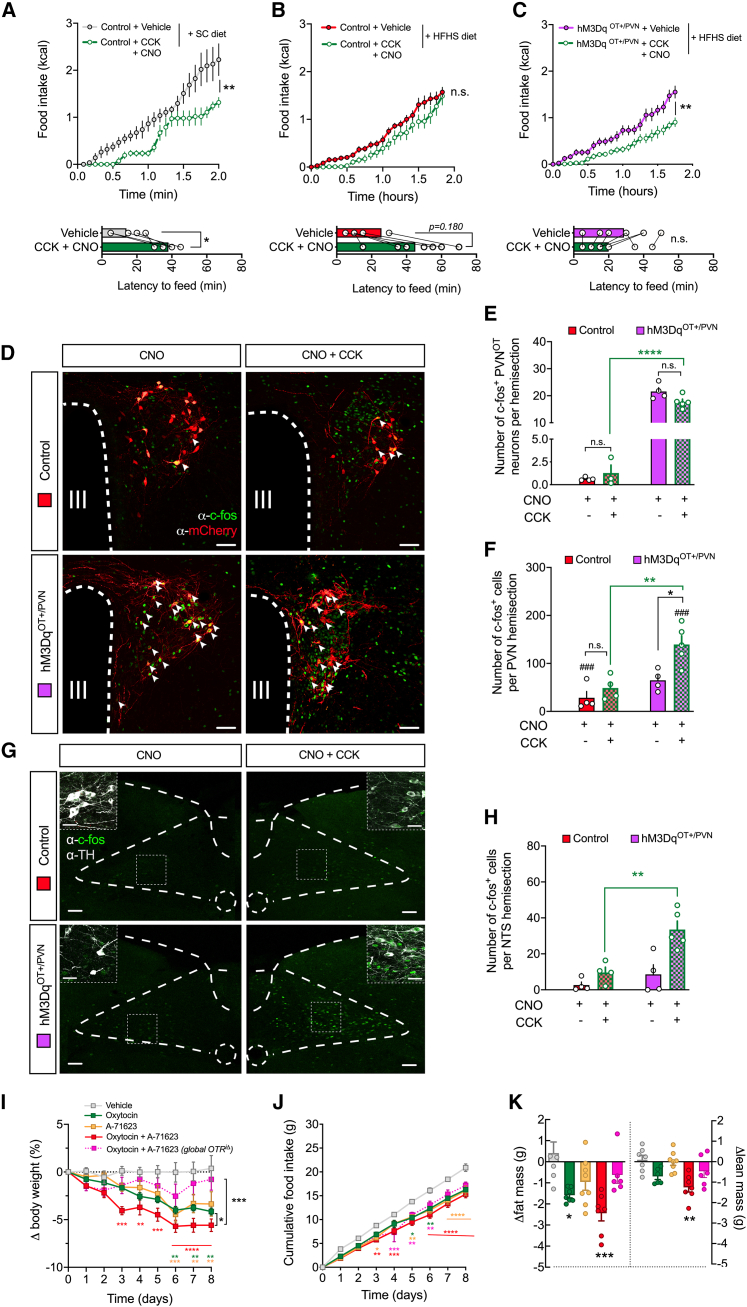
Oxytocin-expressing paraventricular hypothalamic neurons (PVN neurons) integrate afferent signals from the gut, including cholecystokinin (CCK), to adjust whole-body energy homeostasis. However, the molecular underpinnings by which PVN neurons orchestrate gut-to-brain feeding control remain unclear. Here, we show that mice undergoing selective ablation of PVN neurons fail to reduce food intake in response to CCK and develop hyperphagic obesity on a chow diet. Notably, exposing wild-type mice to a high-fat/high-sugar (HFHS) diet recapitulates this insensitivity toward CCK, which is linked to diet-induced transcriptional and electrophysiological aberrations specifically in PVN neurons. Restoring OT pathways in diet-induced obese (DIO) mice via chemogenetics or polypharmacology sufficiently re-establishes CCK's anorexigenic effects. Last, by single-cell profiling, we identify a specialized PVN neuronal subpopulation with increased κ-opioid signaling under an HFHS diet, which restrains their CCK-evoked activation. In sum, we document a (patho)mechanism by which PVN signaling uncouples a gut-brain satiation pathway under obesogenic conditions.
室旁核中表达催产素的神经元(PVN 神经元)整合来自肠道的传入信号,包括胆囊收缩素(CCK),以调节全身能量稳态。然而,PVN 神经元协调肠道到大脑进食控制的分子基础仍不清楚。在这里,我们表明,选择性消融 PVN 神经元的小鼠无法响应 CCK 减少食物摄入,并在标准饮食中发展出暴食性肥胖。值得注意的是,使野生型小鼠暴露于高脂肪/高糖(HFHS)饮食中重现了对 CCK 的这种不敏感性,这与特定于 PVN 神经元的饮食诱导的转录和电生理异常有关。通过化学遗传学或多药理学在饮食诱导肥胖(DIO)小鼠中恢复 OT 途径足以重新建立 CCK 的厌食作用。最后,通过单细胞分析,我们确定了一个专门的 PVN 神经元亚群,在 HFHS 饮食下,κ-阿片信号增加,抑制了它们对 CCK 的激活。总之,我们记录了一种(病理)机制,即室旁核信号在肥胖条件下使肠道到大脑饱食途径解耦。