Zheng Hua-Jie, Zhang Xian-Pu, Yu San-Jiu, Lin De-Qing, Cheng Yong-Bo, Yan Chao-Jun, He Ping, Li Jun, Cheng Wei
Department of Cardiac Surgery, Southwest Hospital, Third Military Medical University (Army Medical University), Chongqing, China.
J Thorac Dis. 2023 Sep 28;15(9):4596-4605. doi: 10.21037/jtd-23-550. Epub 2023 Aug 14.
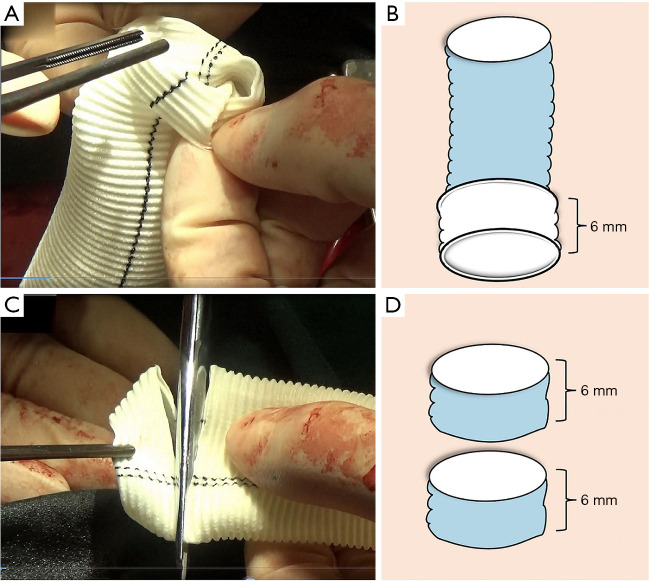
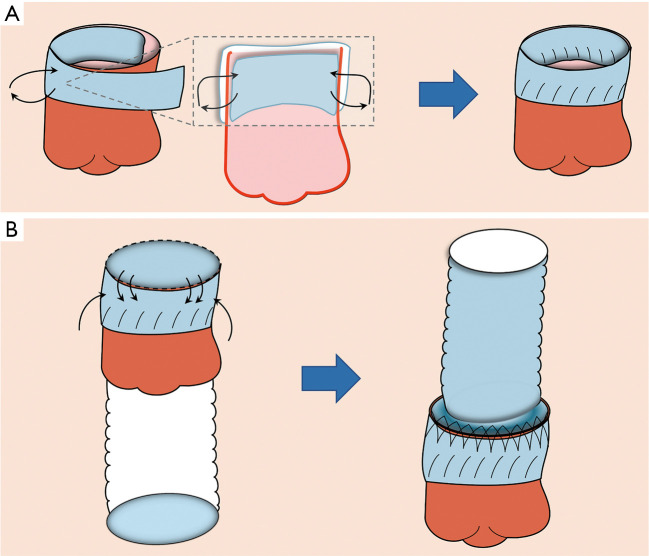
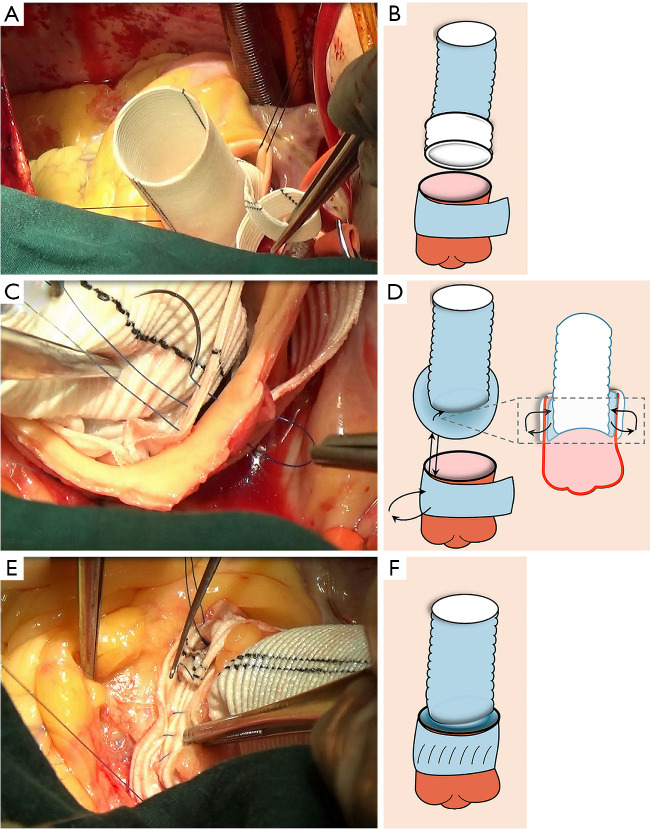
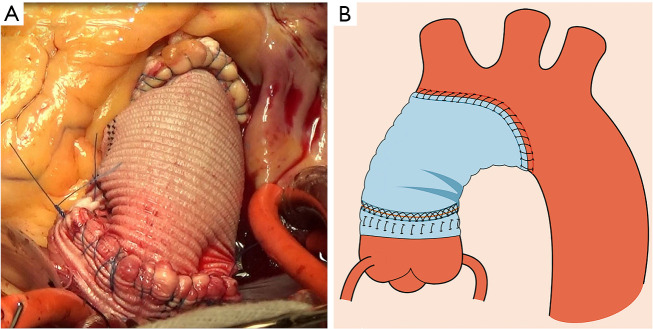
One of the crucial aspects of ascending aorta replacement is to achieve hemostasis of the proximal anastomosis. This study aimed to describe a modified prosthesis eversion technique for proximal anastomosis in ascending aorta replacement and compare its operative outcomes with the conventional prosthesis eversion technique.
We conducted a retrospective analysis of all consecutive patients who had ascending aortic aneurysm and underwent ascending aorta replacement with the modified or conventional prosthesis eversion technique between January 2019 and December 2022 in our center.
A total of 108 patients were included: 55 in the modified group and 53 in the conventional group. The durations of cardiopulmonary bypass, aortic cross-clamping and total operation in the conventional group were longer than those in the modified group. Furthermore, perioperative blood loss and the incidence of re-exploration for bleeding were significantly lower in the modified group. Accordingly, patients in the conventional group accepted more blood transfusion. The modified group had a shorter duration in intensive care unit (ICU) and hospital, and lower total hospitalization costs than those in the conventional group.
The modified prosthesis eversion technique is an effective alternative for proximal anastomosis in ascending aorta replacement, with less blood loss, shorter operation time, and lower rate of postoperative complications compared with the conventional technique.
升主动脉置换术的关键环节之一是实现近端吻合口的止血。本研究旨在描述一种用于升主动脉置换术中近端吻合的改良人工血管外翻技术,并将其手术结果与传统人工血管外翻技术进行比较。
我们对2019年1月至2022年12月期间在本中心连续接受升主动脉瘤手术并采用改良或传统人工血管外翻技术进行升主动脉置换的所有患者进行了回顾性分析。
共纳入108例患者,改良组55例,传统组53例。传统组的体外循环时间、主动脉阻断时间和总手术时间均长于改良组。此外,改良组围手术期失血量和再次手术止血的发生率显著更低。因此,传统组患者接受了更多的输血。改良组在重症监护病房(ICU)的住院时间和总住院时间更短,总住院费用也低于传统组。
改良人工血管外翻技术是升主动脉置换术中近端吻合的一种有效替代方法,与传统技术相比,具有更少的失血量、更短的手术时间和更低的术后并发症发生率。