Department of Pathology, Dalhousie University, Halifax, NS, Canada.
Department of Biochemistry, University of Toronto, Toronto, ON, Canada.
Front Immunol. 2023 Oct 5;14:1242659. doi: 10.3389/fimmu.2023.1242659. eCollection 2023.
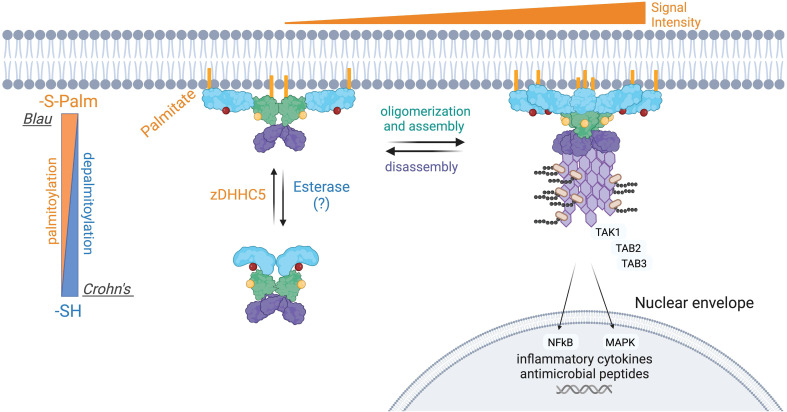
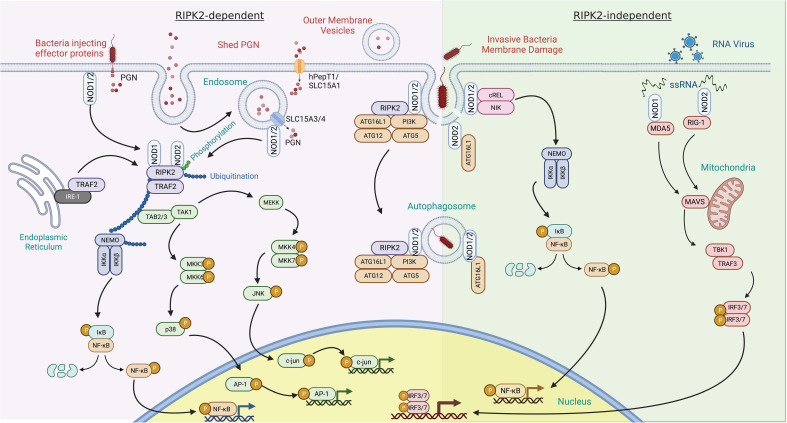
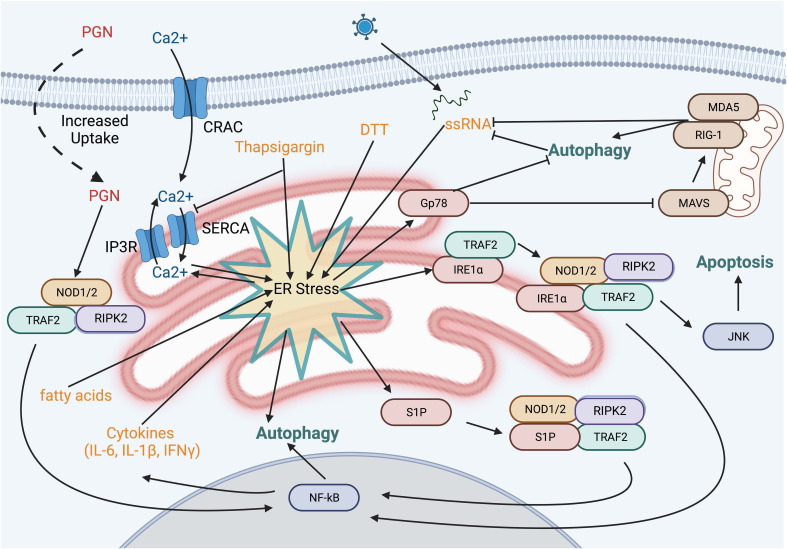
Nucleotide-binding oligomerization domain-containing proteins, NOD1 and NOD2, are cytosolic receptors that recognize dipeptides and tripeptides derived from the bacterial cell wall component peptidoglycan (PGN). During the past two decades, studies have revealed several roles for NODs beyond detecting PGN fragments, including activation of an innate immune anti-viral response, NOD-mediated autophagy, and ER stress induced inflammation. Recent studies have also clarified the dynamic regulation of NODs at cellular membranes to generate specific and balanced immune responses. This review will describe how NOD1 and NOD2 detect microbes and cellular stress and detail the molecular mechanisms that regulate activation and signaling while highlighting new evidence and the impact on inflammatory disease pathogenesis.
核苷酸结合寡聚化结构域蛋白(NOD)1 和 NOD2 是胞质受体,可识别来自细菌细胞壁成分肽聚糖(PGN)的二肽和三肽。在过去的二十年中,研究揭示了 NOD 除了检测 PGN 片段之外的几种作用,包括激活先天抗病毒反应、NOD 介导的自噬和内质网应激诱导的炎症。最近的研究还阐明了 NOD 在细胞膜上的动态调节,以产生特定和平衡的免疫反应。本综述将描述 NOD1 和 NOD2 如何检测微生物和细胞应激,并详细介绍调节激活和信号转导的分子机制,同时强调新的证据及其对炎症性疾病发病机制的影响。