Cambridge Institute of Therapeutic Immunology and Infectious Disease, University of Cambridge School of Clinical Medicine, Cambridge Biomedical Campus, Cambridge, CB2 0AW, UK.
Parasites and Microbes Programme, Wellcome Sanger Institute, Wellcome Genome Campus, Hinxton, Cambridge, UK.
Nat Commun. 2023 Oct 23;14(1):6392. doi: 10.1038/s41467-023-41152-6.
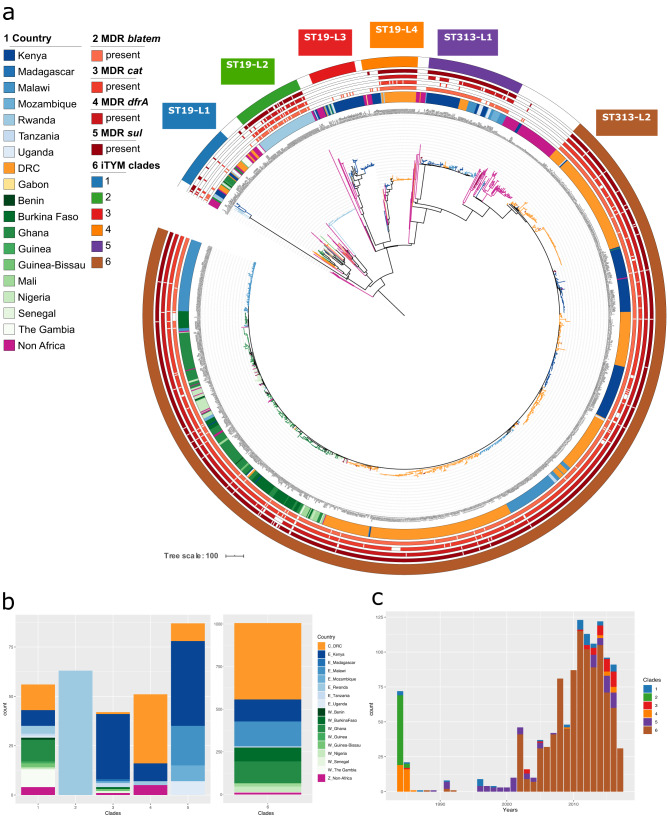
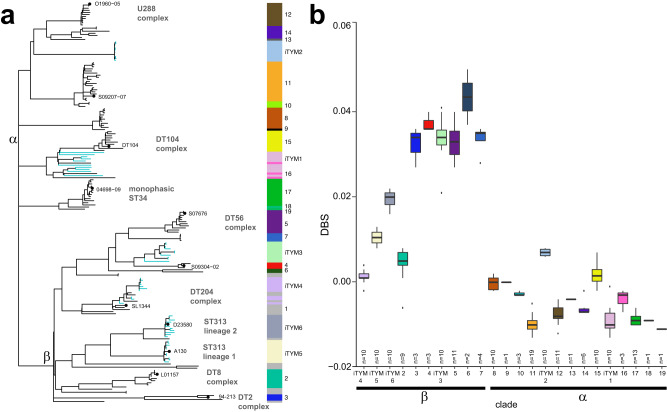
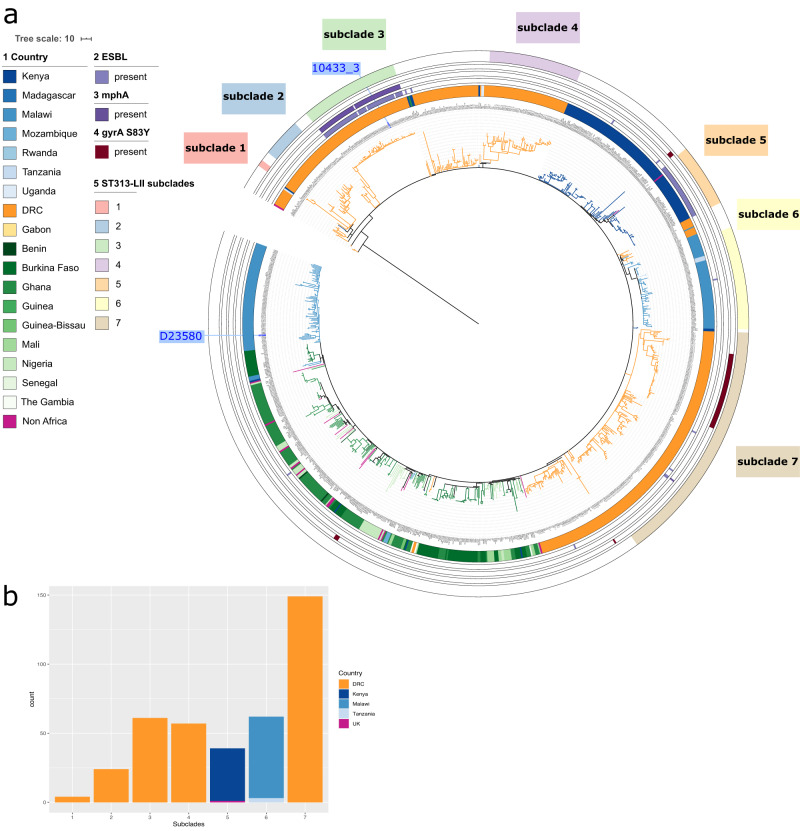
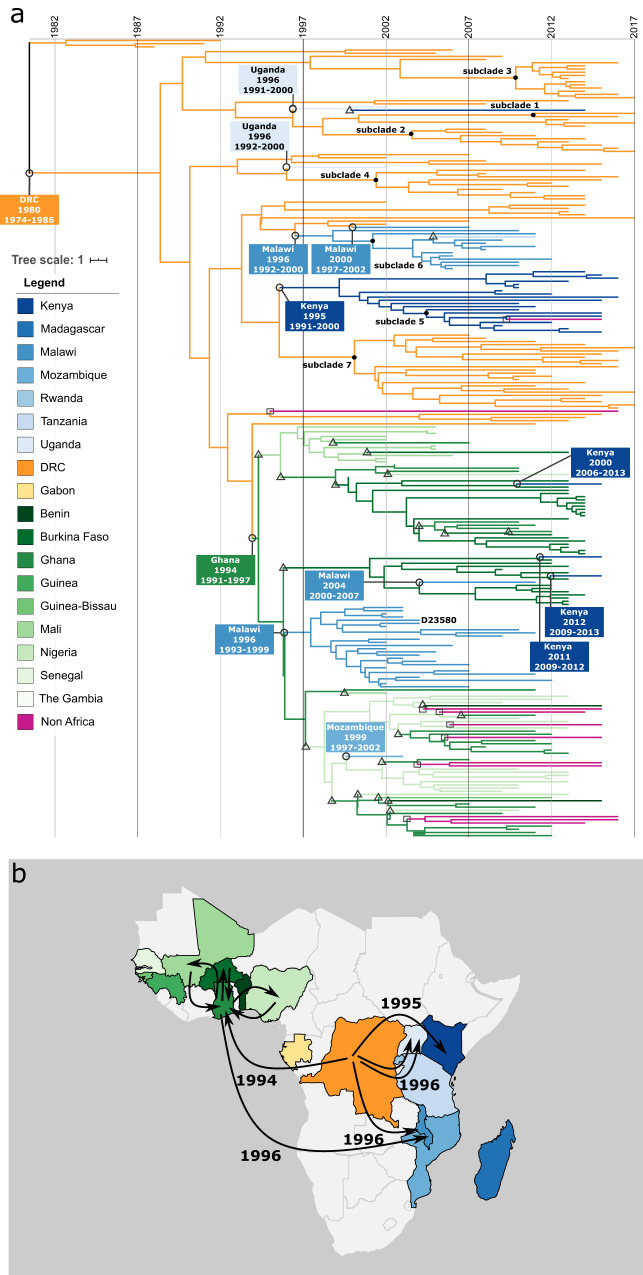
Invasive non-typhoidal Salmonella (iNTS) disease manifesting as bloodstream infection with high mortality is responsible for a huge public health burden in sub-Saharan Africa. Salmonella enterica serovar Typhimurium (S. Typhimurium) is the main cause of iNTS disease in Africa. By analysing whole genome sequence data from 1303 S. Typhimurium isolates originating from 19 African countries and isolated between 1979 and 2017, here we show a thorough scaled appraisal of the population structure of iNTS disease caused by S. Typhimurium across many of Africa's most impacted countries. At least six invasive S. Typhimurium clades have already emerged, with ST313 lineage 2 or ST313-L2 driving the current pandemic. ST313-L2 likely emerged in the Democratic Republic of Congo around 1980 and further spread in the mid 1990s. We observed plasmid-borne as well as chromosomally encoded fluoroquinolone resistance underlying emergences of extensive-drug and pan-drug resistance. Our work provides an overview of the evolution of invasive S. Typhimurium disease, and can be exploited to target control measures.
在撒哈拉以南非洲地区,引起血流感染并伴有高死亡率的侵袭性非伤寒沙门氏菌(iNTS)疾病是一个巨大的公共卫生负担。肠道沙门氏菌血清型鼠伤寒(S. Typhimurium)是非洲 iNTS 疾病的主要病因。通过分析来自 19 个非洲国家的 1303 株 S. Typhimurium 分离株的全基因组序列数据,这些分离株的采集时间在 1979 年至 2017 年之间,我们对非洲受影响最严重的许多国家中由 S. Typhimurium 引起的 iNTS 疾病的种群结构进行了全面评估。至少已经出现了六个侵袭性 S. Typhimurium 进化枝,其中 ST313 谱系 2 或 ST313-L2 驱动着当前的大流行。ST313-L2 可能于 1980 年前后在刚果民主共和国出现,并于 20 世纪 90 年代中期进一步传播。我们观察到了质粒和染色体编码的氟喹诺酮耐药性,这是广泛耐药和全耐药出现的基础。我们的工作提供了对侵袭性 S. Typhimurium 疾病进化的概述,并可用于靶向控制措施。