Fujian Provincial Hospital, Shengli Clinical Medical College of Fujian Medical University, Fuzhou, 350001, China.
Xiyuan Clinical Medical College of Beijing University of Chinese Medicine, Beijing, 100029, China.
Pediatr Rheumatol Online J. 2023 Oct 23;21(1):130. doi: 10.1186/s12969-023-00909-5.
Systemic lupus erythematosus is an autoimmune disease that involves multiple organ systems. One of its major complications, lupus nephritis (LN), is associated with a high mortality rate, and children-onset LN have a more severe course and worse prognosis than adults. Oxidative stress and inflammatory responses are involved in LN development and pathogenesis. Thus, this study aimed to explore the role of signaling regulation of the Nrf2/HMGB1/TLR/NF-κB pathway in LN pathogenesis and unravel the expression of TLR4CXCR4 plasma cells subset (PCs) in LN.
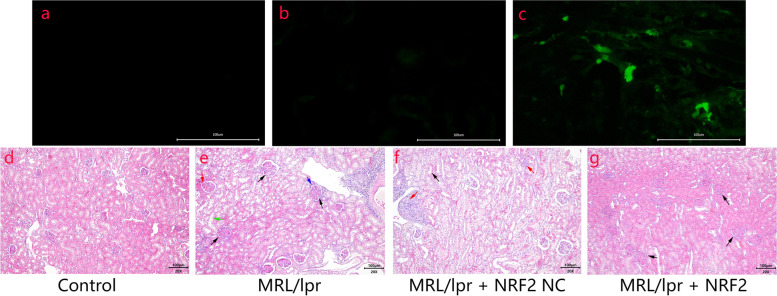
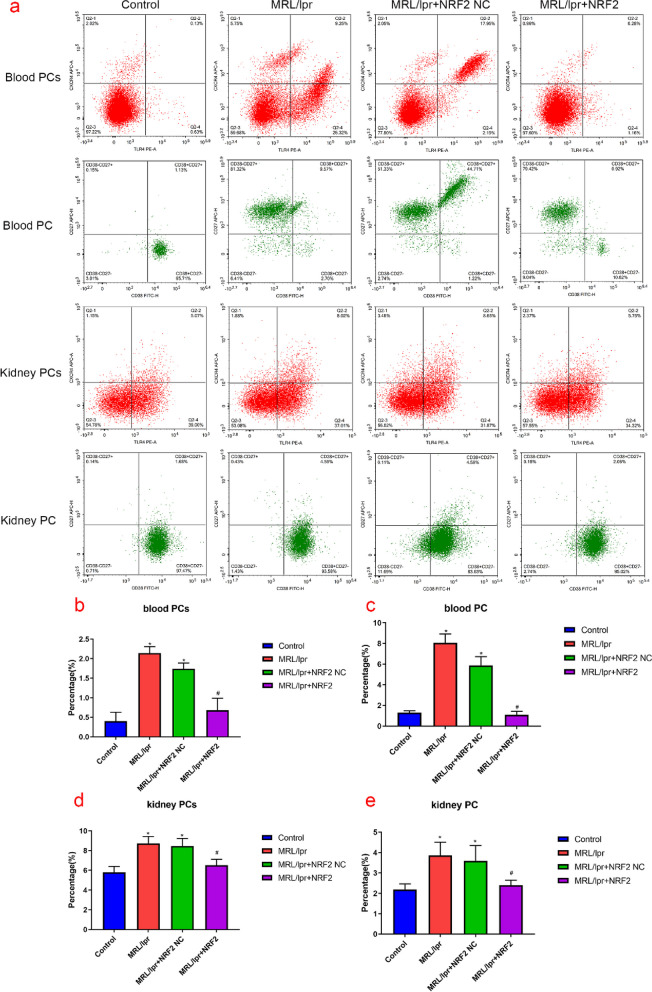
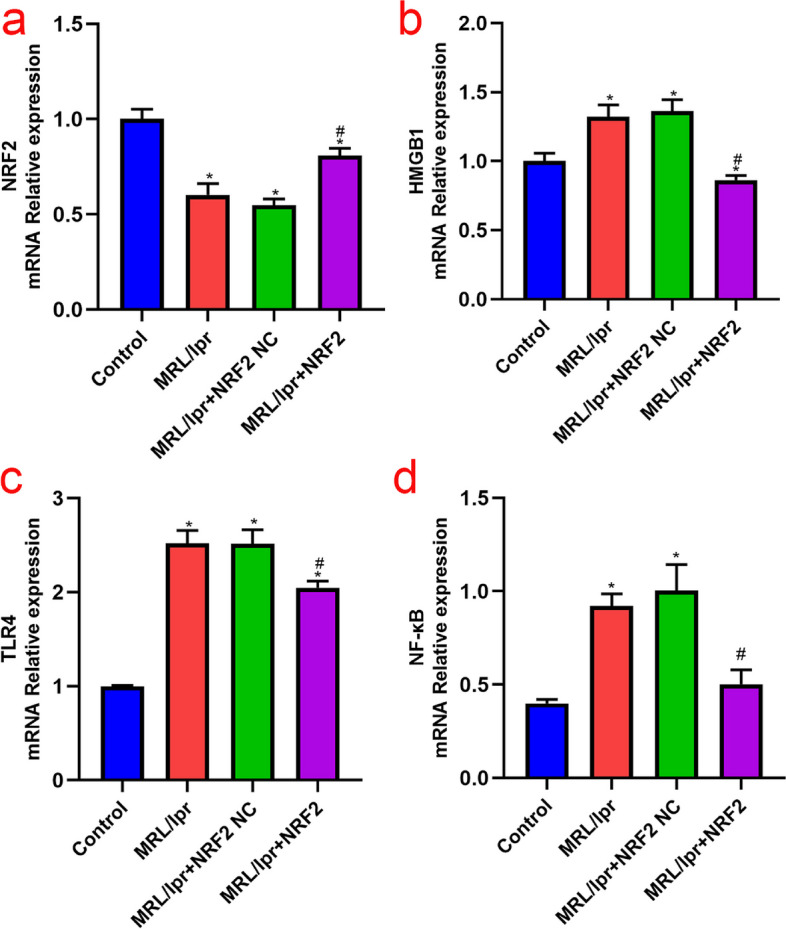
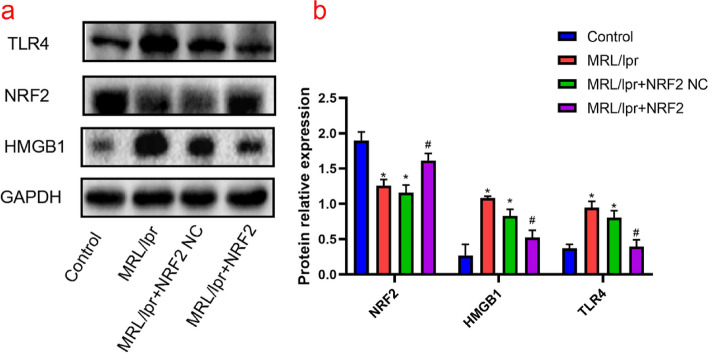
C57BL/6 and MRL/lpr mice were divided into four groups: control, model, vector control, and Nrf2 overexpression groups. The vector control and Nrf2 overexpression groups were injected with adenoviral vectors into the kidney in situ. Pathological changes in kidney tissues were observed by hematoxylin-eosin staining. The expression of Nrf2, HMGB1, TLR4, NF-κB, and downstream inflammatory factors in kidney samples was analyzed by quantitative polymerase chain reaction, western blotting, and enzyme-linked immunosorbent assay. The ratios of TLR4CXCR4 PC subsets in the blood and kidneys of mice were determined by flow cytometry.
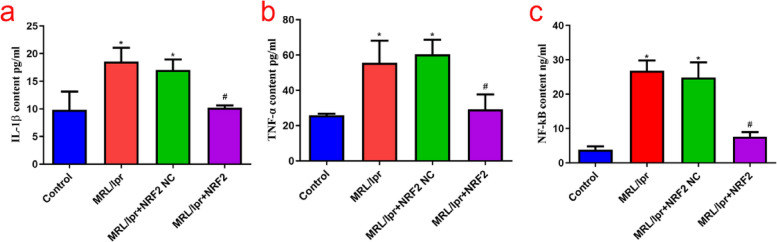
In MRL/lpr mice, Nrf2 was downregulated while HMGB1/TLR4/NF-κB pathway proteins were upregulated. Nrf2 overexpression decreased the expression of HMGB1, TLR4, NF-κB, and its downstream inflammatory cytokines (IL-1β and TNFα). These cytokines were negatively correlated with an increase in Nrf2 content. PC and TLR4 CXCR4 PCs in the blood and kidney samples were significantly increased in MRL/lpr mice; however, they were decreased upon Nrf2 overexpression.
This study showed severe kidney injury in an LN mouse model and an increased ratio of TLR4 CXCR4 PCs. Furthermore, we observed that Nrf2 regulates LN immune response through the Nrf2/HMGB1/TLR4/NF-κB pathway, which can be considered an important target for LN treatment. The clinical value of the findings of our study requires further investigation.
系统性红斑狼疮是一种涉及多个器官系统的自身免疫性疾病。其主要并发症之一狼疮肾炎(LN)与高死亡率相关,且儿童发病的 LN 比成人具有更严重的病程和更差的预后。氧化应激和炎症反应参与 LN 的发生和发病机制。因此,本研究旨在探讨 Nrf2/HMGB1/TLR/NF-κB 通路信号调节在 LN 发病机制中的作用,并阐明 LN 中 TLR4CXCR4 浆细胞亚群(PCs)的表达。
将 C57BL/6 和 MRL/lpr 小鼠分为四组:对照组、模型组、载体对照组和 Nrf2 过表达组。载体对照组和 Nrf2 过表达组通过原位注射腺病毒载体。通过苏木精-伊红染色观察肾组织的病理变化。通过定量聚合酶链反应、western blot 和酶联免疫吸附试验分析肾组织中 Nrf2、HMGB1、TLR4、NF-κB 及下游炎症因子的表达。通过流式细胞术测定小鼠血液和肾脏中 TLR4CXCR4 PC 亚群的比例。
在 MRL/lpr 小鼠中,Nrf2 下调而 HMGB1/TLR4/NF-κB 通路蛋白上调。Nrf2 过表达降低了 HMGB1、TLR4、NF-κB 及其下游炎症细胞因子(IL-1β 和 TNFα)的表达。这些细胞因子与 Nrf2 含量的增加呈负相关。MRL/lpr 小鼠血液和肾脏样本中的 PC 和 TLR4CXCR4 PC 明显增加;然而,Nrf2 过表达后它们减少。
本研究显示 LN 小鼠模型中存在严重的肾脏损伤和 TLR4CXCR4 PC 比例增加。此外,我们观察到 Nrf2 通过 Nrf2/HMGB1/TLR4/NF-κB 通路调节 LN 免疫反应,这可被视为 LN 治疗的一个重要靶点。本研究结果的临床价值需要进一步研究。