Sherman David J, Liu Lei, Mamrosh Jennifer L, Xie Jiansong, Ferbas John, Lomenick Brett, Ladinsky Mark S, Verma Rati, Rulifson Ingrid C, Deshaies Raymond J
Amgen Research, Thousand Oaks, CA 91320, USA.
Amgen Research, South San Francisco, CA 94080, USA.
bioRxiv. 2023 Oct 14:2023.10.13.562302. doi: 10.1101/2023.10.13.562302.
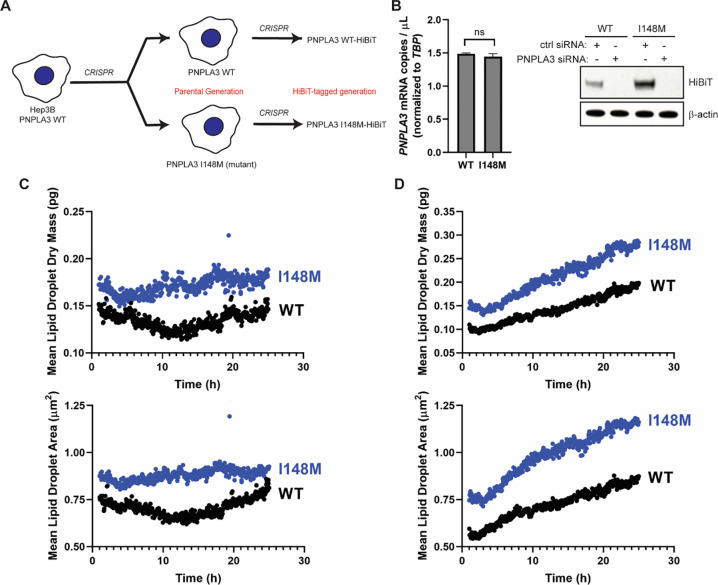
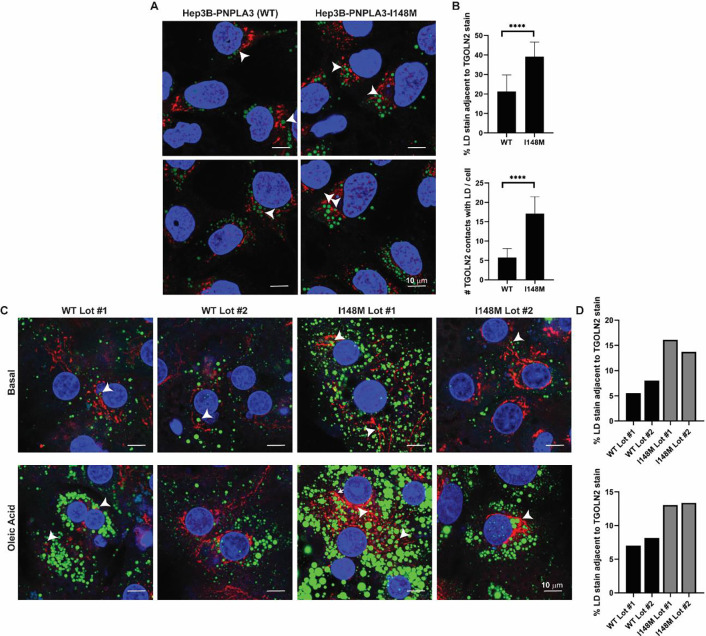
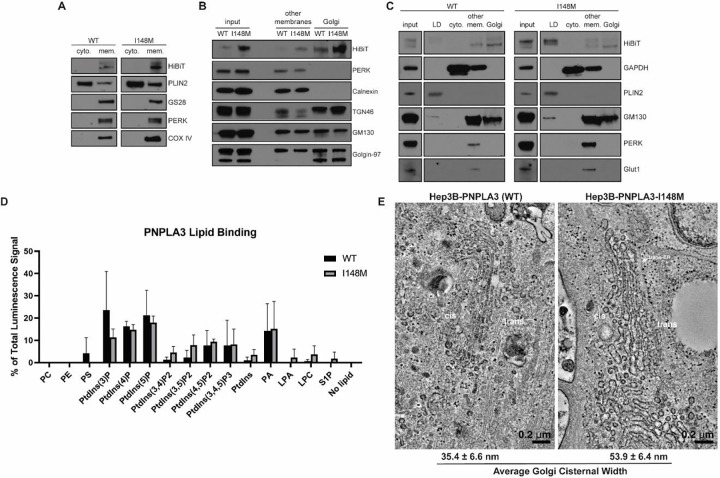
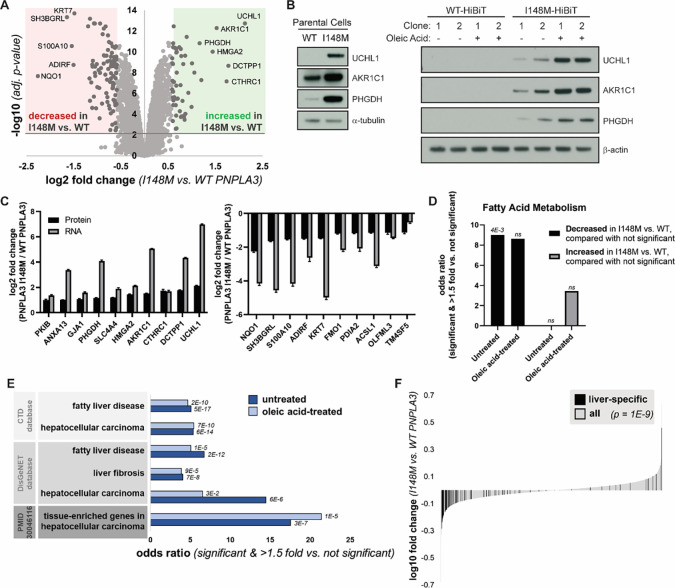
Non-alcoholic fatty liver disease (NAFLD), recently renamed metabolic dysfunction-associated steatotic liver disease (MASLD), is a progressive metabolic disorder that begins with aberrant triglyceride accumulation in the liver and can lead to cirrhosis and cancer. A common variant in the gene , encoding the protein PNPLA3-I148M, is the strongest known genetic risk factor for MASLD to date. Despite its discovery twenty years ago, the function of PNPLA3, and now the role of PNPLA3-I148M, remain unclear. In this study, we sought to dissect the biogenesis of PNPLA3 and PNPLA3-I148M and characterize changes induced by endogenous expression of the disease-causing variant. Contrary to bioinformatic predictions and prior studies with overexpressed proteins, we demonstrate here that PNPLA3 and PNPLA3-I148M are not endoplasmic reticulum-resident transmembrane proteins. To identify their intracellular associations, we generated a paired set of isogenic human hepatoma cells expressing PNPLA3 and PNPLA3-I148M at endogenous levels. Both proteins were enriched in lipid droplet, Golgi, and endosomal fractions. Purified PNPLA3 and PNPLA3-I148M proteins associated with phosphoinositides commonly found in these compartments. Despite a similar fractionation pattern as the wild-type variant, PNPLA3-I148M induced morphological changes in the Golgi apparatus, including increased lipid droplet-Golgi contact sites, which were also observed in I148M-expressing primary human patient hepatocytes. In addition to lipid droplet accumulation, PNPLA3-I148M expression caused significant proteomic and transcriptomic changes that resembled all stages of liver disease. Cumulatively, we validate an endogenous human cellular system for investigating PNPLA3-I148M biology and identify the Golgi apparatus as a central hub of PNPLA3-I148M-driven cellular change.
非酒精性脂肪性肝病(NAFLD),最近更名为代谢功能障碍相关脂肪性肝病(MASLD),是一种进行性代谢紊乱疾病,始于肝脏中异常的甘油三酯积累,并可导致肝硬化和癌症。编码蛋白质PNPLA3 - I148M的基因中的一个常见变体是迄今为止已知的MASLD最强遗传风险因素。尽管该变体在二十年前就已被发现,但PNPLA3的功能以及现在PNPLA3 - I148M的作用仍不清楚。在本研究中,我们试图剖析PNPLA3和PNPLA3 - I148M的生物发生过程,并表征由致病变体的内源性表达所诱导的变化。与生物信息学预测和先前对过表达蛋白质的研究相反,我们在此证明PNPLA3和PNPLA3 - I148M不是内质网驻留跨膜蛋白。为了确定它们在细胞内的关联,我们构建了一对同基因人肝癌细胞系,以内源性水平表达PNPLA3和PNPLA3 - I148M。这两种蛋白质都在脂滴、高尔基体和内体组分中富集。纯化的PNPLA3和PNPLA3 - I148M蛋白与这些区室中常见的磷酸肌醇相关联。尽管PNPLA3 - I148M与野生型变体具有相似的分级分离模式,但它诱导了高尔基体的形态变化,包括脂滴 - 高尔基体接触位点增加,这在表达I148M的原发性人类患者肝细胞中也有观察到。除了脂滴积累外,PNPLA3 - I148M的表达还引起了显著的蛋白质组学和转录组学变化,类似于肝病的所有阶段。总的来说,我们验证了一个用于研究PNPLA3 - I148M生物学的内源性人类细胞系统,并确定高尔基体是PNPLA3 - I148M驱动的细胞变化的中心枢纽。