Yantai Key Laboratory for Repair and Reconstruction of Bone and Joint, Yantaishan Hospital Affiliated to Binzhou Medical University, 10087 Keji Avenue, Laishan District, Yantai, 264003, China.
J Orthop Surg Res. 2023 Oct 24;18(1):797. doi: 10.1186/s13018-023-04269-4.
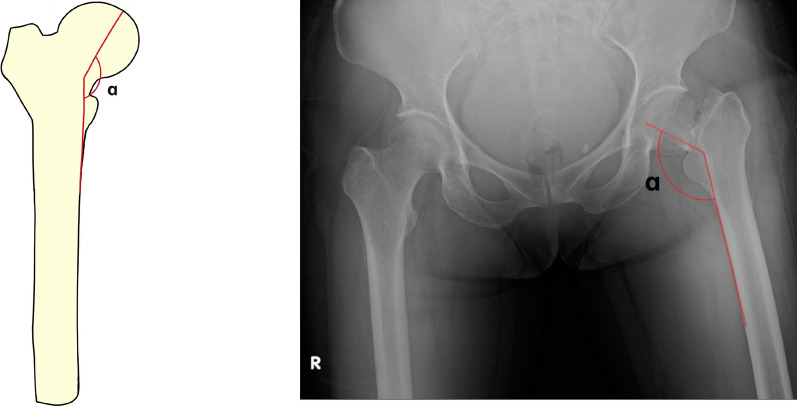
Femoral neck fractures represent a significant public health concern, particularly in the elderly population. A thorough understanding and assessment of these fractures are deemed essential for optimal treatment and management. Displacement characteristics of Garden III femoral neck fractures were explored in this study, and the reliability, validity, and clinical utility of the anteroposterior Garden Index in evaluating displacement severity were investigated.
Patients diagnosed with Garden III femoral neck fractures were included in this study. The anteroposterior Garden Index was computed from X-ray images by three experienced orthopedic doctors. Additionally, the contact area of the fracture endpoint and displacement of the femoral neck were evaluated using 128-slice 3D CT scans. Inter-observer and retest reliability of the Garden Index measurements were assessed, along with its correlation with CT measurements.
In this study, a total of 110 patients with Garden III femoral neck fractures were analyzed, showcasing an almost equal gender distribution and an age range spanning from 20 to 88 years. An average Garden Index of 135° (± 16°) was observed. The intra-observer repeatability of the Garden Index was found to exceed 90%. A significant positive correlation was identified between the Garden Index and the contact surface area of the fracture endpoint (r = 0.82, P < 0.001), while a significant negative correlation was noted with the upward displacement of the femoral neck (r = - 0.79, P < 0.001).
The anteroposterior Garden Index has been demonstrated to have promising potential as a reliable and valid tool for assessing the displacement severity of Garden III femoral neck fractures. Nonetheless, further research is needed to elucidate its relationship with other fracture characteristics and to enhance its criterion and construct validity.
股骨颈骨折是一个重大的公共卫生问题,尤其在老年人群中更为常见。深入了解和评估这些骨折对于实现最佳治疗和管理至关重要。本研究旨在探讨 Garden III 型股骨颈骨折的移位特征,并研究前后位 Garden 指数评估移位严重程度的可靠性、有效性和临床实用性。
本研究纳入了诊断为 Garden III 型股骨颈骨折的患者。由三位有经验的骨科医生通过 X 射线图像计算前后位 Garden 指数。此外,还使用 128 层 3D CT 扫描评估骨折端接触面积和股骨颈移位。评估了 Garden 指数测量的观察者间和重测可靠性,并分析了其与 CT 测量的相关性。
本研究共分析了 110 例 Garden III 型股骨颈骨折患者,男女比例基本相当,年龄范围为 20 岁至 88 岁。平均 Garden 指数为 135°(±16°)。Garden 指数的观察者内重复性超过 90%。Garden 指数与骨折端接触面积呈显著正相关(r=0.82,P<0.001),与股骨颈向上移位呈显著负相关(r=-0.79,P<0.001)。
前后位 Garden 指数已被证明是一种可靠且有效的评估 Garden III 型股骨颈骨折移位严重程度的工具。然而,需要进一步研究以阐明其与其他骨折特征的关系,并提高其准则和结构有效性。