Centre of Experimental Medicine, Institute of Normal and Pathological Physiology, Slovak Academy of Sciences, Bratislava, Slovakia.
Institute of Experimental Endocrinology, Biomedical Research Center, Slovak Academy of Sciences, Bratislava, Slovakia.
Biol Res. 2023 Oct 25;56(1):55. doi: 10.1186/s40659-023-00466-x.
Angiotensin converting enzyme 2 (ACE2) plays a crucial role in the infection cycle of SARS-CoV-2 responsible for formation of COVID-19 pandemic. In the cardiovascular system, the virus enters the cells by binding to the transmembrane form of ACE2 causing detrimental effects especially in individuals with developed hypertension or heart disease. Zofenopril, a HS-releasing angiotensin-converting enzyme inhibitor (ACEI), has been shown to be effective in the treatment of patients with essential hypertension; however, in conditions of ACE2 inhibition its potential beneficial effect has not been investigated yet. Therefore, the aim of the study was to determine the effect of zofenopril on the cardiovascular system of spontaneously hypertensive rats, an animal model of human essential hypertension and heart failure, under conditions of ACE2 inhibition induced by the administration of the specific inhibitor MLN-4760 (MLN).
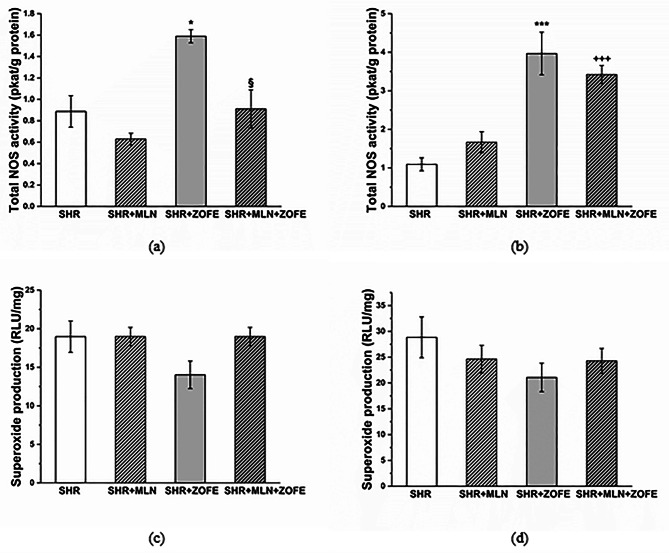
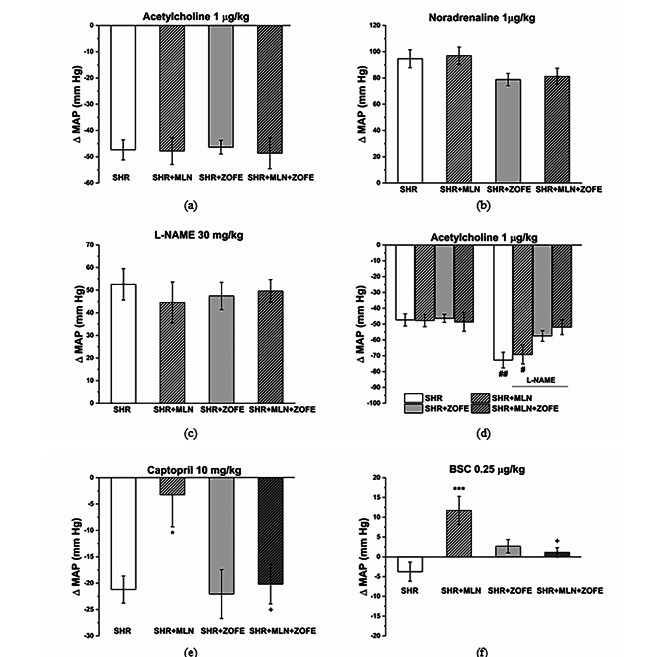
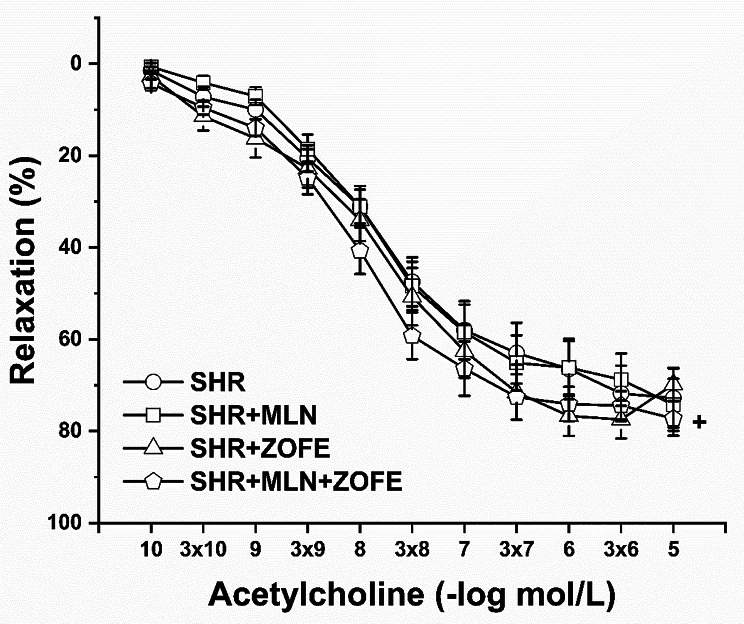
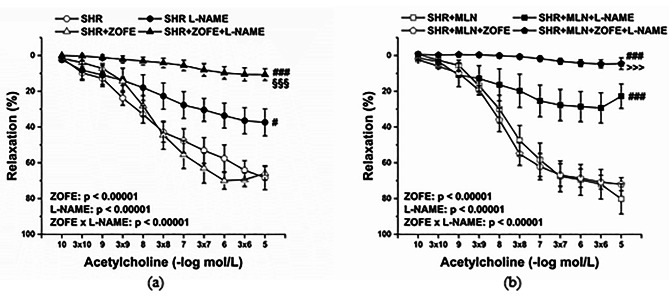
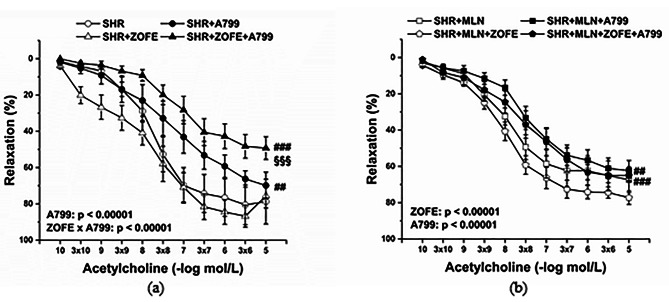
Zofenopril reduced MLN-increased visceral fat to body weight ratio although no changes in systolic blood pressure were recorded. Zofenopril administration resulted in a favorable increase in left ventricle ejection fraction and improvement of diastolic function regardless of ACE2 inhibition, which was associated with increased HS levels in plasma and heart tissue. Similarly, the acute hypotensive responses induced by acetylcholine, L-NAME (NOsynthase inhibitor) and captopril (ACEI) were comparable after zofenopril administration independently from ACE2 inhibition. Although simultaneous treatment with zofenopril and MLN led to increased thoracic aorta vasorelaxation, zofenopril increased the NO component equally regardless of MLN treatment, which was associated with increased NO-synthase activity in aorta and left ventricle. Moreover, unlike in control rats, the endogenous HS participated in maintaining of aortic endothelial function in MLN-treated rats and the treatment with zofenopril had no impact on this effect.
Zofenopril treatment reduced MLN-induced adiposity and improved cardiac function regardless of ACE2 inhibition. Although the concomitant MLN and zofenopril treatment increased thoracic aorta vasorelaxation capacity, zofenopril increased the participation of HS and NO in the maintenance of endothelial function independently from ACE2 inhibition. Our results confirmed that the beneficial effects of zofenopril were not affected by ACE2 inhibition, moreover, we assume that ACE2 inhibition itself can lead to the activation of cardiovascular compensatory mechanisms associated with Mas receptor, nitrous and sulfide signaling.
血管紧张素转换酶 2(ACE2)在导致 COVID-19 大流行的 SARS-CoV-2 感染循环中发挥着关键作用。在心血管系统中,病毒通过与跨膜形式的 ACE2 结合进入细胞,导致有害影响,特别是在已经患有高血压或心脏病的个体中。佐芬普利是一种 HS 释放的血管紧张素转换酶抑制剂(ACEI),已被证明可有效治疗原发性高血压患者;然而,在 ACE2 抑制的情况下,其潜在的有益作用尚未得到研究。因此,本研究旨在确定佐芬普利在 ACE2 抑制(通过给予特异性抑制剂 MLN-4760(MLN))诱导的情况下,对自发性高血压大鼠(一种人类原发性高血压和心力衰竭的动物模型)心血管系统的影响。
佐芬普利降低了 MLN 引起的内脏脂肪与体重比的增加,尽管未记录到收缩压的变化。佐芬普利的给药导致左心室射血分数的有利增加和舒张功能的改善,无论 ACE2 是否被抑制,这与血浆和心脏组织中 HS 水平的增加有关。同样,乙酰胆碱、L-NAME(NOSynthase 抑制剂)和卡托普利(ACEI)诱导的急性降压反应在佐芬普利给药后也可比较,而与 ACE2 抑制无关。尽管佐芬普利与 MLN 同时治疗导致胸主动脉血管舒张增加,但佐芬普利同等程度地增加了 NO 成分,而与 MLN 治疗无关,这与主动脉和左心室中 NO 合酶活性的增加有关。此外,与对照组大鼠不同,内源性 HS 参与维持 MLN 处理大鼠的主动脉内皮功能,而佐芬普利的治疗对这种作用没有影响。
佐芬普利治疗可降低 MLN 诱导的肥胖并改善心脏功能,无论 ACE2 是否被抑制。虽然同时给予 MLN 和佐芬普利治疗可增加胸主动脉血管舒张能力,但佐芬普利增加了 HS 和 NO 在维持内皮功能中的参与,而与 ACE2 抑制无关。我们的研究结果证实,佐芬普利的有益作用不受 ACE2 抑制的影响,此外,我们假设 ACE2 抑制本身可导致与 Mas 受体、氮氧化物和硫代化合物信号相关的心血管代偿机制的激活。