Nuffield Department of Orthopaedics, Rheumatology and Musculoskeletal Sciences, Botnar Research Centre, University of Oxford, Oxford, OX3 7LD, UK.
NIHR Oxford Biomedical Research Centre, Oxford, UK.
BMC Med. 2023 Oct 26;21(1):406. doi: 10.1186/s12916-023-03112-1.
The aim of this study was to forecast future patient demand for shoulder replacement surgery in England and investigate any geographic and socioeconomic inequalities in service provision and patient outcomes.
For this cohort study, all elective shoulder replacements carried out by NHS hospitals and NHS-funded care in England from 1999 to 2020 were identified using Hospital Episode Statistics data. Eligible patients were aged 18 years and older. Shoulder replacements for malignancy or acute trauma were excluded. Population estimates and projections were obtained from the Office for National Statistics. Standardised incidence rates and the risks of serious adverse events (SAEs) and revision surgery were calculated and stratified by geographical region, socioeconomic deprivation, sex, and age band. Hospital costs for each admission were calculated using Healthcare Resource Group codes and NHS Reference Costs based on the National Reimbursement System. Projected rates and hospital costs were predicted until the year 2050 for two scenarios of future growth.
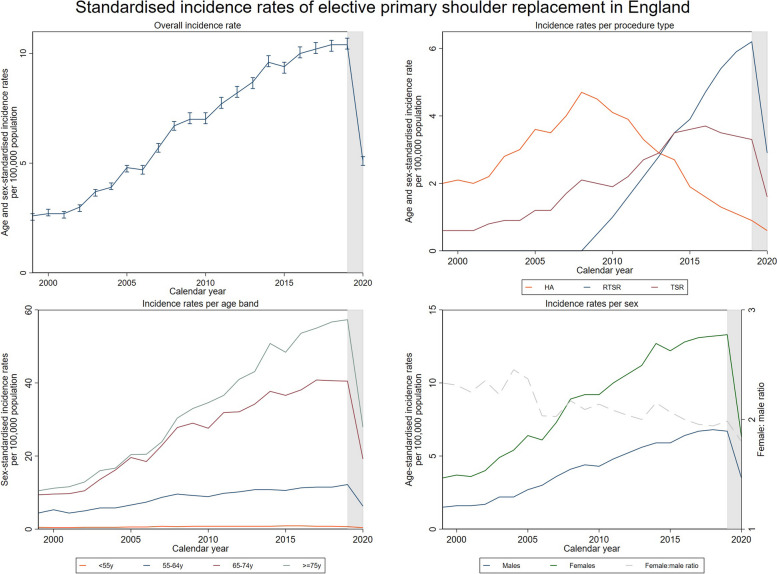
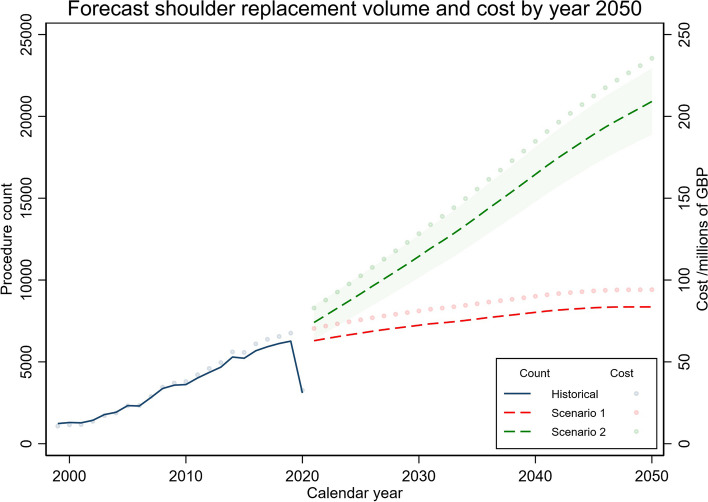
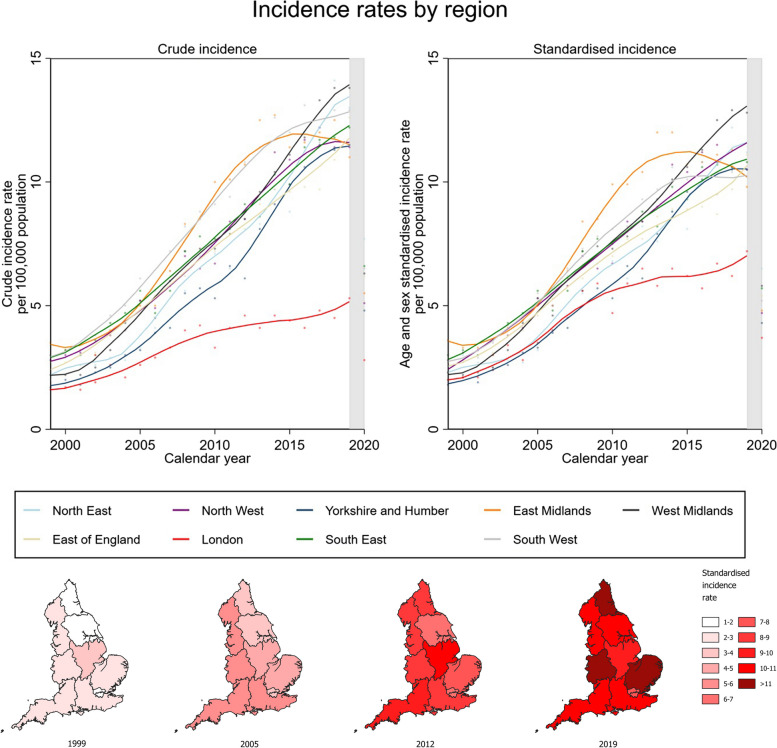
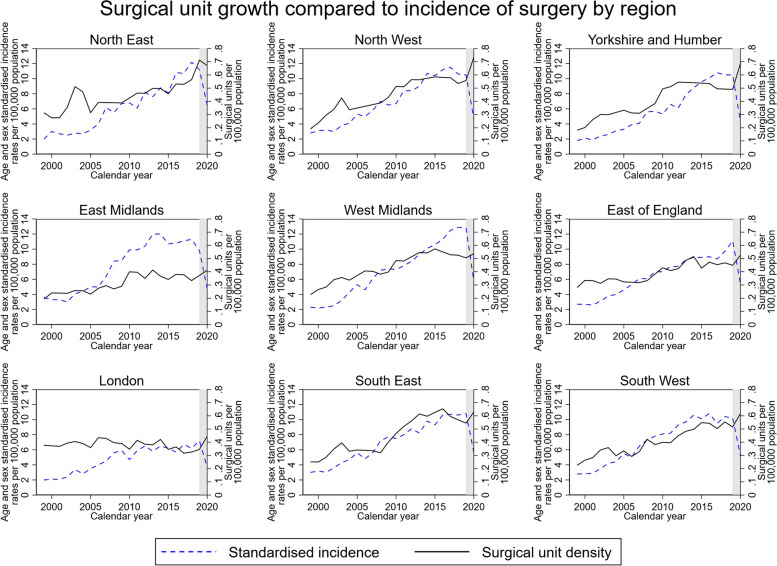
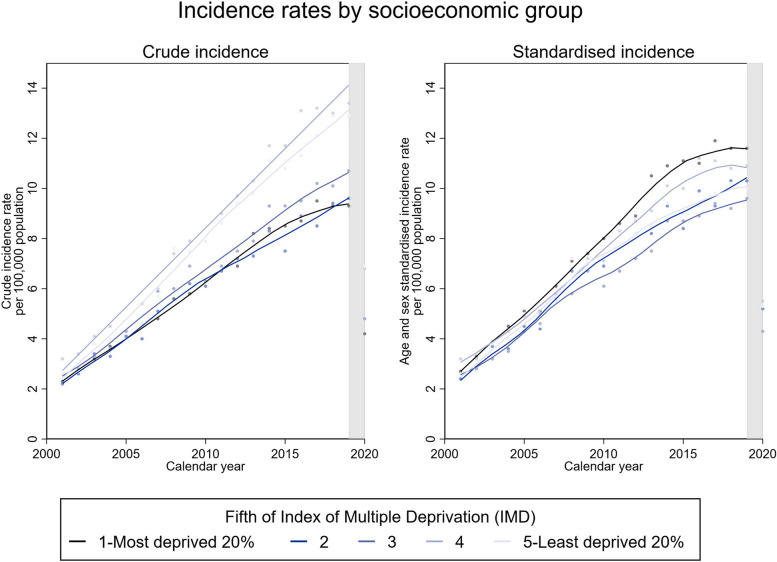
A total of 77,613 elective primary and 5847 revision shoulder replacements were available for analysis. Between 1999 and 2020, the standardised incidence of primary shoulder replacements in England quadrupled from 2.6 to 10.4 per 100,000 population, increasing predominantly in patients aged over 65 years. As many as 1 in 6 patients needed to travel to a different region for their surgery indicating inequality of service provision. A temporal increase in SAEs was observed: the 30-day risk increased from 1.3 to 4.8% and the 90-day risk increased from 2.4 to 6.0%. Patients from the more deprived socioeconomic groups appeared to have a higher risk of SAEs and revision surgery. Shoulder replacements are forecast to increase by up to 234% by 2050 in England, reaching 20,912 procedures per year with an associated annual cost to hospitals of £235 million.
This study reports a rising incidence of shoulder replacements, regional disparities in service provision, and an overall increasing risk of SAEs, especially in more deprived socioeconomic groups. These findings highlight the need for better healthcare planning to match local population demand, while more research is needed to understand and prevent the increase observed in SAEs.
本研究旨在预测英格兰未来对肩部置换手术的患者需求,并调查服务提供和患者结果方面的任何地理和社会经济不平等现象。
在这项队列研究中,使用医院入院统计数据识别了 1999 年至 2020 年期间 NHS 医院和 NHS 资助的英格兰所有择期肩部置换手术。符合条件的患者年龄在 18 岁及以上。排除了因恶性肿瘤或急性创伤而进行的肩部置换。人口估计和预测从国家统计局获得。按地理区域、社会经济贫困程度、性别和年龄组计算和分层标准化发病率以及严重不良事件 (SAE) 和翻修手术的风险。使用医疗保健资源组代码和 NHS 参考成本(基于国家报销系统)计算每次入院的医院费用。根据国家报销系统,使用医疗保健资源组代码和 NHS 参考成本计算了每次入院的医院费用。基于国家报销系统,使用医疗保健资源组代码和 NHS 参考成本计算了每次入院的医院费用。基于国家报销系统,使用医疗保健资源组代码和 NHS 参考成本计算了每次入院的医院费用。预测了两种未来增长情景下 2050 年之前的预测率和医院费用。
共分析了 77613 例原发性和 5847 例翻修原发性肩部置换术。1999 年至 2020 年间,英格兰原发性肩部置换术的标准化发病率翻了两番,从每 10 万人 2.6 例增加到 10.4 例,主要发生在 65 岁以上的患者中。多达 1/6 的患者需要前往不同地区进行手术,这表明服务提供存在不平等现象。观察到 SAE 的时间性增加:30 天风险从 1.3%增加到 4.8%,90 天风险从 2.4%增加到 6.0%。来自社会经济地位较低组的患者似乎有更高的 SAE 和翻修手术风险。预计到 2050 年,英格兰的肩部置换术将增加 234%,每年达到 20912 例,每年相关医院费用为 2.35 亿英镑。
本研究报告了肩部置换术发病率上升、服务提供方面的地区差异以及 SAE 总体风险增加,尤其是在社会经济地位较低的人群中。这些发现强调了需要更好的医疗保健规划以满足当地人口需求,同时需要进一步研究以了解和预防观察到的 SAE 增加。