Department of Chemistry, The University of Chicago, Chicago, IL, USA.
Department of Neurobiology, The University of Chicago, Chicago, IL, USA.
Nat Commun. 2023 Oct 26;14(1):6827. doi: 10.1038/s41467-023-42252-z.
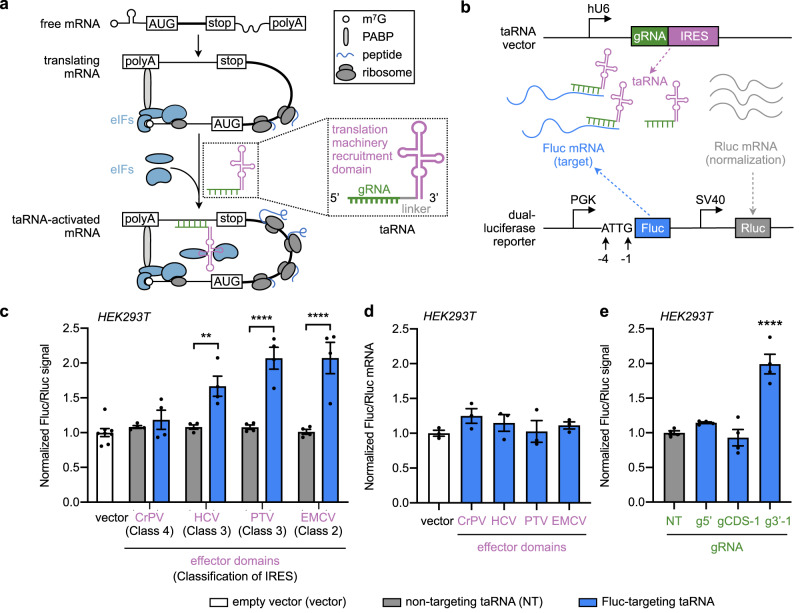
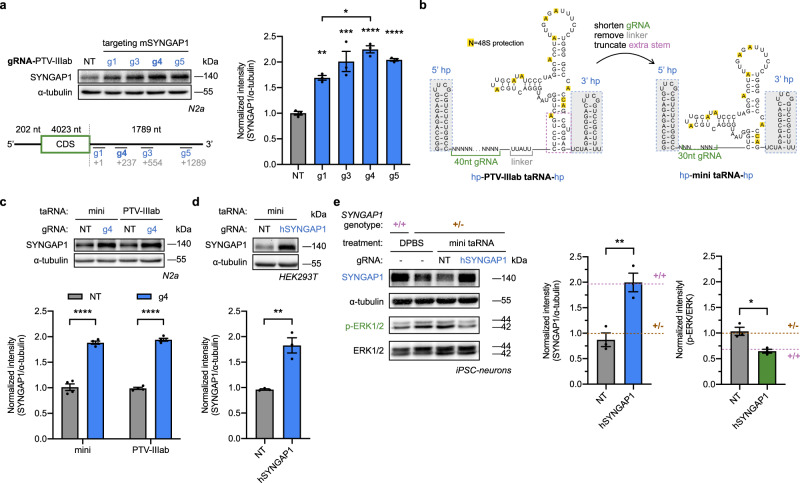
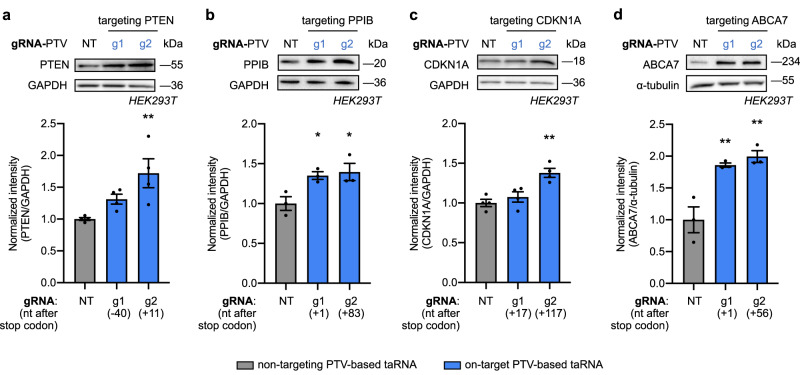
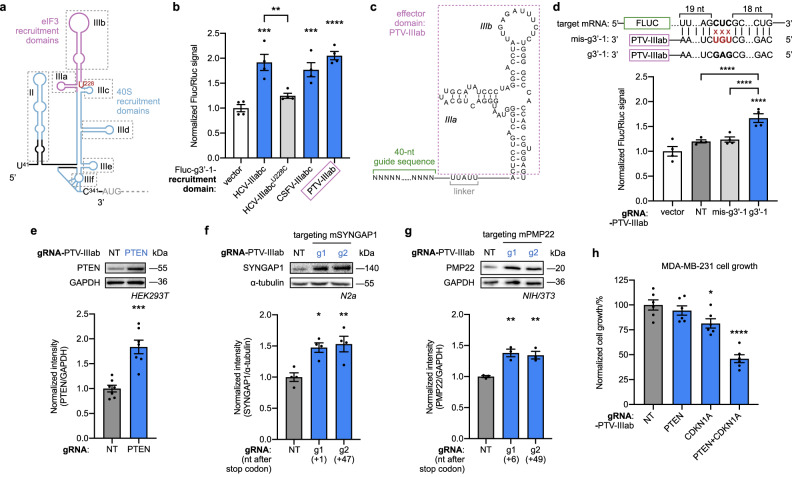
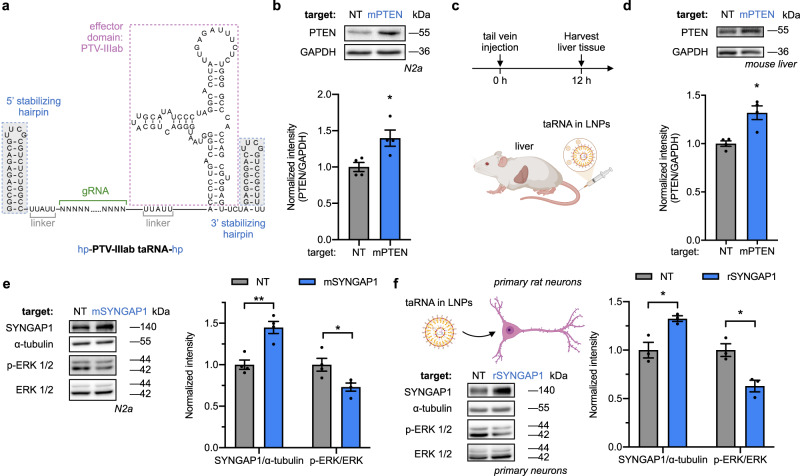
Technologies capable of programmable translation activation offer strategies to develop therapeutics for diseases caused by insufficient gene expression. Here, we present "translation-activating RNAs" (taRNAs), a bifunctional RNA-based molecular technology that binds to a specific mRNA of interest and directly upregulates its translation. taRNAs are constructed from a variety of viral or mammalian RNA internal ribosome entry sites (IRESs) and upregulate translation for a suite of target mRNAs. We minimize the taRNA scaffold to 94 nucleotides, identify two translation initiation factor proteins responsible for taRNA activity, and validate the technology by amplifying SYNGAP1 expression, a haploinsufficiency disease target, in patient-derived cells. Finally, taRNAs are suitable for delivery as RNA molecules by lipid nanoparticles (LNPs) to cell lines, primary neurons, and mouse liver in vivo. taRNAs provide a general and compact nucleic acid-based technology to upregulate protein production from endogenous mRNAs, and may open up possibilities for therapeutic RNA research.
能够实现可编程翻译激活的技术为开发因基因表达不足而导致的疾病的治疗方法提供了策略。在这里,我们提出了“翻译激活 RNA”(taRNA),这是一种基于 RNA 的双功能分子技术,可与特定的感兴趣的 mRNA 结合,并直接上调其翻译。taRNA 由多种病毒或哺乳动物 RNA 内部核糖体进入位点(IRES)构建而成,可上调一系列靶标 mRNA 的翻译。我们将 taRNA 支架最小化至 94 个核苷酸,鉴定出两种负责 taRNA 活性的翻译起始因子蛋白,并通过在患者来源的细胞中扩增 SYNGAP1 表达(一种单倍不足疾病靶标)来验证该技术。最后,taRNA 适合通过脂质纳米颗粒(LNP)递送至细胞系、原代神经元和小鼠肝脏在体。taRNA 提供了一种通用且紧凑的基于核酸的技术,可从内源性 mRNA 上调蛋白质的产生,这可能为治疗性 RNA 研究开辟了可能性。