Timofte Andrei Daniel, Caruntu Irina-Draga, Covic Adrian C, Hancianu Monica, Girlescu Nona, Chifu Mariana Bianca, Giusca Simona Eliza
Department of Morpho-Functional Sciences I, "Grigore T. Popa" University of Medicine and Pharmacy, 700115 Iasi, Romania.
Department of Pathology, "Dr. C. I. Parhon" University Hospital, 700503 Iasi, Romania.
Cancers (Basel). 2023 Oct 16;15(20):5013. doi: 10.3390/cancers15205013.
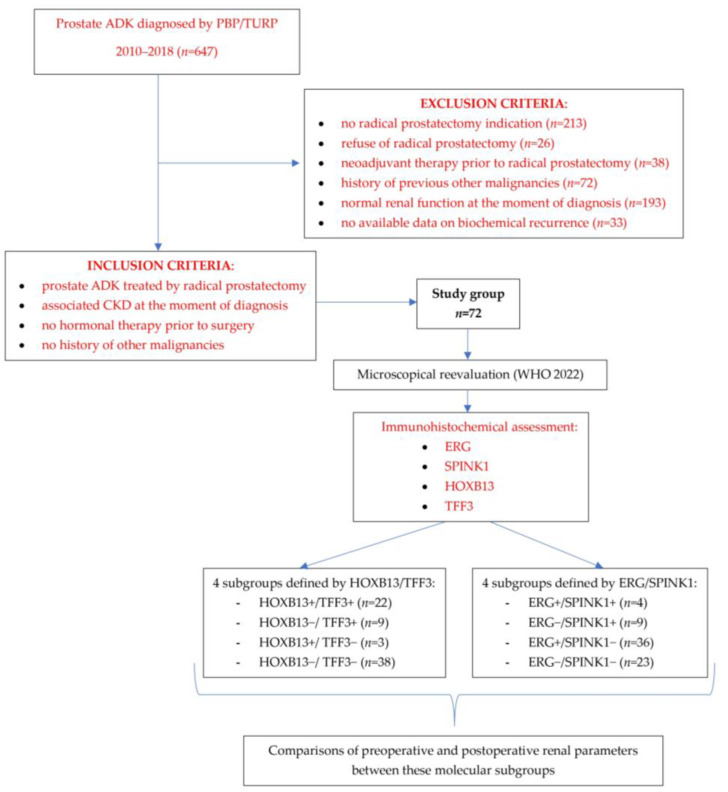
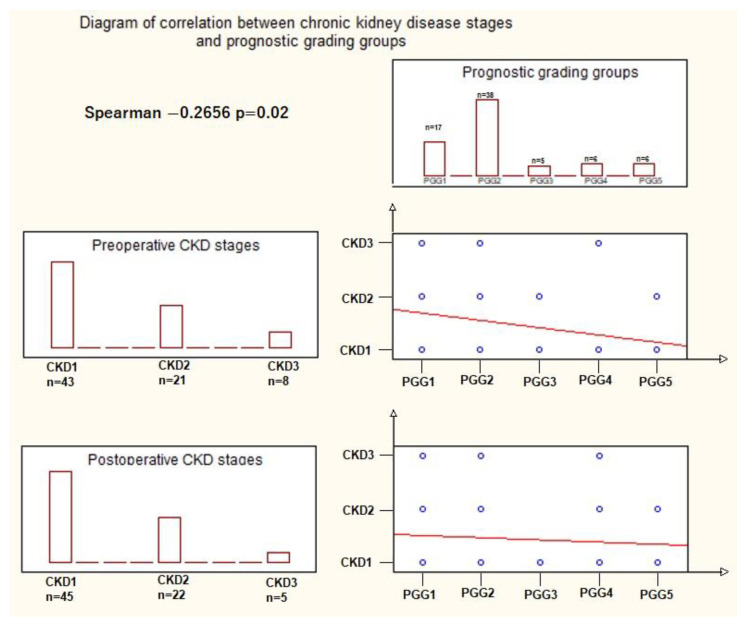
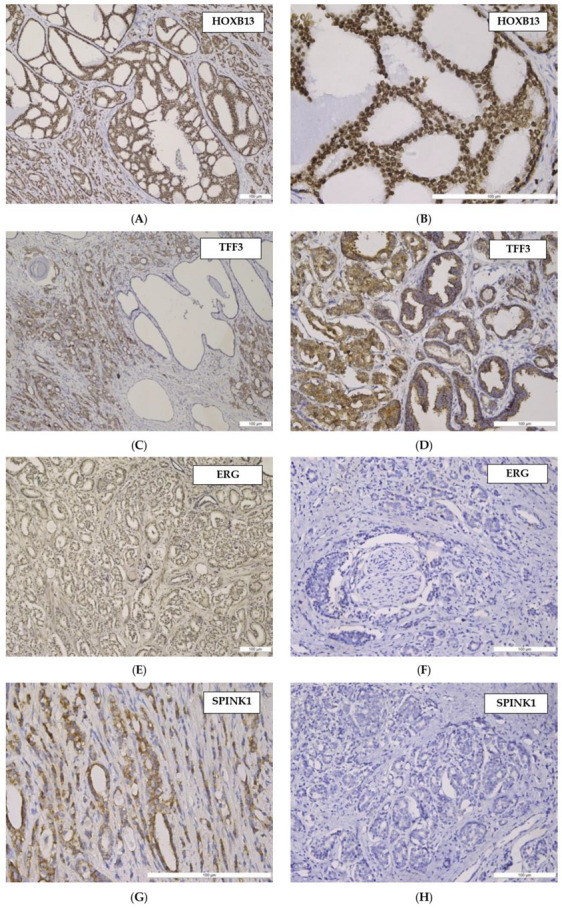
Prostate cancer is a prevalent malignancy in male patients, having diverse clinical outcomes. The follow-up of patients diagnosed with prostate cancer involves the evaluation of renal function, because its impairment reduces patient survival rates and adds complexity to their treatment and clinical care. This study aimed to investigate the relationship between renal function parameters and distinctive molecular subtypes of prostate adenocarcinomas, defined by the immunoexpression of the SPINK1, ERG, HOXB13, and TFF3 markers. The study group comprised 72 patients with prostate cancer and associated chronic kidney disease (CKD) who underwent radical prostatectomy. Histopathological, molecular, and renal parameters were analyzed. Patients were categorized based on ERG/SPINK1 and HOXB13/TFF3 status, and correlations with renal function and prognostic grade groups were assessed. The ERG+/SPINK1+ subgroup exhibited significantly higher postoperative CKD stages and serum creatinine levels compared to the ERG+/SPINK1- subgroup. This suggests an intricate relationship between SPINK1 overexpression and renal function dynamics. The HOXB13-/TFF3+ subgroup displayed higher preoperative serum creatinine levels and CKD stages than the HOXB13-/TFF3- subgroup, aligning with TFF3's potential role in renal function. Furthermore, the study revealed associations between CKD stages and prognostic grade groups in different molecular subtypes, pointing out an intricate interplay between renal function and tumor behavior. Although the molecular classification of prostate acinar ADK is not yet implemented, this research underscores the variability of renal function parameters in different molecular subtypes, offering potential insights into patient prognosis.
前列腺癌是男性患者中一种常见的恶性肿瘤,具有多样的临床结局。对被诊断为前列腺癌的患者进行随访时需要评估肾功能,因为肾功能损害会降低患者生存率,并增加治疗和临床护理的复杂性。本研究旨在调查肾功能参数与前列腺腺癌不同分子亚型之间的关系,这些分子亚型由丝氨酸蛋白酶抑制剂Kazal型1(SPINK1)、红系白血病病毒整合1(ERG)、同源盒B13(HOXB13)和三叶因子3(TFF3)标志物的免疫表达所定义。研究组包括72例接受根治性前列腺切除术的前列腺癌合并慢性肾脏病(CKD)患者。对组织病理学、分子和肾脏参数进行了分析。根据ERG/SPINK1和HOXB13/TFF3状态对患者进行分类,并评估其与肾功能和预后分级组的相关性。与ERG+/SPINK1-亚组相比,ERG+/SPINK1+亚组术后CKD分期和血清肌酐水平显著更高。这表明SPINK1过表达与肾功能动态之间存在复杂关系。HOXB13-/TFF3+亚组术前血清肌酐水平和CKD分期高于HOXB13-/TFF3-亚组,这与TFF3在肾功能中的潜在作用一致。此外,研究还揭示了不同分子亚型中CKD分期与预后分级组之间的关联,指出了肾功能与肿瘤行为之间存在复杂的相互作用。尽管前列腺腺泡腺癌的分子分类尚未实施,但本研究强调了不同分子亚型中肾功能参数的变异性,为患者预后提供了潜在的见解。