Laboratory for Personalized Medicine, Division of Molecular Medicine, Rudjer Boskovic Institute, Bijenicka 54, 10000 Zagreb, Croatia.
Department of Maxillofacial Surgery, Dubrava University Hospital, School of Medicine, University of Zagreb, Gojko Šušak Avenue 6, 10000 Zagreb, Croatia.
Int J Mol Sci. 2023 Oct 17;24(20):15269. doi: 10.3390/ijms242015269.
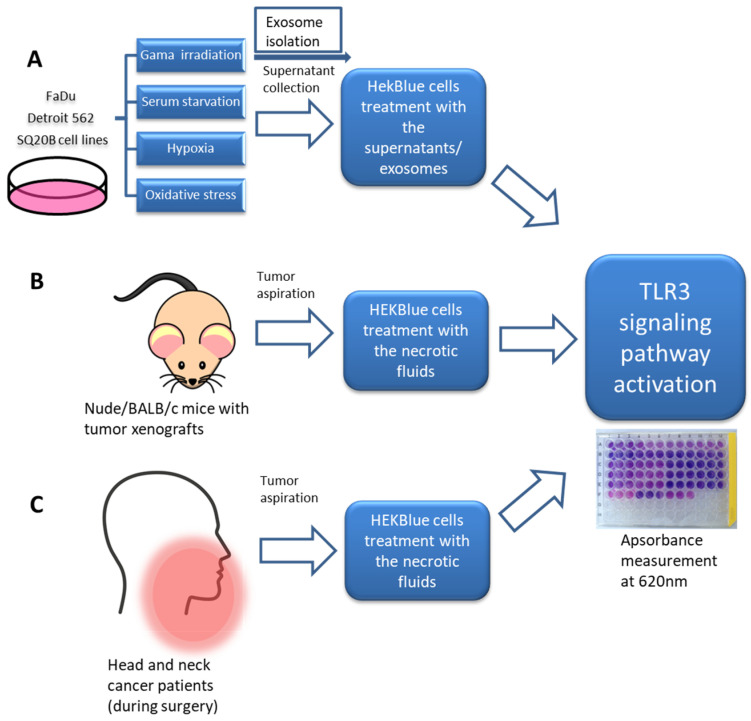
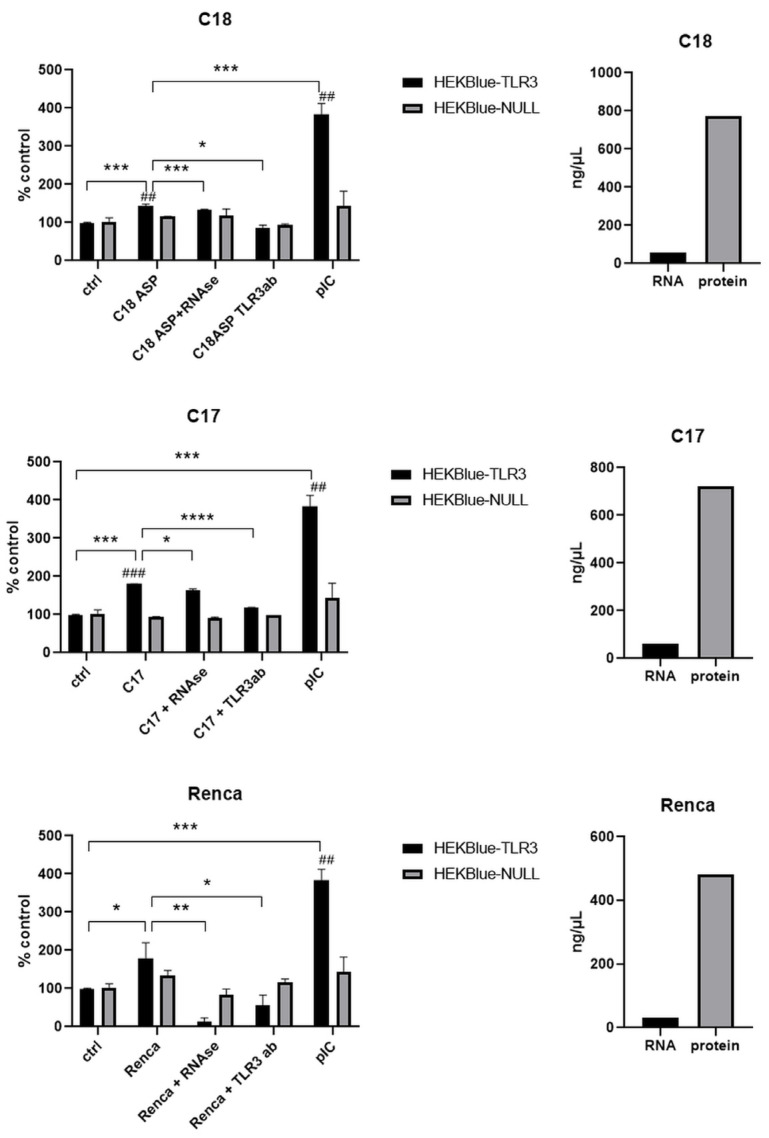
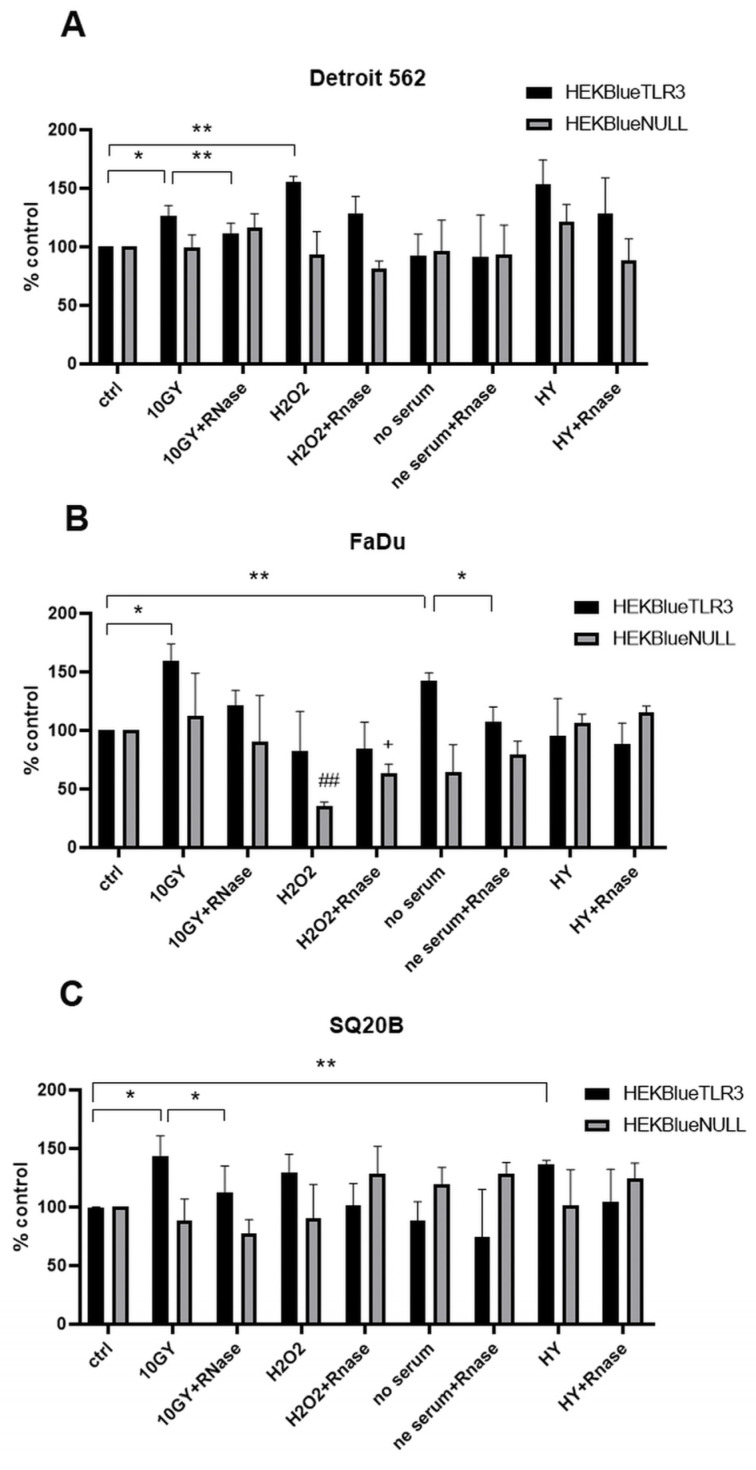
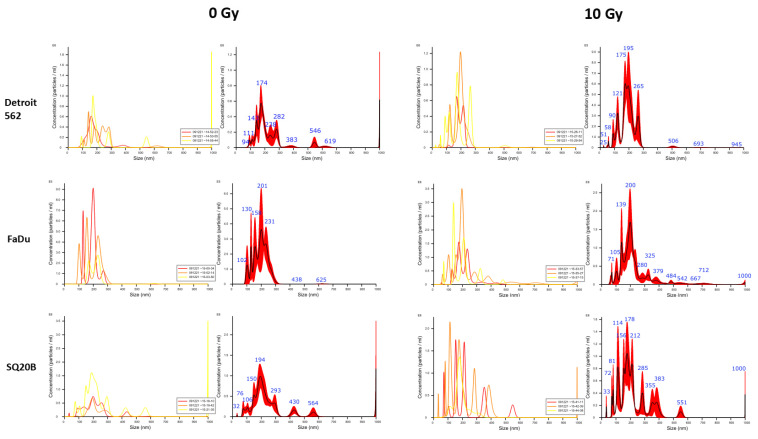
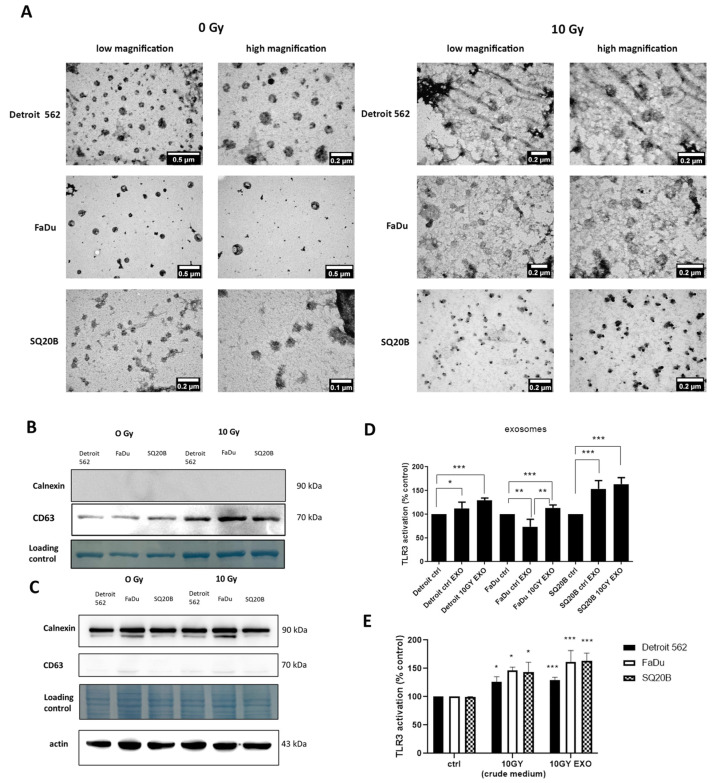
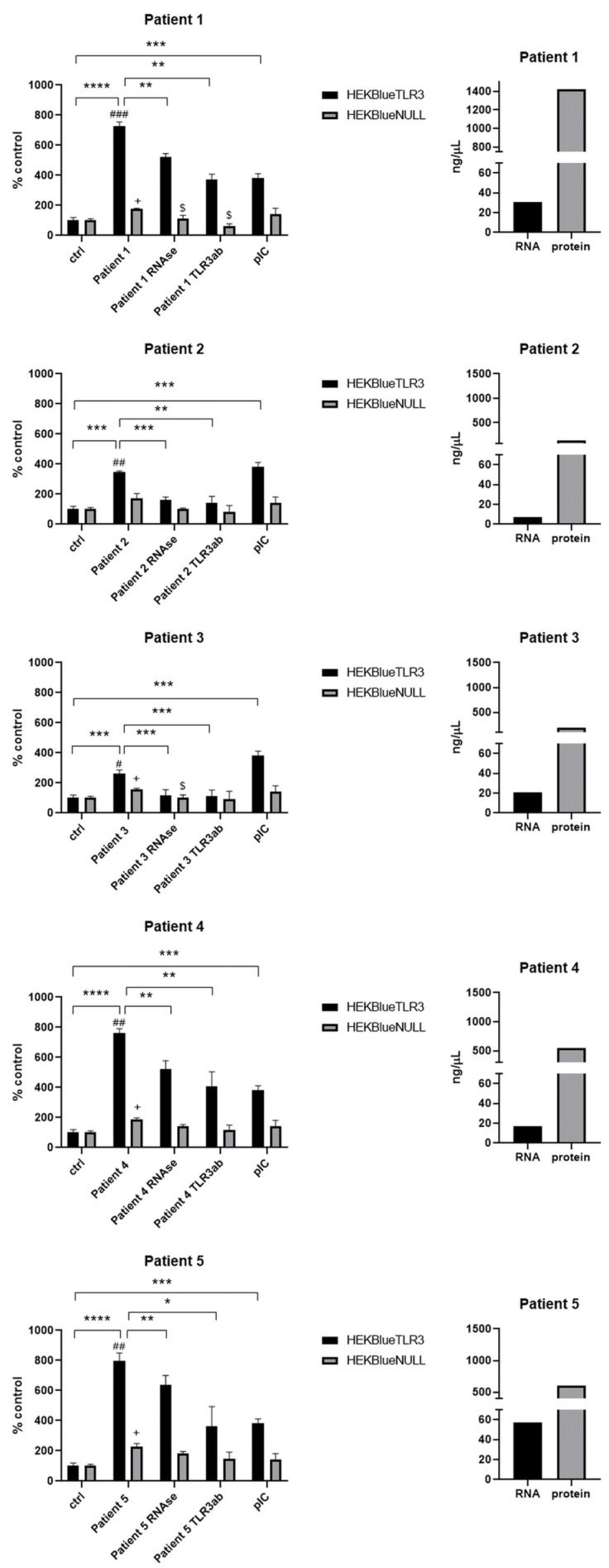
Tumor necrosis is a recurrent characteristic of head and neck squamous cell carcinomas (HNSCCs). There is a need for more investigations on the influence of biomolecules released by these necrotic foci in the HNSCC tumor microenvironment. It is suspected that a fraction of the biomolecules released by necrotic cells are damage-associated molecular patterns (DAMPs), which are known to be natural endogenous ligands of Toll-like receptors (TLRs), including, among others, proteins and nucleic acids. However, there has been no direct demonstration that biomolecules released by HNSCC necrotic cells can activate TLRs. Our aim was to investigate whether some of these molecules could behave as agonists of the TLR3, either in vitro or in vivo. We chose a functional approach based on reporter cell exhibiting artificial TLR3 expression and downstream release of secreted alkaline phosphatase. The production of biomolecules activating TLR3 was first investigated in vitro using three HNSCC cell lines subjected to various pronecrotic stimuli (external irradiation, serum starvation, hypoxia and oxidative stress). TLR3 agonists were also investigated in necrotic tumor fluids from five oral cancer patients and three mouse tumor grafts. The release of biomolecules activating TLR3 was demonstrated for all three HNSCC cell lines. External irradiation was the most consistently efficient stimulus, and corresponding TLR3 agonists were conveyed in extracellular vesicles. TLR3-stimulating activity was detected in the fluids from all five patients and three mouse tumor grafts. In most cases, this activity was greatly reduced by RNAse pretreatment or TLR3 blocking antibodies. Our data indicate that TLR3 agonists are consistently present in necrotic fluids from HNSCC cells and mainly made of dsRNA fragments. These endogenous agonists may induce TLR3, which might lead to a protumorigenic effect. Regarding methodological aspects, our study demonstrates that direct investigations-including functional testing-can be performed on necrotic fluids from patient tumors.
肿瘤坏死是头颈部鳞状细胞癌(HNSCC)的一个反复出现的特征。需要进一步研究这些坏死灶释放的生物分子对 HNSCC 肿瘤微环境的影响。据推测,坏死细胞释放的一部分生物分子是损伤相关分子模式(DAMPs),已知它们是 Toll 样受体(TLR)的天然内源性配体,包括蛋白质和核酸等。然而,尚未直接证明 HNSCC 坏死细胞释放的生物分子可以激活 TLR。我们的目的是研究这些分子中的一些是否可以作为 TLR3 的激动剂,无论是在体外还是体内。我们选择了一种基于报告细胞的功能方法,该方法具有人工 TLR3 表达和下游分泌碱性磷酸酶释放。首先使用三种 HNSCC 细胞系在体外研究了激活 TLR3 的生物分子的产生,这些细胞系受到各种促坏死刺激(外部照射、血清饥饿、缺氧和氧化应激)。还研究了来自五名口腔癌患者和三名小鼠肿瘤移植物的坏死肿瘤液中的 TLR3 激动剂。所有三种 HNSCC 细胞系均证明了激活 TLR3 的生物分子的释放。外部照射是最一致有效的刺激物,相应的 TLR3 激动剂存在于细胞外囊泡中。在所有五名患者和三名小鼠肿瘤移植物的液体中均检测到 TLR3 刺激活性。在大多数情况下,该活性通过 RNAse 预处理或 TLR3 阻断抗体大大降低。我们的数据表明,TLR3 激动剂一致存在于 HNSCC 细胞的坏死液中,主要由双链 RNA 片段组成。这些内源性激动剂可能会诱导 TLR3,从而导致促肿瘤作用。关于方法学方面,我们的研究表明可以直接对来自患者肿瘤的坏死液进行直接研究,包括功能测试。