Gao Hongtao, Wang Xue, Wu Hao, Zhang Yuan, Zhang Wenxiao, Wang Zuobin, Liu Xin, Li Xiaokun, Li Haiyan
Hainan Yazhou Bay Seed Laboratory, Sanya Nanfan Research Institute of Hainan University, Sanya 572025, China.
College of Tropical Crops, Hainan University, Haikou 570288, China.
Pharmaceuticals (Basel). 2023 Oct 20;16(10):1492. doi: 10.3390/ph16101492.
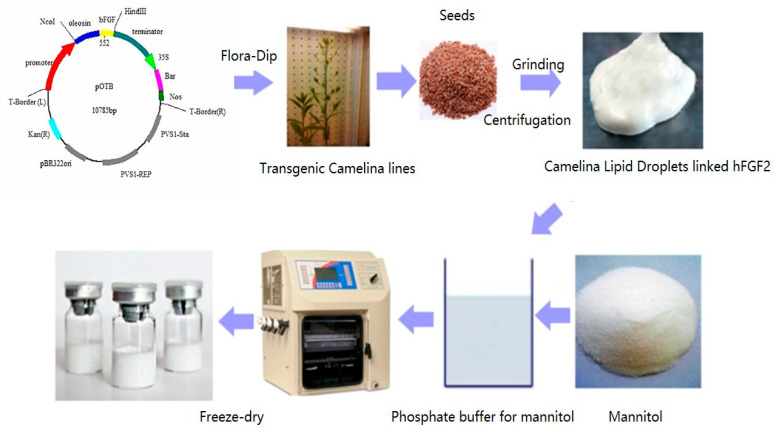
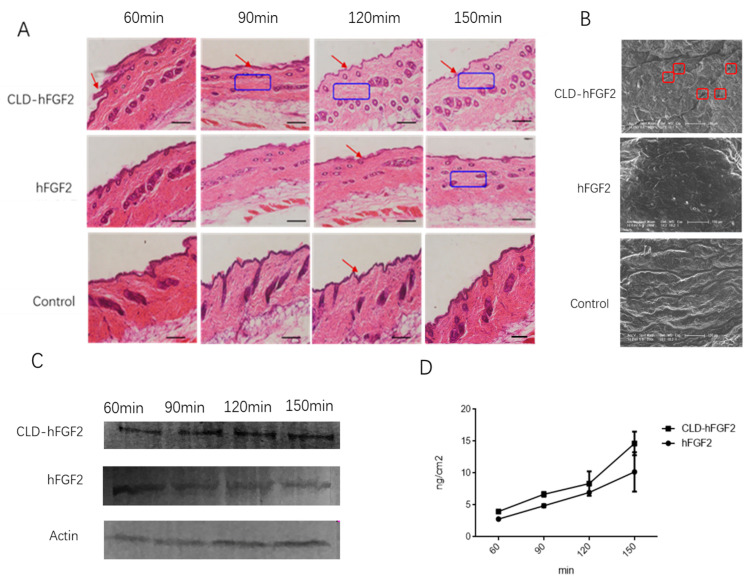
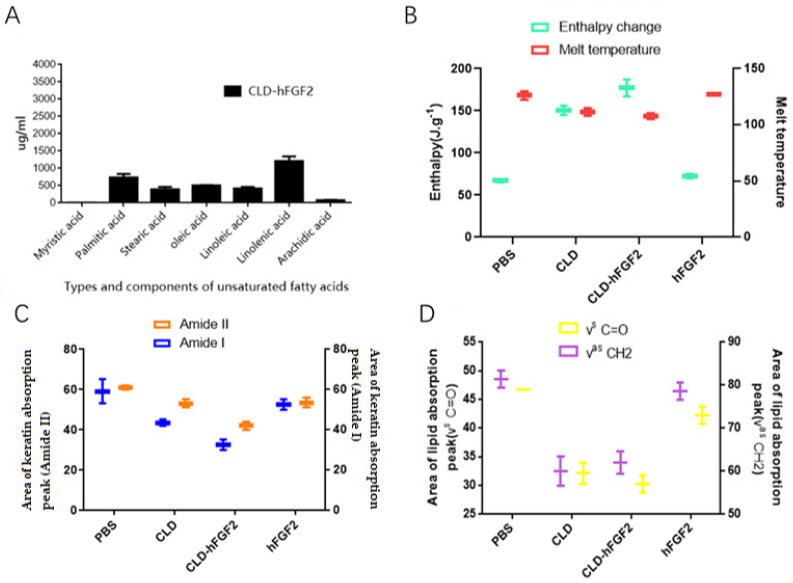
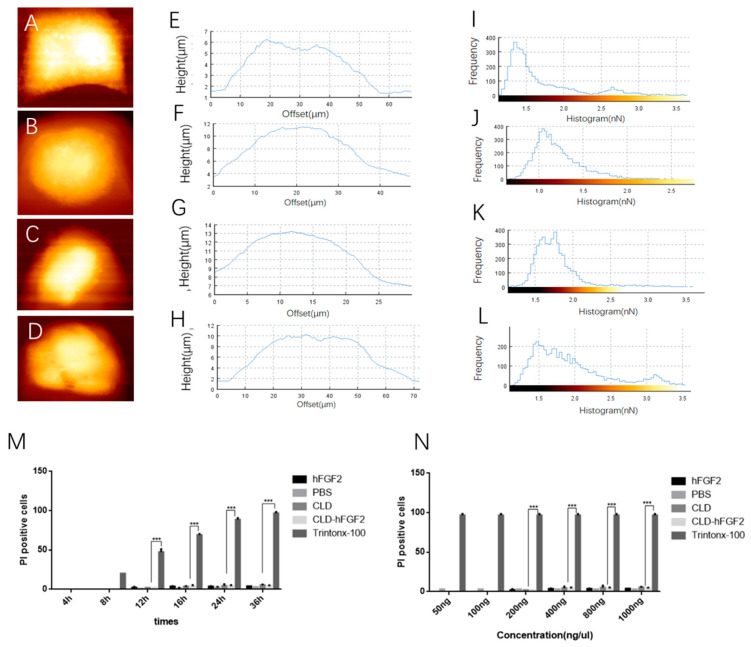
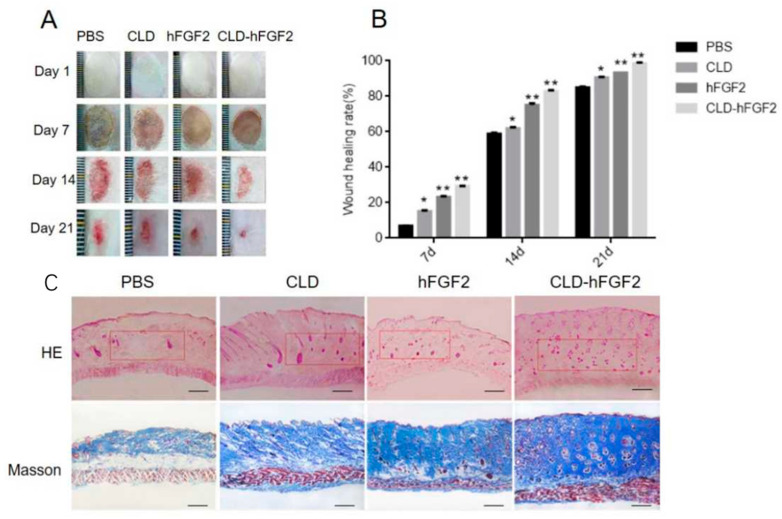
Transdermal administration of chemo therapeutics into burn healing may be an effective treatment to reduce toxic side effects and improve patient compliance for burns. As a transdermal delivery system, Camelina lipid droplets (CLDs) have received great attention due to their biocompatibility, high drug payload, and rapid absorption. However, the absorbed-related mechanisms of Camelina lipid droplets have not yet been reported. Thus, this paper not only demonstrated that CLD can accelerate skin burn healing through promoting hFGF2 absorption, but also elucidated the mechanism between the skin tissue and keratinocytes using Franz, HE staining, DSC, FTIR spectroscopy, and atomic force microscopy with the presence of CLD-hFGF2 freeze-dried powder. We found that the cumulative release rate of CLD-hFGF2 freeze-dried powder was significantly higher than that of free hFGF2 freeze-dried powder into the skin. At the same time, CLD can change the structure and content of lipids and keratin to increase the permeability of hFGF2 freeze-dried powder in skin tissue. Unlike the free state of hFGF2, the biophysical properties of single cells, including height and adhesion force, were changed under CLD-hFGF2 freeze-dried powder treatment. Meanwhile, CLD-hFGF2 freeze-dried powder was more easily taken up through keratinocytes without damaging cell integrity, which provided a new viewpoint for understanding the absorption mechanism with the CLD system for cellular physiology characteristics. Overall, our findings demonstrated that CLD could break through the stratum corneum (SC) barrier and elucidated the transport mechanism of lipid droplets in skin tissue, which provides a crucial guideline in drug delivery applications for future engineering.
将化疗药物经皮给药用于烧伤愈合可能是一种有效的治疗方法,可减少毒副作用并提高患者对烧伤治疗的依从性。作为一种经皮给药系统,亚麻荠脂滴(CLDs)因其生物相容性、高药物负载量和快速吸收而备受关注。然而,亚麻荠脂滴的吸收相关机制尚未见报道。因此,本文不仅证明了CLD可通过促进人成纤维细胞生长因子2(hFGF2)的吸收来加速皮肤烧伤愈合,还利用Franz扩散池、苏木精-伊红(HE)染色、差示扫描量热法(DSC)、傅里叶变换红外光谱法(FTIR)以及在CLD-hFGF2冻干粉末存在下的原子力显微镜,阐明了皮肤组织与角质形成细胞之间的作用机制。我们发现,CLD-hFGF2冻干粉末在皮肤中的累积释放率显著高于游离hFGF2冻干粉末。同时,CLD可改变脂质和角蛋白的结构与含量,以增加hFGF2冻干粉末在皮肤组织中的渗透性。与hFGF2的游离状态不同,在CLD-hFGF2冻干粉末处理下,单细胞的生物物理特性(包括高度和粘附力)发生了变化。此外,CLD-hFGF2冻干粉末更容易被角质形成细胞摄取且不破坏细胞完整性,这为从细胞生理特性角度理解CLD系统的吸收机制提供了新观点。总体而言,我们的研究结果表明CLD可突破角质层(SC)屏障,并阐明了脂滴在皮肤组织中的转运机制,这为未来工程学在药物递送应用中提供了关键指导。