Henriques Sara Carolina, Paixão Paulo, Almeida Luis, Silva Nuno Elvas
Research Institute for Medicines (iMed.ULisboa), Faculty of Pharmacy, Universidade de Lisboa, 1649-003 Lisboa, Portugal.
BlueClinical Ltd., Senhora da Hora, 4460-439 Matosinhos, Portugal.
Pharmaceutics. 2023 Oct 20;15(10):2498. doi: 10.3390/pharmaceutics15102498.
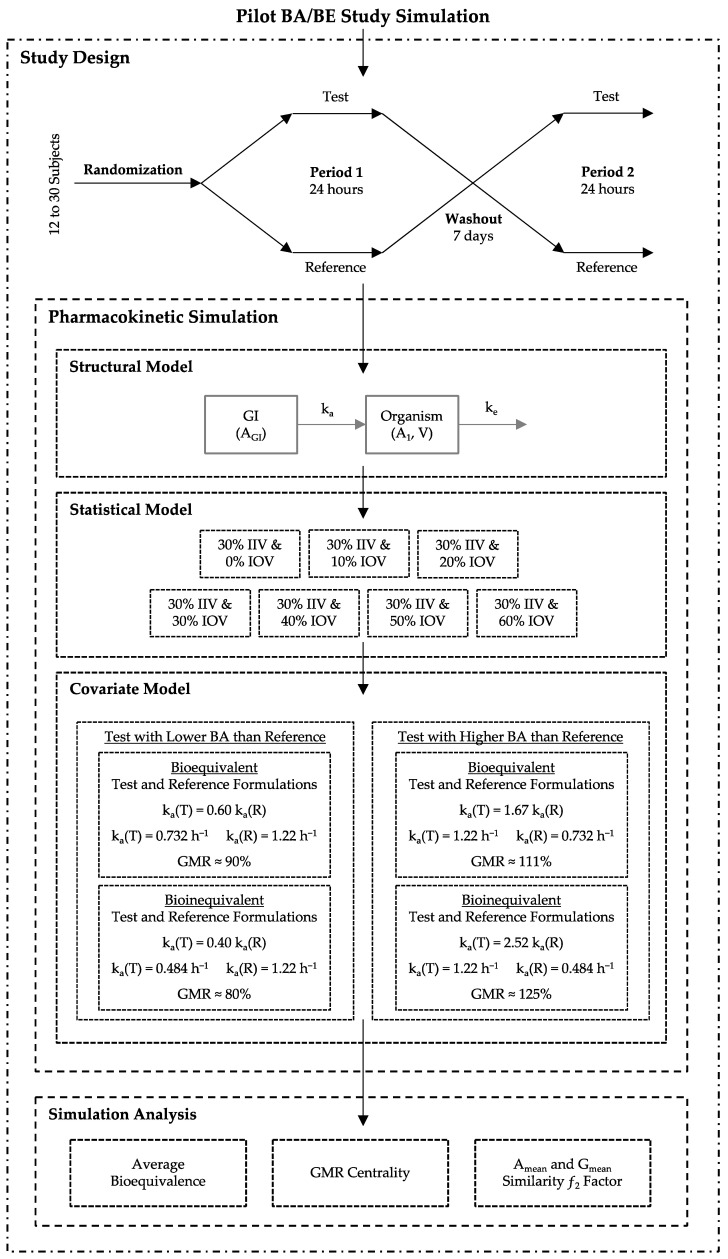
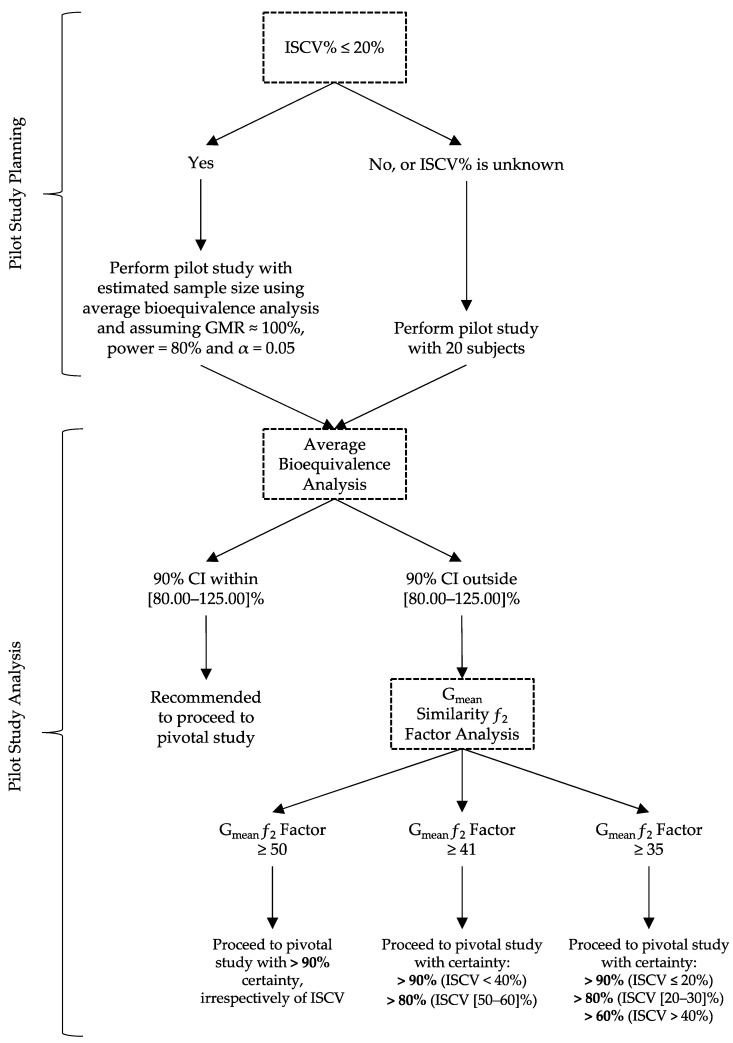
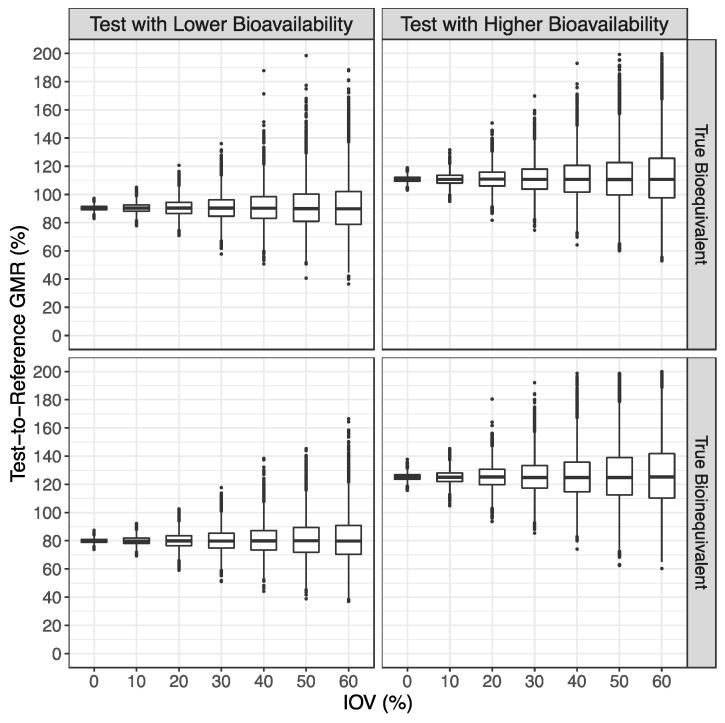
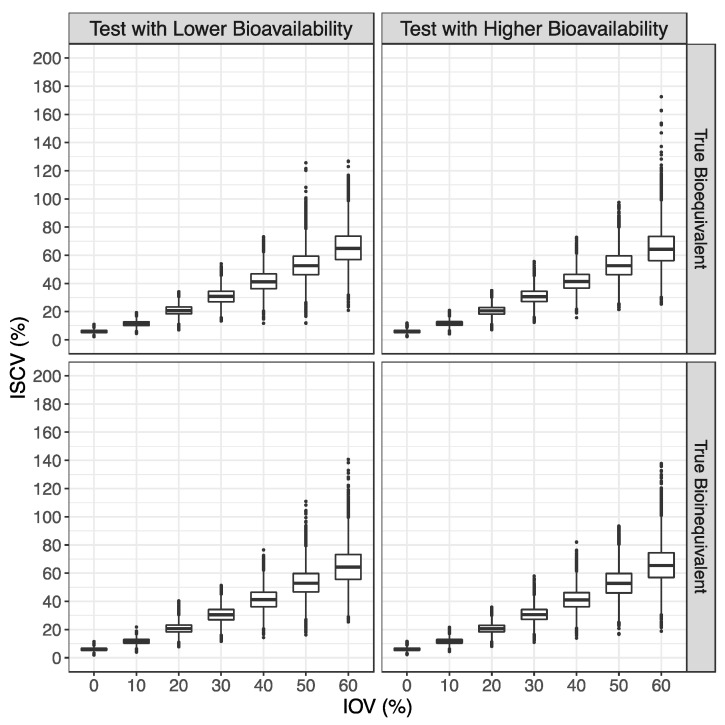
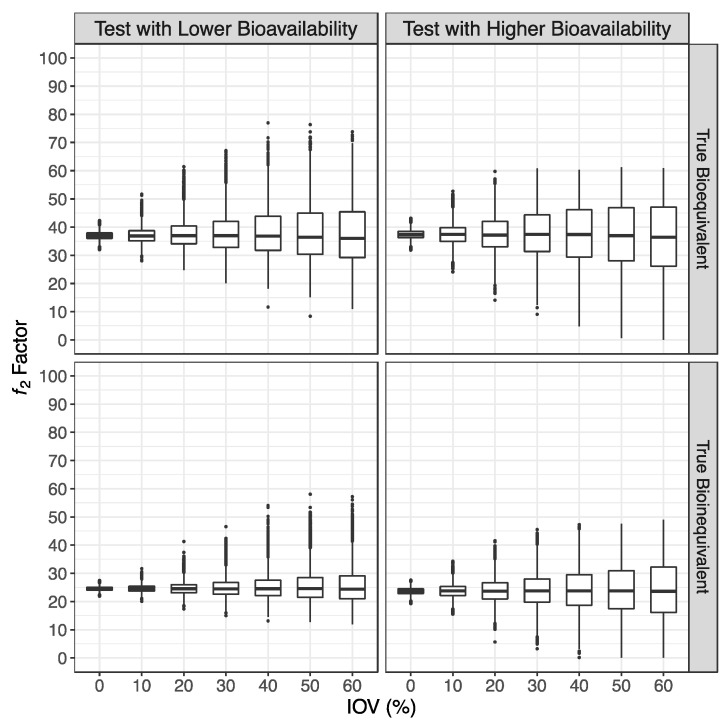
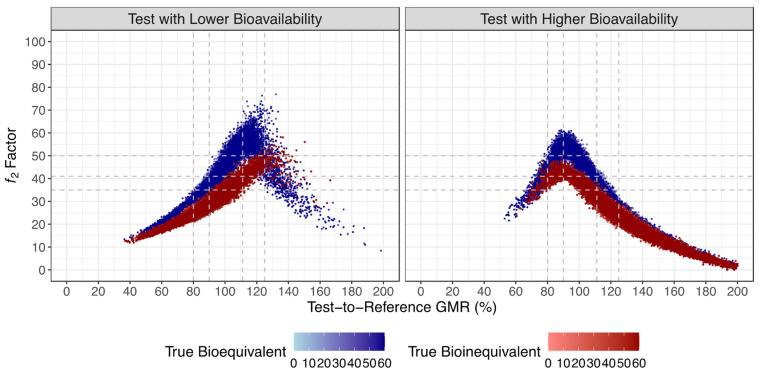
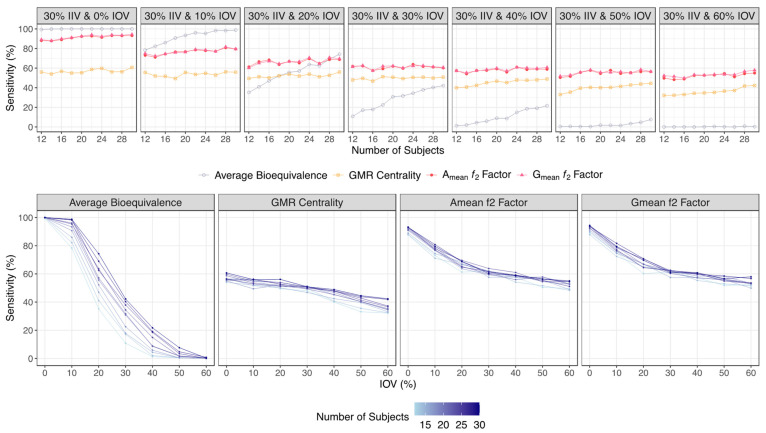
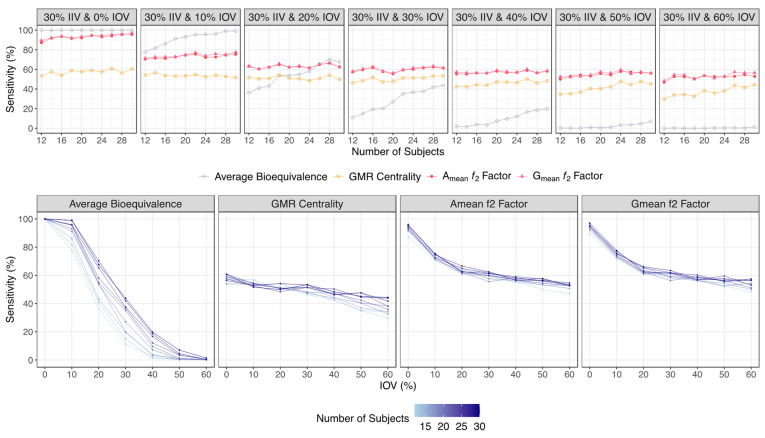
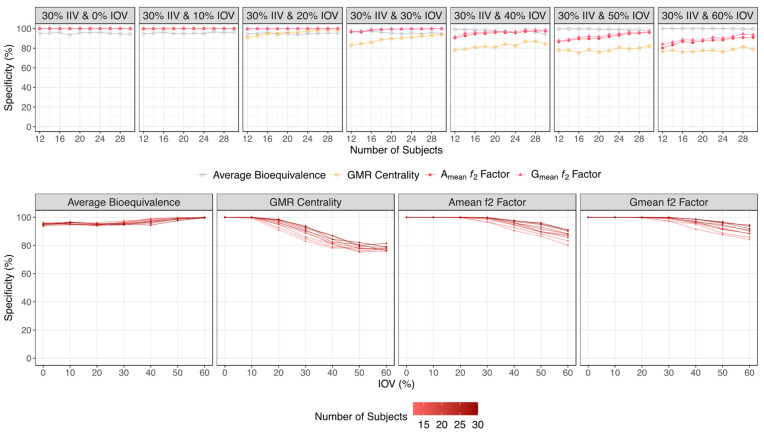
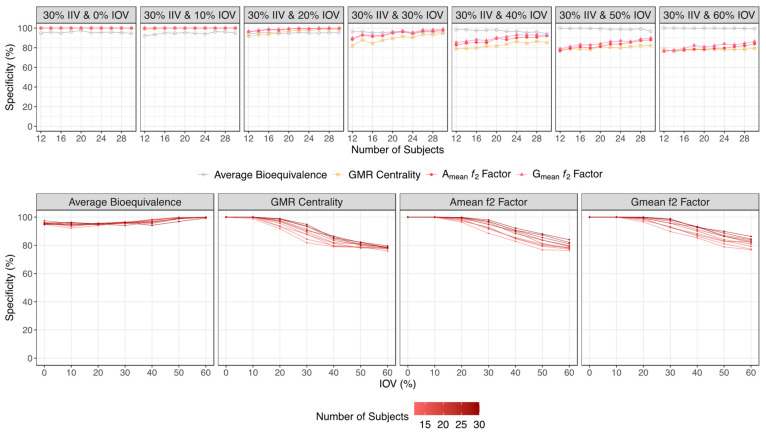
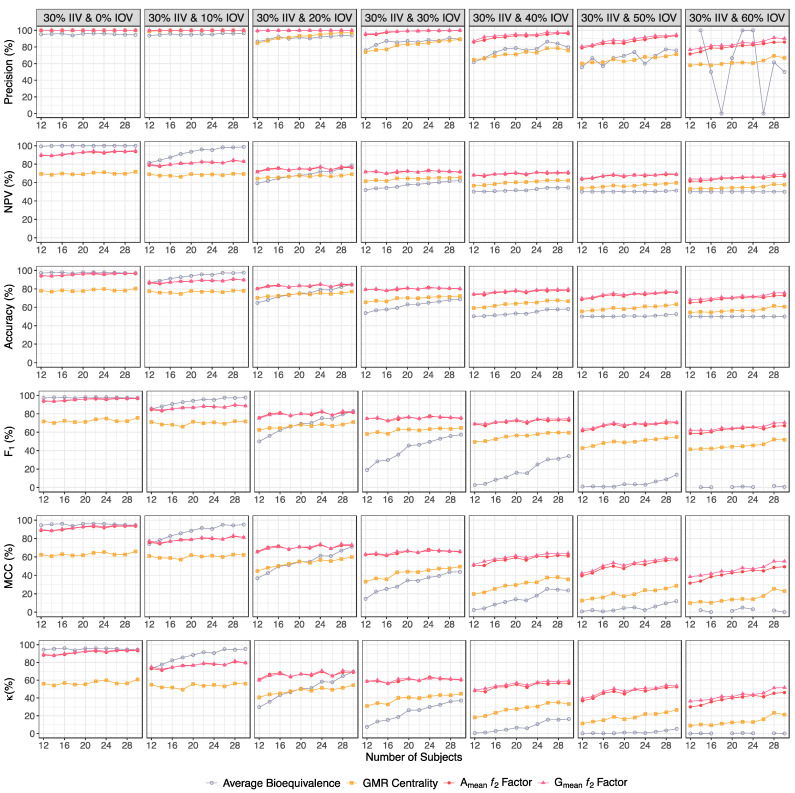
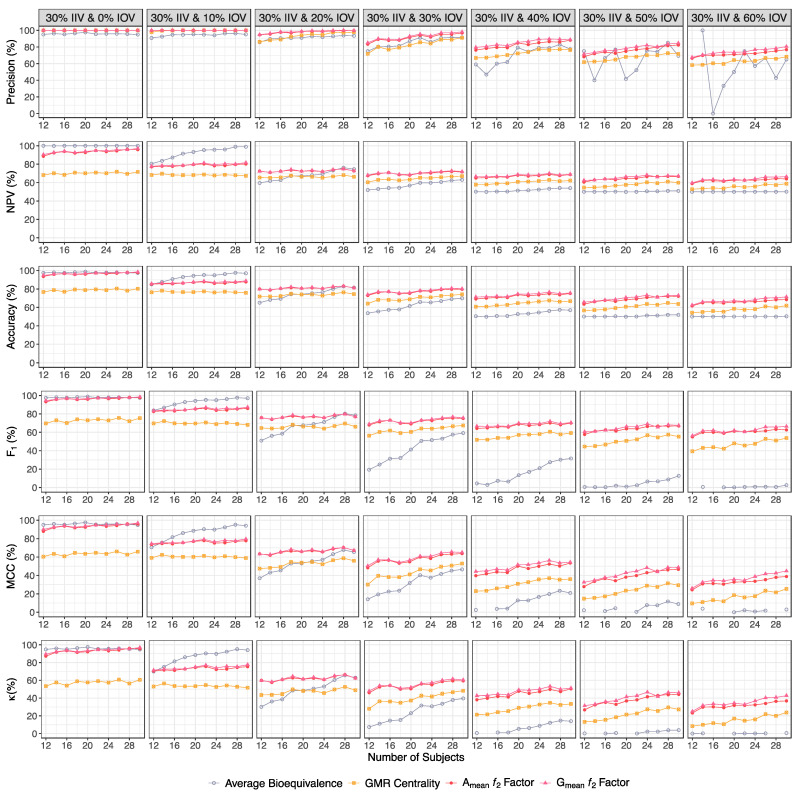
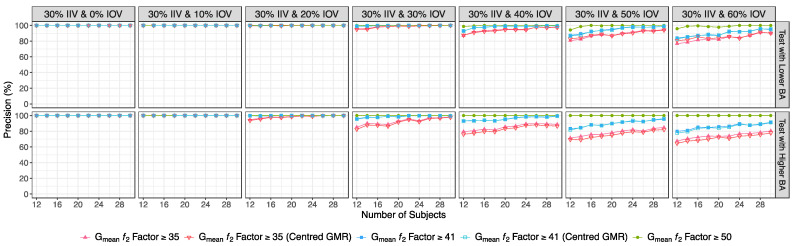
Pilot bioavailability/bioequivalence (BA/BE) studies are downsized trials that can be conducted prior to the definitive pivotal trial. In these trials, 12 to 18 subjects are usually enrolled, although, in principle, a sample size is not formally calculated. In a previous work, authors recommended the use of an alternative approach to the average bioequivalence methodology to evaluate pilot studies' data, using the geometric mean (G) ƒ factor with a cut off of 35, which has shown to be an appropriate method to assess the potential bioequivalence for the maximum observed concentration (C) metric under the assumptions of a true Test-to-Reference Geometric Mean Ratio (GMR) of 100% and an inter-occasion variability (IOV) in the range of 10% to 45%. In this work, the authors evaluated the proposed ƒ factor in comparison with the standard average bioequivalence in more extreme scenarios, using a true GMR of 90% or 111% for truly bioequivalent formulations, and 80% or 125% for truly bioinequivalent formulations, in order to better derive conclusions on the potential of this analysis method. Several scenarios of pilot BA/BE crossover studies were simulated through population pharmacokinetic modelling, accounting for different IOV levels. A redefined decision tree is proposed, suggesting a fixed sample size of 20 subjects for pilot studies in the case of intra-subject coefficient of variation (ISCV%) > 20% or unknown variability, and suggesting the assessment of study results through the average bioequivalence analysis, and additionally through G ƒ factor method in the case of the 90% confidence interval (CI) for GMR is outside the regulatory acceptance bioequivalence interval of [80.00-125.00]%. Using this alternative approach, the certainty levels to proceed with pivotal studies, depending on G ƒ values and variability scenarios tested (20-60% IOV), were assessed, which is expected to be helpful in terms of the decision to proceed with pivotal bioequivalence studies.
先导生物利用度/生物等效性(BA/BE)研究是在确定性关键试验之前进行的小型试验。在这些试验中,通常招募12至18名受试者,不过原则上样本量并不进行正式计算。在先前的一项工作中,作者建议采用一种替代平均生物等效性方法的途径来评估先导研究的数据,即使用截止值为35的几何均值(G)ƒ因子,在真实的试验与参比几何均值比(GMR)为100%且批内变异(IOV)在10%至45%范围内的假设下,该方法已被证明是评估最大观测浓度(C)指标潜在生物等效性的合适方法。在这项工作中,作者在更极端的情况下,将提议的ƒ因子与标准平均生物等效性进行比较,对于真正生物等效的制剂使用90%或111%的真实GMR,对于真正生物不等效的制剂使用80%或125%的真实GMR,以便更好地得出关于这种分析方法潜力的结论。通过群体药代动力学建模模拟了先导BA/BE交叉研究的几种情况,同时考虑了不同的IOV水平。提出了一个重新定义的决策树,建议在受试者内变异系数(ISCV%)>20%或变异情况未知时,先导研究的固定样本量为20名受试者,并建议通过平均生物等效性分析评估研究结果,此外,在GMR的90%置信区间(CI)超出监管认可的生物等效性区间[80.00 - 125.00]%时,通过G ƒ因子方法进行评估。使用这种替代方法,评估了根据G ƒ值和测试的变异情况(20 - 60% IOV)进行关键研究的确定性水平,这有望在决定进行关键生物等效性研究方面有所帮助。