López-Manzanara Pérez Celia, Torres-Pabón Norma Sofía, Laguna Almudena, Torrado Guillermo, de la Torre-Iglesias Paloma M, Torrado-Santiago Santiago, Torrado-Salmerón Carlos
Department of Pharmaceutics and Food Technology, Faculty of Pharmacy, Complutense University of Madrid, Plaza Ramón y Cajal s/n, 28040 Madrid, Spain.
Department of Biomedical Science, Faculty of Pharmacy, University of Alcalá de Henares, Ctra Madrid-Barcelona Km 33600, 28805 Madrid, Spain.
Polymers (Basel). 2023 Oct 22;15(20):4184. doi: 10.3390/polym15204184.
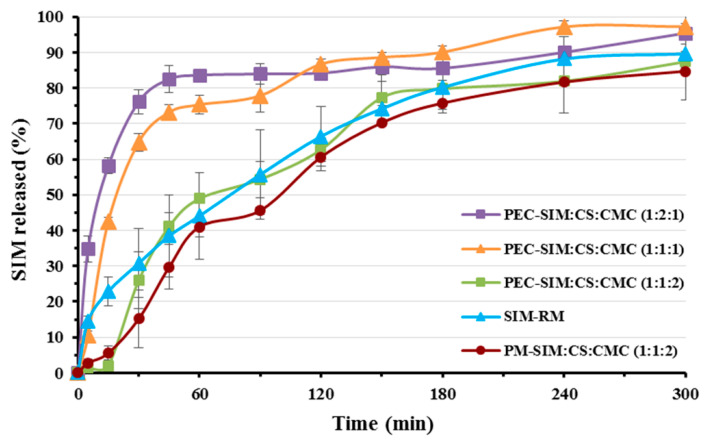
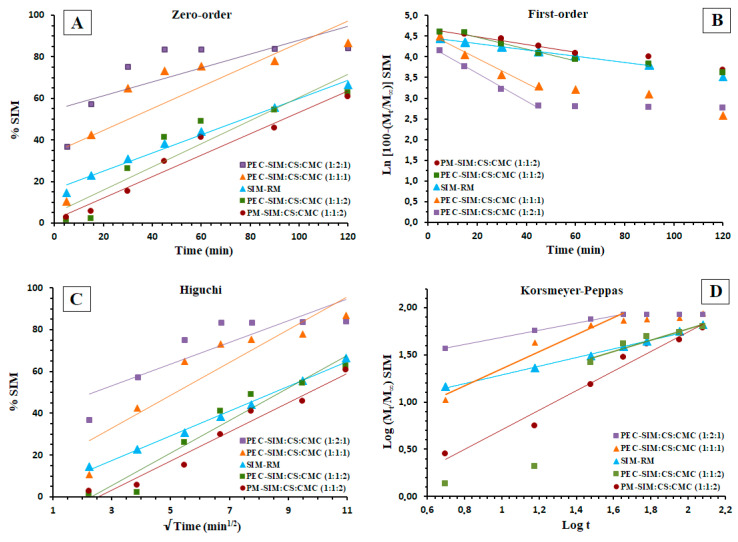
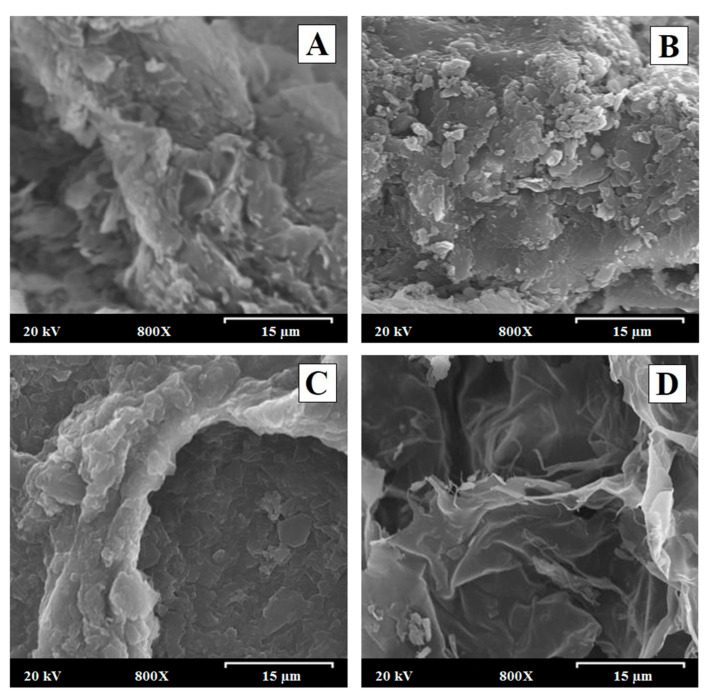
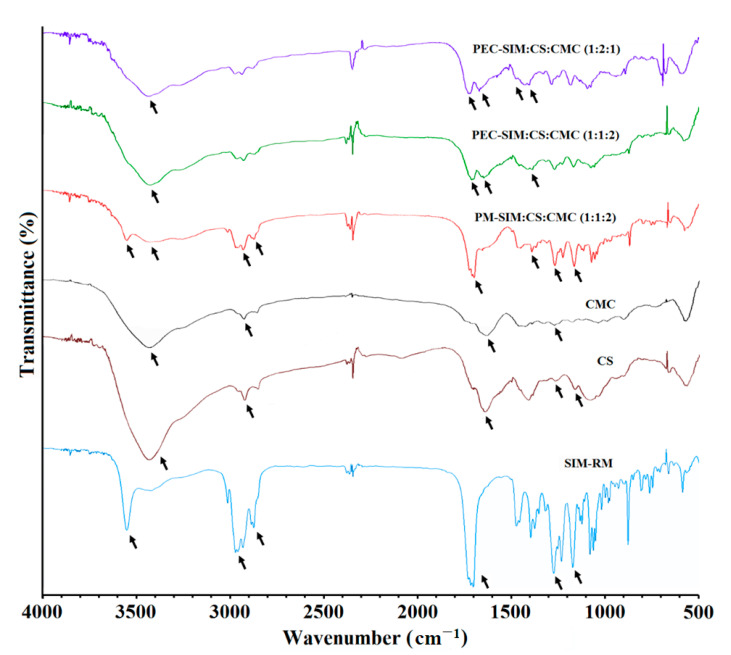
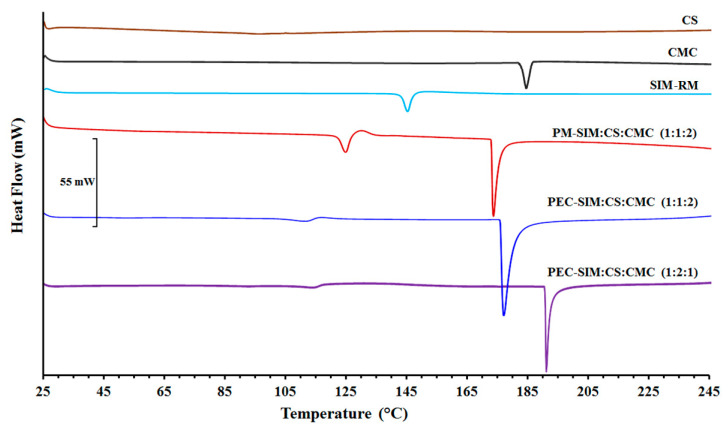
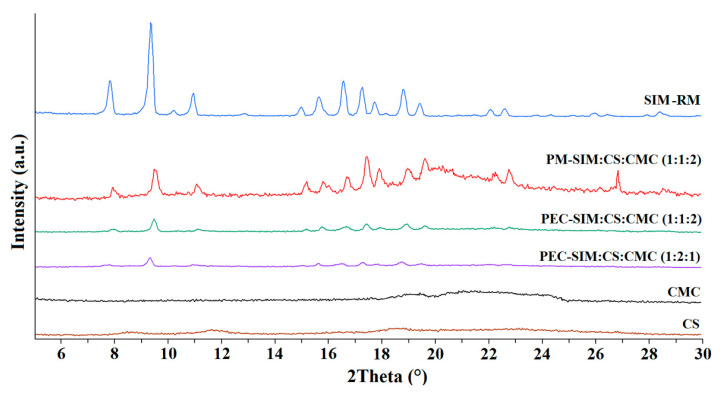
Simvastatin (SIM) is a potent lipid-lowering drug used to control hyper-cholesterolemia and prevent cardiovascular diseases. SIM presents low oral bioavailability (5%) because of its low aqueous solubility. In this work, polyelectrolyte complexes (PEC) are developed with different chitosan (CS) and carboxymethylcellulose (CMC) ratios that will allow for an increase in the SIM dissolution rate (2.54-fold) in simulated intestinal medium (pH 4.5). Scanning Electron Microscopy (SEM) images revealed highly porous structures. The changes between both complexes, PEC-SIM:CS:CMC (1:1:2) and (1:2:1), were related to the relaxation of the polymer chains upon absorption of the dissolution medium. Fourier-transform infrared spectroscopy (FTIR), differential scanning calorimetry (DSC) and powder X-ray diffraction (XRPD) studies were used to evaluate the polymer/polymer and drug/polymer interactions on the different PEC-SIM:CS:CMC ratios. In addition, the PEC-SIM:CS:CMC (1:2:1) complex exhibited a high ratio of protonated amino groups (NH) and an increase in intramolecular hydrogen bonds, which were correlated with a high expansion of the interpolymer chains and an increase in the SIM dissolution rate. Different kinetic models such as zero-order, first-order, Higuchi and Korsmeyer-Peppas were studied to evaluate the influence of CS/CMC ionic interactions on the ability to improve the release rate of poorly soluble drugs.
辛伐他汀(SIM)是一种强效降脂药物,用于控制高胆固醇血症和预防心血管疾病。由于其水溶性低,SIM的口服生物利用度较低(5%)。在这项研究中,开发了具有不同壳聚糖(CS)和羧甲基纤维素(CMC)比例的聚电解质复合物(PEC),这将使SIM在模拟肠道介质(pH 4.5)中的溶解速率提高(2.54倍)。扫描电子显微镜(SEM)图像显示出高度多孔的结构。两种复合物PEC-SIM:CS:CMC(1:1:2)和(1:2:1)之间的变化与聚合物链在吸收溶解介质时的松弛有关。利用傅里叶变换红外光谱(FTIR)、差示扫描量热法(DSC)和粉末X射线衍射(XRPD)研究来评估不同PEC-SIM:CS:CMC比例下的聚合物/聚合物和药物/聚合物相互作用。此外,PEC-SIM:CS:CMC(1:2:1)复合物表现出较高的质子化氨基(NH)比例和分子内氢键增加,这与聚合物链的高度膨胀和SIM溶解速率的增加相关。研究了零级、一级、Higuchi和Korsmeyer-Peppas等不同的动力学模型,以评估CS/CMC离子相互作用对提高难溶性药物释放速率能力的影响。