Le Corre Nicole, Abarca Katia, Astudillo Patricio, Potin Marcela, López Sofía, Goldsack Macarena, Valenzuela Vania, Schilling Andrea, Gaete Victoria, Rubio Lilian, Calvo Mario, Twele Loreto, González Marcela, Fuentes Daniela, Gutiérrez Valentina, Reyes Felipe, Tapia Lorena I, Villena Rodolfo, Retamal-Díaz Angello, Cárdenas Antonio, Alarcón-Bustamante Eduardo, Meng Xing, Xin Qianqian, González-Aramundiz José V, Álvarez-Figueroa María Javiera, González Pablo A, Bueno Susan M, Soto Jorge A, Perret Cecilia, Kalergis Alexis M
Departamento de Enfermedades Infecciosas e Inmunología Pediátricas, División de Pediatría, Escuela de Medicina, Pontificia Universidad Católica de Chile, Santiago 8330077, Chile.
División de Pediatría, Escuela de Medicina, Pontificia Universidad Católica de Chile, Santiago 8330077, Chile.
Vaccines (Basel). 2023 Sep 26;11(10):1526. doi: 10.3390/vaccines11101526.
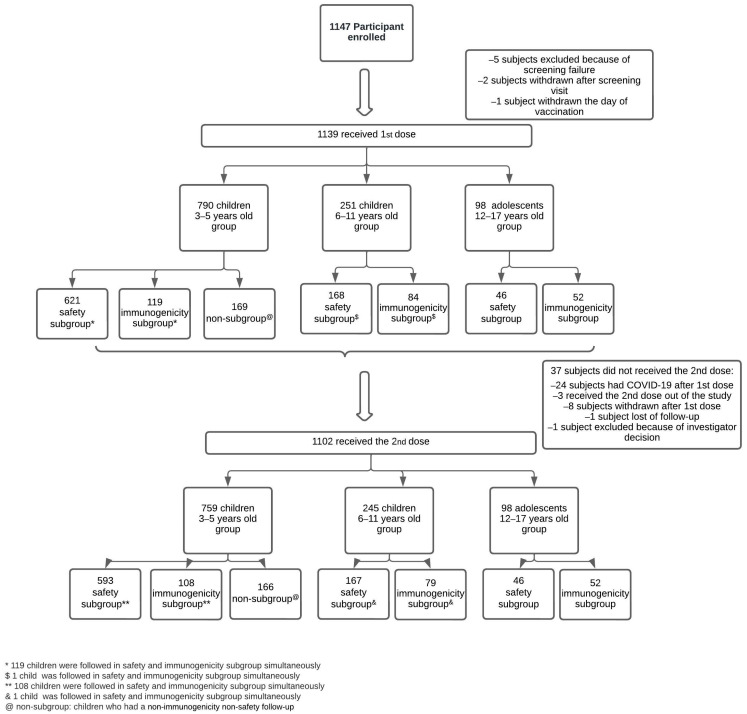
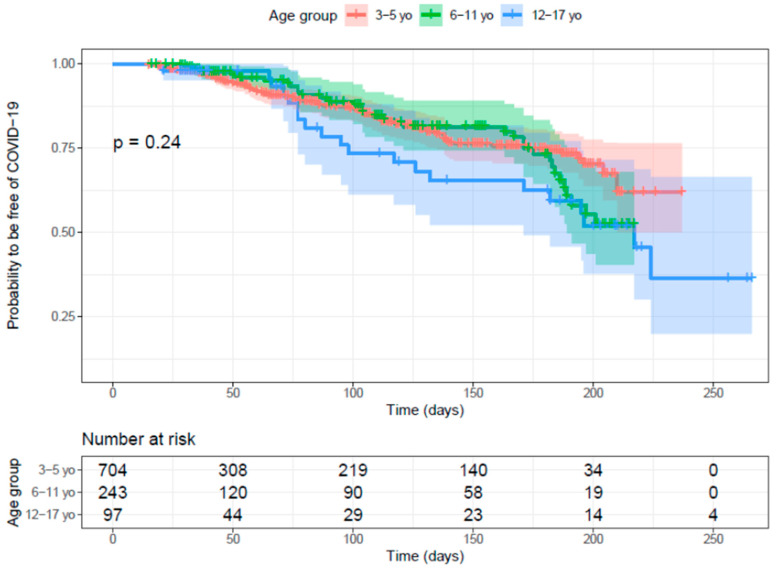
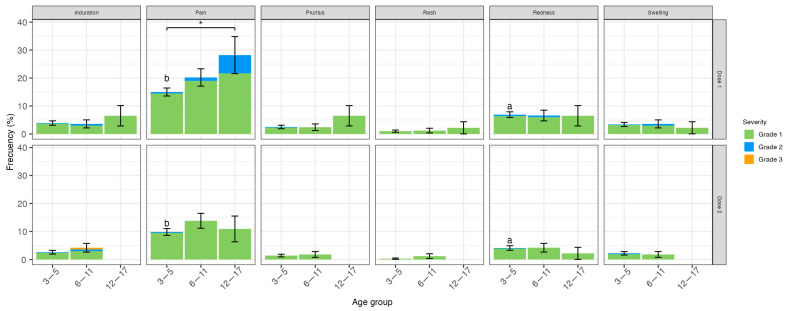
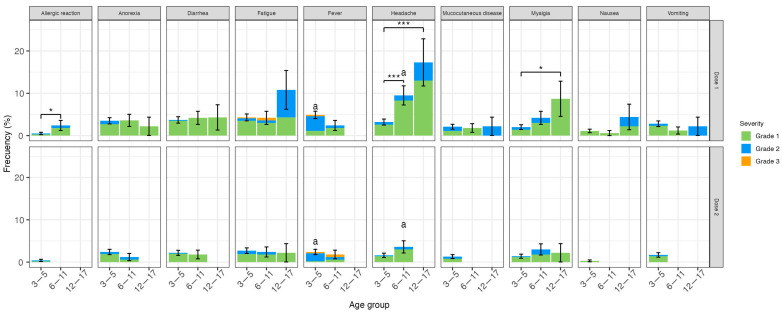
During the COVID-19 pandemic, the importance of vaccinating children against SARS-CoV-2 was rapidly established. This study describes the safety of CoronaVac in children and adolescents between 3- and 17-years-old in a multicenter study in Chile with two vaccine doses in a 4-week interval. For all participants, immediate adverse events (AEs), serious AEs (SAEs), and AEs of special interest (AESIs) were registered throughout the study. In the safety subgroup, AEs were recorded 28 days after each dose. COVID-19 surveillance was performed throughout the study. A total of 1139 individuals received the first and 1102 the second dose of CoronaVac; 835 were in the safety subgroup. The first dose showed the highest number of AEs: up to 22.2% of participants reported any local and 17.1% systemic AE. AEs were more frequent in adolescents after the first dose, were transient, and mainly mild. Pain at the inoculation site was the most frequent AE for all ages. Fever was the most frequent systemic AE for 3-5 years old and headache in 6-17 years old. No SAEs or AESIs related to vaccination occurred. Most of the COVID-19 cases were mild and managed as outpatients. CoronaVac was safe and well tolerated in children and adolescents, with different safety patterns according to age.
在新冠疫情期间,为儿童接种新冠病毒疫苗的重要性迅速得到确立。本研究描述了在智利一项多中心研究中,3至17岁儿童和青少年接种两剂间隔4周的科兴新冠疫苗(CoronaVac)的安全性。在整个研究过程中,记录了所有参与者的即时不良事件(AE)、严重不良事件(SAE)和特殊关注不良事件(AESI)。在安全亚组中,每次接种后28天记录不良事件。在整个研究过程中进行了新冠病毒监测。共有1139人接种了第一剂科兴新冠疫苗,1102人接种了第二剂;835人在安全亚组中。第一剂接种后出现的不良事件数量最多:高达22.2%的参与者报告了任何局部不良事件,17.1%报告了全身不良事件。第一剂接种后,青少年中的不良事件更为常见,多为短暂性,且主要为轻度。接种部位疼痛是各年龄段最常见的不良事件。发热是3至5岁儿童最常见的全身不良事件,6至17岁儿童中最常见的是头痛。未发生与疫苗接种相关的严重不良事件或特殊关注不良事件。大多数新冠病例为轻症,作为门诊患者处理。科兴新冠疫苗在儿童和青少年中安全且耐受性良好,不同年龄组有不同的安全模式。