Atay Funda Yavanoglu, Ciftci Hilal Berber, Sahin Ozlem, Guran Omer, Colak Derya, Gok Nazife Reyyan, Erdem Burcu Karakol, Akin Ilke Mungan
Division of Neonatology, Umraniye Training and Research Hospital, Istanbul, Türkiye.
Department of Speech and Language Therapy, Tarsus University Faculty of Health Sciences, Tarsus, Mersin, Türkiye.
Sisli Etfal Hastan Tip Bul. 2023 Jun 20;57(2):189-194. doi: 10.14744/SEMB.2022.96562. eCollection 2023.
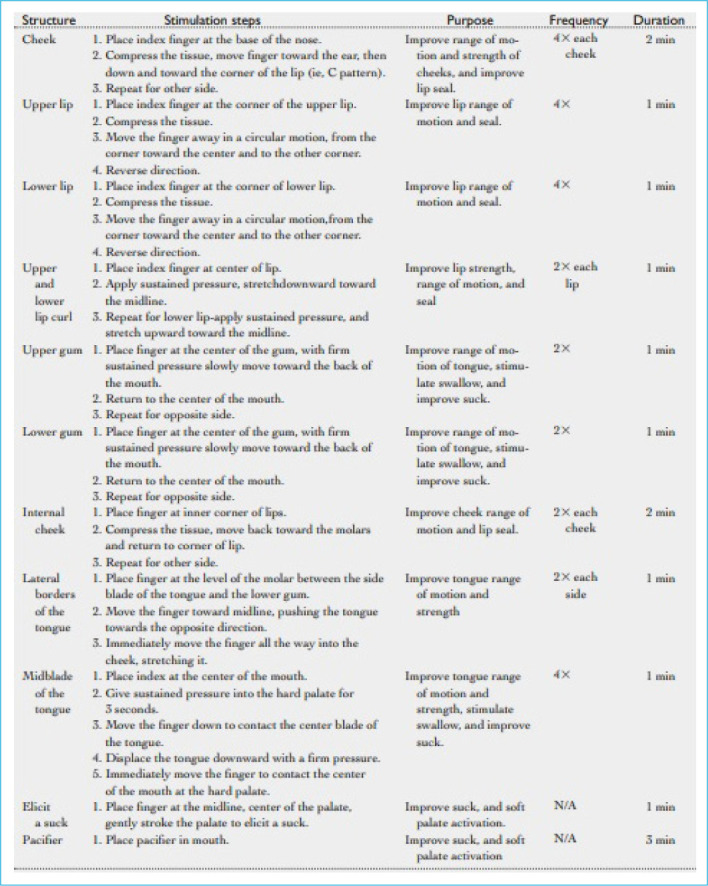
Oral feeding in preterm infants is a complex and dynamic process involving oral motor development and interaction between the neurological, cardiorespiratory, and gastrointestinal systems. Oral motor stimulation (OMS) is defined as stimulating the oropharyngeal components such as the lips, jaw, tongue, and soft palate with fingers in preterm infants to increase their feeding skills. In this study, we aimed to evaluate the effect of OMS exercises on the sucking and swallowing skills of preterm infants and demonstrate the utility of objective scales to evaluate infants' readiness for oral feeding.
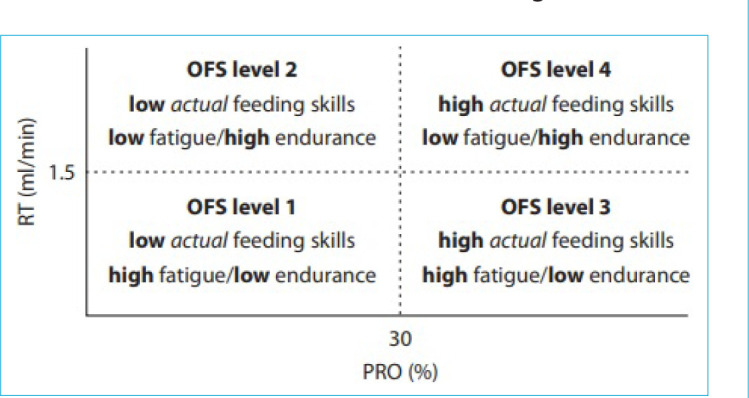
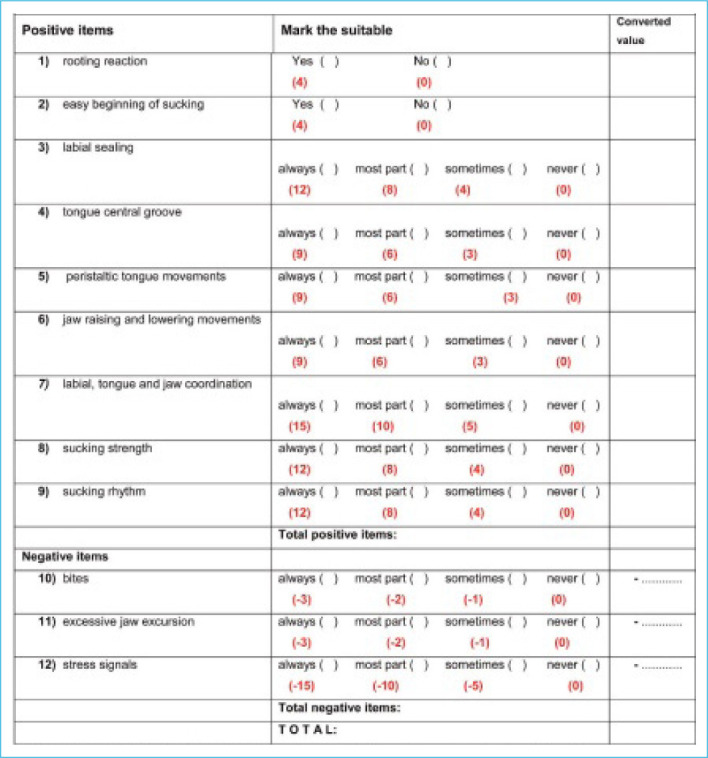
This single-center, prospective cohort study was conducted between June 1 and December 31, 2020, which included preterm infants born at ≤34 weeks of gestation and admitted to the neonatal intensive care unit of our hospital. All procedures of the OMS program were performed once a day, 5 times a week by a language and speech therapist who is an expert in oral feeding skills (OFS) staging and non-nutritive sucking (NNS) scoring. All infants were followed up until discharge with a weekly evaluation of OFS staging and NNS scoring.
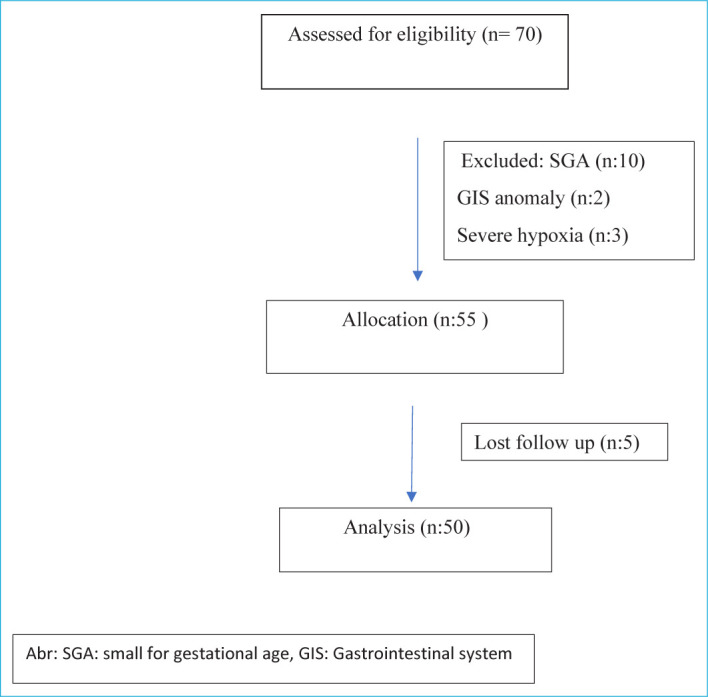
A total of 50 infants were included in this prospective cohort study. The mean birth weight was 1376.9±372 g, and the median gestational age was 30 weeks (interquartile range: 25-34). The comparison of OFS stages on day 5 and day 10 of OMS revealed a significant increase (p<0.001). Similarly, there was a significant improvement in the NNS scores on days 5 and 10 compared to the baseline.
In preterm infants, OMS during the transition from gavage feeding to oral feeding improves feeding skills.
早产儿经口喂养是一个复杂且动态的过程,涉及口腔运动发育以及神经、心肺和胃肠系统之间的相互作用。口腔运动刺激(OMS)被定义为通过手指刺激早产儿的口咽部分,如嘴唇、下颌、舌头和软腭,以提高其喂养技能。在本研究中,我们旨在评估OMS训练对早产儿吸吮和吞咽技能的影响,并证明客观量表在评估婴儿经口喂养准备情况方面的实用性。
本单中心前瞻性队列研究于2020年6月1日至12月31日进行,纳入孕周≤34周且入住我院新生儿重症监护病房的早产儿。OMS计划的所有程序均由一名语言和言语治疗师每天进行一次,每周进行5次,该治疗师是口腔喂养技能(OFS)分期和非营养性吸吮(NNS)评分方面的专家。所有婴儿均随访至出院,每周评估OFS分期和NNS评分。
本前瞻性队列研究共纳入50例婴儿。平均出生体重为1376.9±372g,中位孕周为30周(四分位间距:25 - 34周)。OMS第5天和第10天的OFS分期比较显示有显著增加(p<0.001)。同样,与基线相比第5天和第10天的NNS评分有显著改善。
在早产儿从管饲喂养过渡到经口喂养期间,OMS可改善喂养技能。