Psychosocial Research and Epidemiology, Antoni van Leeuwenhoek Netherlands Cancer Institute, Amsterdam, The Netherlands.
Julius Center for Health Sciences and Primary Care, University Medical Center Utrecht, Utrecht University, Utrecht, Netherlands.
Open Heart. 2023 Oct;10(2). doi: 10.1136/openhrt-2023-002464.
Animal data suggest that exercise during chemotherapy is cardioprotective, but clinical evidence to support this is limited. This study evaluated the effect of exercise during chemotherapy for breast cancer on long-term cardiovascular toxicity.
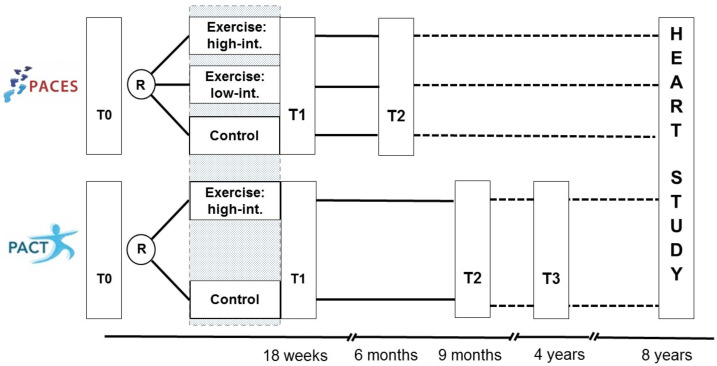
This is a follow-up study of two previously performed randomised trials in patients with breast cancer allocated to exercise during chemotherapy or non-exercise controls. Cardiac imaging parameters, including T1 mapping (native T1, extracellular volume fraction (ECV)), left ventricular ejection fraction (LVEF) and global longitudinal strain (GLS), cardiorespiratory fitness, and physical activity levels, were acquired 8.5 years post-treatment.
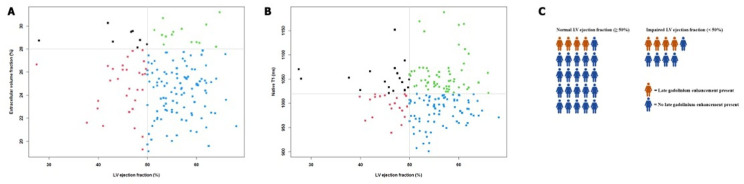
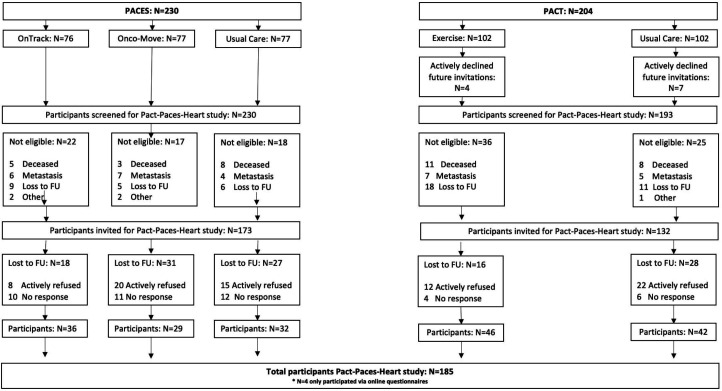
In total, 185 breast cancer survivors were included (mean age 58.9±7.8 years), of whom 99% and 18% were treated with anthracyclines and trastuzumab, respectively. ECV and Native T1 were 25.3%±2.5% and 1026±51 ms in the control group, and 24.6%±2.8% and 1007±44 ms in the exercise group, respectively. LVEF was borderline normal in both groups, with an LVEF<50% prevalence of 22.5% (n=40/178) in all participants. Compared with control, native T1 was statistically significantly lower in the exercise group (β=-20.16, 95% CI -35.35 to -4.97). We found no effect of exercise on ECV (β=-0.69, 95% CI -1.62 to 0.25), LVEF (β=-1.36, 95% CI -3.45 to 0.73) or GLS (β=0.31, 95% CI -0.76 to 1.37). Higher self-reported physical activity levels during chemotherapy were significantly associated with better native T1 and ECV.
In long-term breast cancer survivors, exercise and being more physically active during chemotherapy were associated with better structural but not functional cardiac parameters. The high prevalence of cardiac dysfunction calls for additional research on cardioprotective measures, including alternative exercise regimens.
NTR7247.
动物研究表明,化疗期间运动具有心脏保护作用,但支持这一作用的临床证据有限。本研究旨在评估乳腺癌患者化疗期间运动对长期心血管毒性的影响。
这是两项先前进行的随机试验的随访研究,将乳腺癌患者随机分配至化疗期间运动组或非运动对照组。在治疗后 8.5 年,采集心脏影像学参数,包括 T1 映射(原生 T1、细胞外容积分数(ECV))、左心室射血分数(LVEF)和整体纵向应变(GLS)、心肺功能和体力活动水平。
共纳入 185 例乳腺癌幸存者(平均年龄 58.9±7.8 岁),其中 99%和 18%分别接受了蒽环类药物和曲妥珠单抗治疗。对照组的 ECV 和原生 T1 分别为 25.3%±2.5%和 1026±51 ms,运动组分别为 24.6%±2.8%和 1007±44 ms。两组的 LVEF 均接近正常,所有参与者的 LVEF<50%患病率为 22.5%(n=40/178)。与对照组相比,运动组的原生 T1 明显更低(β=-20.16,95%CI-35.35 至-4.97)。我们未发现运动对 ECV(β=-0.69,95%CI-1.62 至 0.25)、LVEF(β=-1.36,95%CI-3.45 至 0.73)或 GLS(β=0.31,95%CI-0.76 至 1.37)有影响。化疗期间较高的自我报告体力活动水平与更好的原生 T1 和 ECV 显著相关。
在长期乳腺癌幸存者中,化疗期间运动和更高的体力活动与更好的结构性但非功能性心脏参数相关。高患病率的心脏功能障碍表明需要进一步研究心脏保护措施,包括替代运动方案。
NTR7247。