Dept. of Biochemistry, Vanderbilt University, Nashville, TN, USA.
Multiscale Modeling Group, SI3, Altos Labs, Redwood City, CA, USA.
NPJ Syst Biol Appl. 2023 Oct 31;9(1):55. doi: 10.1038/s41540-023-00316-2.
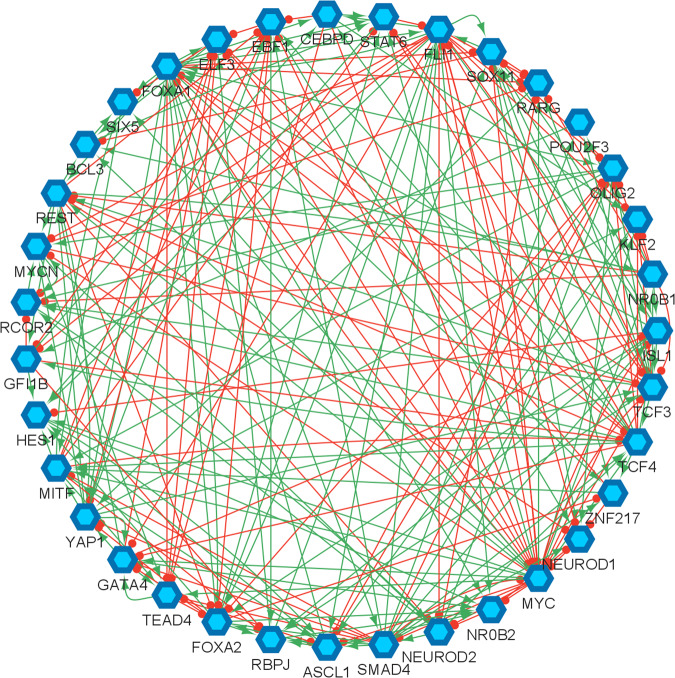
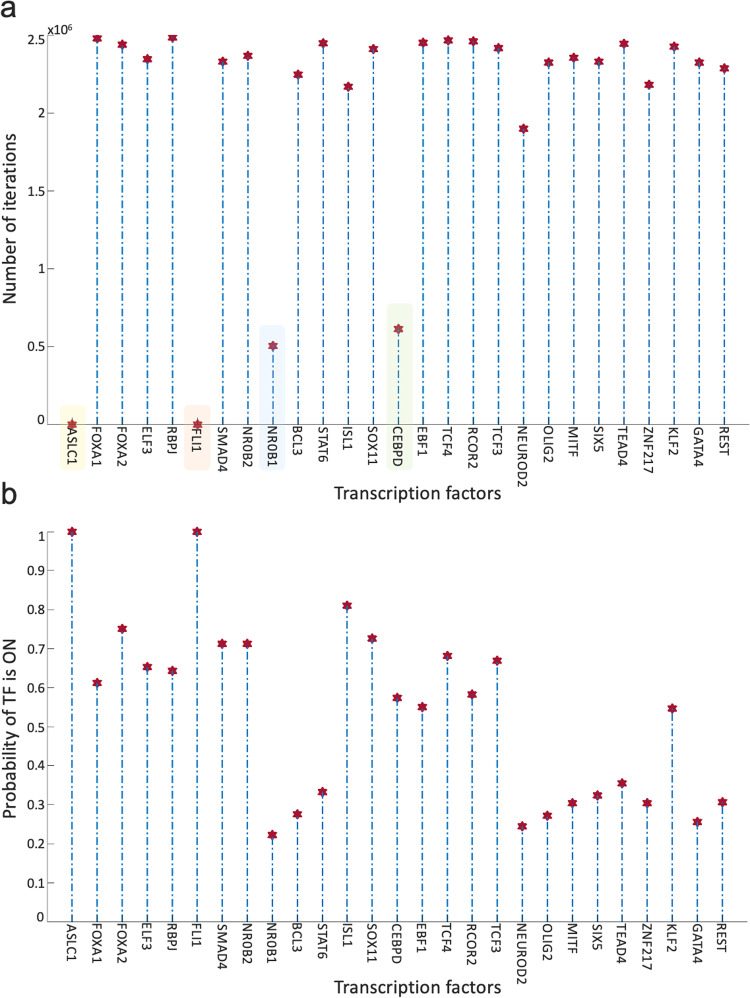
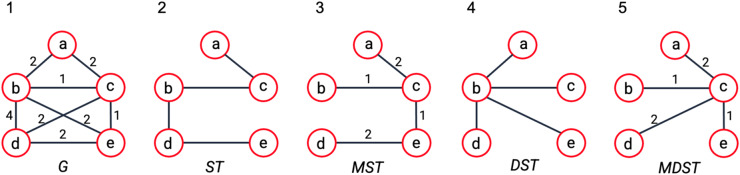
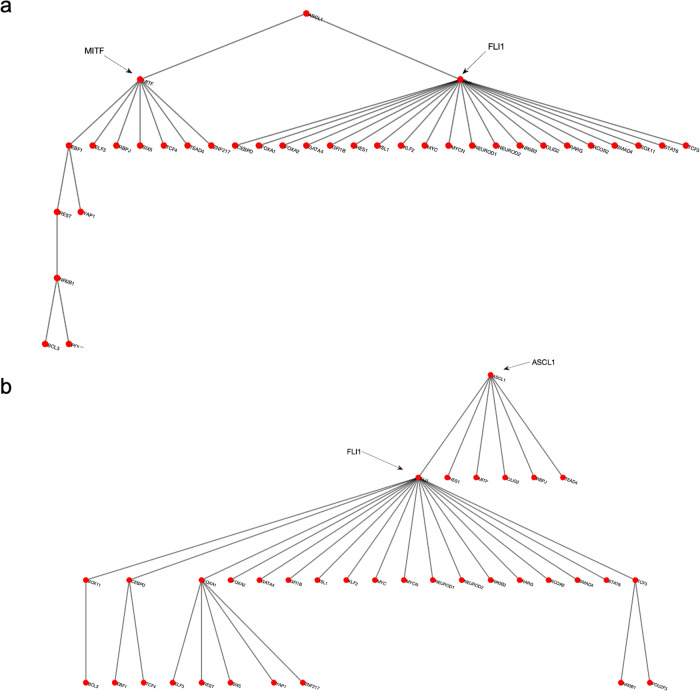
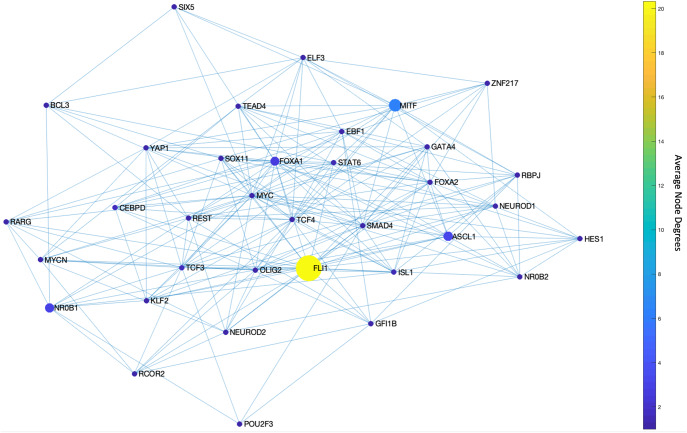
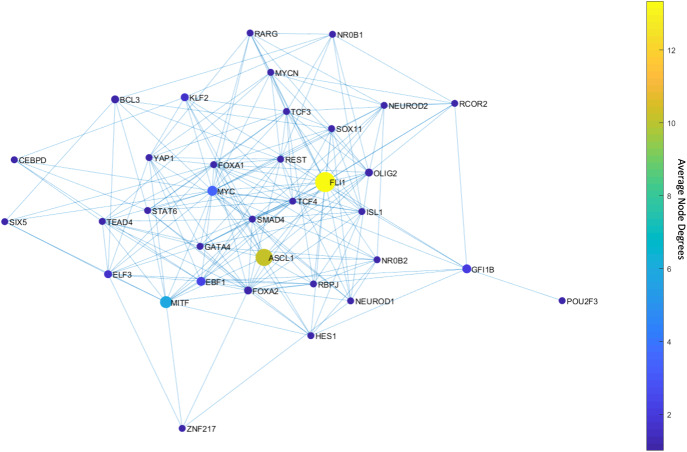
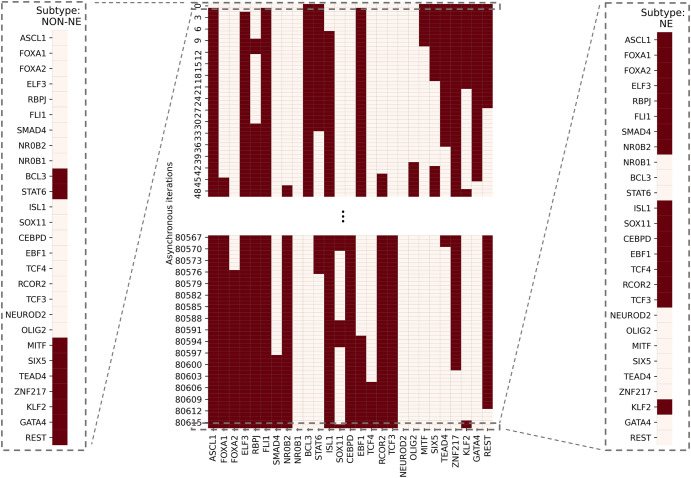
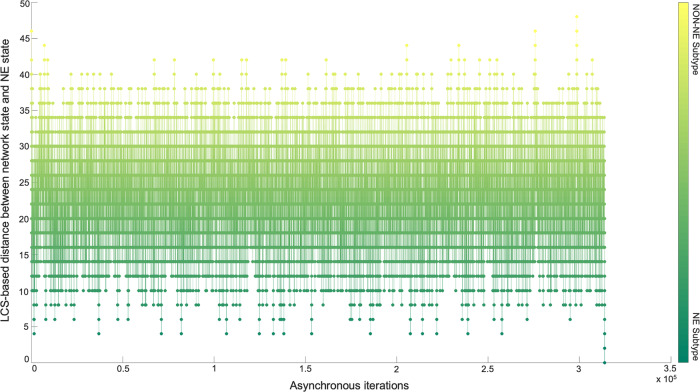
Small cell lung cancer (SCLC) is an aggressive disease and challenging to treat due to its mixture of transcriptional subtypes and subtype transitions. Transcription factor (TF) networks have been the focus of studies to identify SCLC subtype regulators via systems approaches. Yet, their structures, which can provide clues on subtype drivers and transitions, are barely investigated. Here, we analyze the structure of an SCLC TF network by using graph theory concepts and identify its structurally important components responsible for complex signal processing, called hubs. We show that the hubs of the network are regulators of different SCLC subtypes by analyzing first the unbiased network structure and then integrating RNA-seq data as weights assigned to each interaction. Data-driven analysis emphasizes MYC as a hub, consistent with recent reports. Furthermore, we hypothesize that the pathways connecting functionally distinct hubs may control subtype transitions and test this hypothesis via network simulations on a candidate pathway and observe subtype transition. Overall, structural analyses of complex networks can identify their functionally important components and pathways driving the network dynamics. Such analyses can be an initial step for generating hypotheses and can guide the discovery of target pathways whose perturbation may change the network dynamics phenotypically.
小细胞肺癌(SCLC)是一种侵袭性疾病,由于其转录亚型的混合和亚型转换,治疗具有挑战性。转录因子(TF)网络一直是通过系统方法识别 SCLC 亚型调节剂的研究焦点。然而,它们的结构可以提供关于亚型驱动因素和转换的线索,几乎没有得到研究。在这里,我们通过使用图论概念来分析 SCLC TF 网络的结构,并确定其负责复杂信号处理的结构重要组成部分,称为枢纽。我们通过分析无偏网络结构,然后将 RNA-seq 数据整合为分配给每个相互作用的权重,来表明网络的枢纽是不同 SCLC 亚型的调节剂。数据驱动的分析强调 MYC 作为一个枢纽,这与最近的报道一致。此外,我们假设连接功能不同枢纽的途径可能控制亚型转换,并通过对候选途径进行网络模拟来测试这一假设,并观察到亚型转换。总的来说,复杂网络的结构分析可以识别其功能重要的组成部分和驱动网络动态的途径。这种分析可以作为产生假设的初始步骤,并可以指导发现可能改变网络表型动态的扰动靶途径。