I-HAB, Institute of Human Virology Nigeria, Abuja, Nigeria.
University of Maryland School of Medicine, Institute of Human Virology, University of Maryland Baltimore, 725 West Lombard Street Suite, Baltimore, MD, USA.
Genome Med. 2023 Nov 6;15(1):92. doi: 10.1186/s13073-023-01235-x.
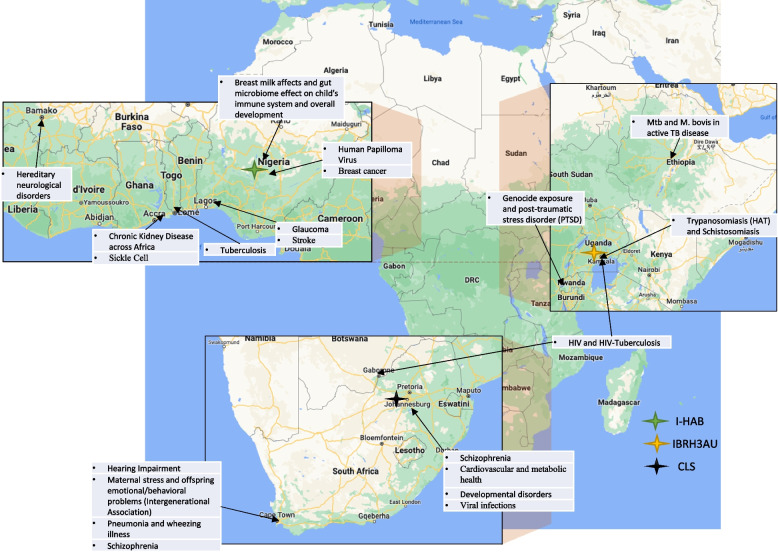
Biorepositories archive and distribute well-characterized biospecimens for research to support the development of medical diagnostics and therapeutics. Knowledge of biobanking and associated practices is incomplete in low- and middle-income countries where disease burden is disproportionately high. In 2011, the African Society of Human Genetics (AfSHG), the National Institutes of Health (NIH), and the Wellcome Trust founded the Human Heredity and Health in Africa (H3Africa) consortium to promote genomic research in Africa and established a network of three biorepositories regionally located in East, West, and Southern Africa to support biomedical research. This manuscript describes the processes established by H3Africa biorepositories to prepare research sites to collect high-quality biospecimens for deposit at H3Africa biorepositories.
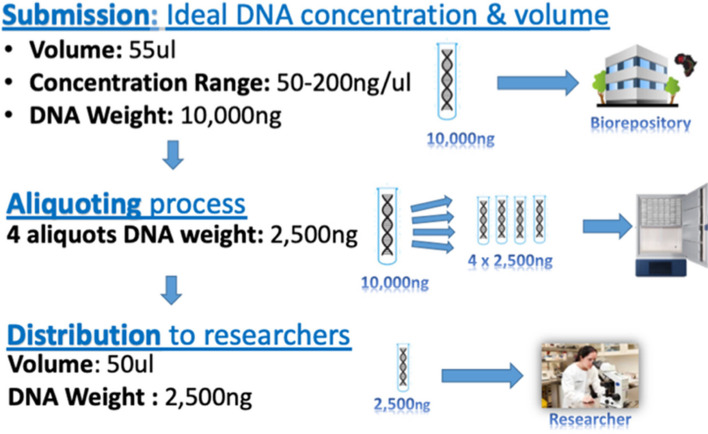
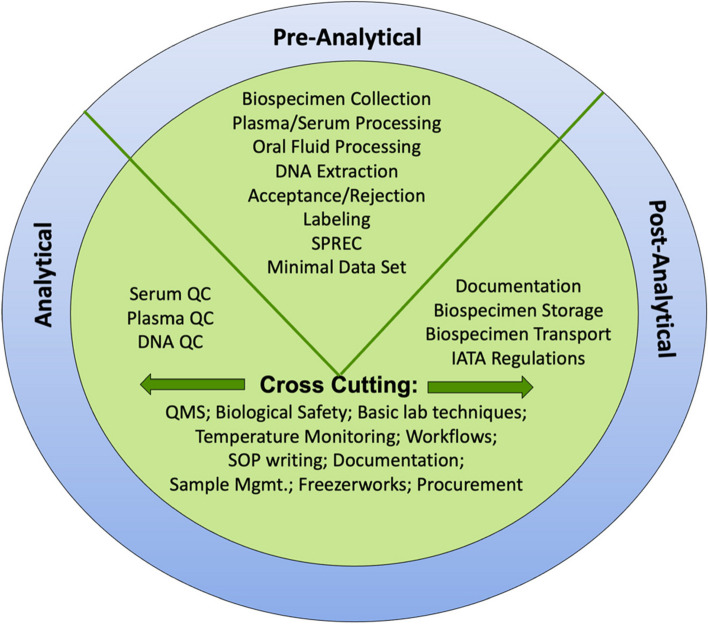
The biorepositories harmonized practices between the biorepositories and the research sites. The biorepositories developed guidelines to establish best practices and define biospecimen requirements; standard operating procedures (SOPs) for common processes such as biospecimen collection, processing, storage, transportation, and documentation as references; requirements for minimal associated datasets and formats; and a template material transfer agreements (MTA) to govern biospecimen exchange. The biorepositories also trained and mentored collection sites in relevant biobanking processes and procedures and verified biospecimen deposit processes. Throughout these procedures, the biorepositories followed ethical and legal requirements.
The 20 research projects deposited 107,982 biospecimens (76% DNA, 81,067), in accordance with the ethical and legal requirements and established best practices. The biorepositories developed and customized resources and human capacity building to support the projects. [The biorepositories developed 34 guidelines, SOPs, and documents; trained 176 clinicians and scientists in over 30 topics; sensitized ethical bodies; established MTAs and reviewed consent forms for all projects; attained import permits; and evaluated pilot exercises and provided feedback.
Biobanking in low- and middle-income countries by local skilled staff is critical to advance biobanking and genomic research and requires human capacity and resources for global partnerships. Biorepositories can help build human capacity and resources to support biobanking by partnering with researchers. Partnerships can be structured and customized to incorporate document development, ethics, training, mentorship, and pilots to prepare sites to collect, process, store, and transport biospecimens of high quality for future research.
生物库为研究存档和分发经过充分特征鉴定的生物样本,以支持医疗诊断和治疗的发展。在疾病负担不成比例地高的低收入和中等收入国家,人们对生物银行及其相关实践的了解并不完整。2011 年,非洲人类遗传学学会(AfSHG)、美国国立卫生研究院(NIH)和惠康信托基金会成立了人类遗传与健康在非洲(H3Africa)联盟,以促进非洲的基因组研究,并建立了一个由三个生物库组成的网络,这些生物库分别位于东非、西非和南非,以支持生物医学研究。本文描述了 H3Africa 生物库为准备研究地点制定的流程,以便为 H3Africa 生物库收集高质量的生物样本。
生物库使生物库和研究地点之间的实践达到协调一致。生物库制定了指导方针,以建立最佳实践并定义生物样本的要求;制定了标准操作规程(SOPs),以涵盖生物样本采集、处理、存储、运输和文档等常见过程,作为参考;定义了最小相关数据集和格式的要求;并制定了材料转移协议(MTA)模板,以规范生物样本的交换。生物库还培训和指导了采集地点的相关生物银行流程和程序,并验证了生物样本的储存流程。在整个过程中,生物库遵循了伦理和法律要求。
20 个研究项目共存入 107982 个生物样本(76%为 DNA,81067 个),符合伦理和法律要求以及既定的最佳实践。生物库开发和定制了资源和人力建设,以支持项目。[生物库制定了 34 项指南、SOP 和文件;培训了 176 名临床医生和科学家,涵盖 30 多个主题;提高了伦理机构的认识;为所有项目制定了 MTA 并审查了同意书;获得了进口许可证;评估了试点活动并提供了反馈。
由当地熟练人员在低收入和中等收入国家进行生物库建设对于推进生物库和基因组研究至关重要,这需要全球合作伙伴的人力和资源。生物库可以通过与研究人员合作,帮助建立人力和资源,以支持生物库建设。合作伙伴关系可以根据需要进行结构化和定制,以纳入文件开发、伦理、培训、指导和试点,使研究地点能够收集、处理、存储和运输高质量的生物样本,以备未来研究使用。