Department of Biological Sciences, Faculty of Science, National University of Singapore, Singapore, 119260, Republic of Singapore.
Sci Rep. 2023 Nov 14;13(1):19868. doi: 10.1038/s41598-023-47338-8.
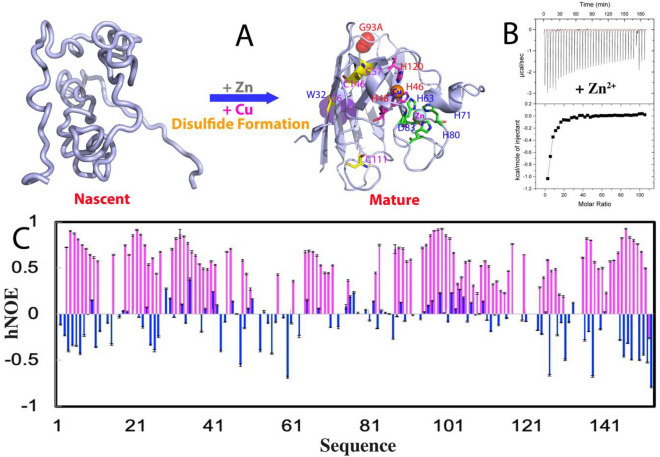
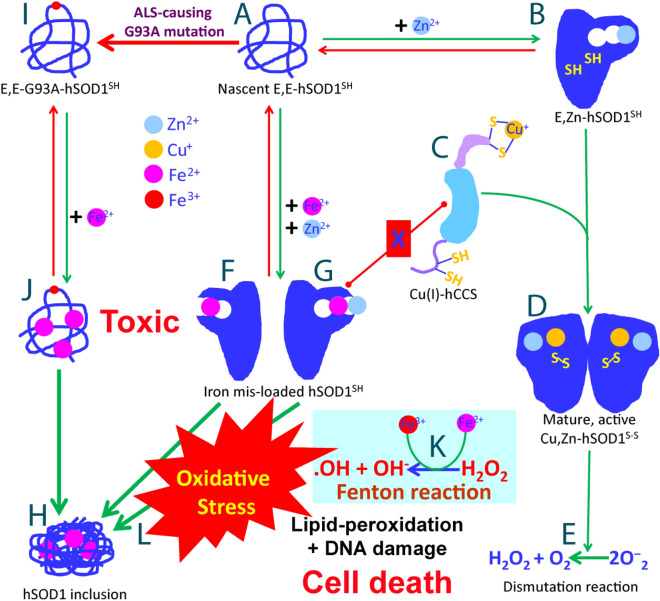
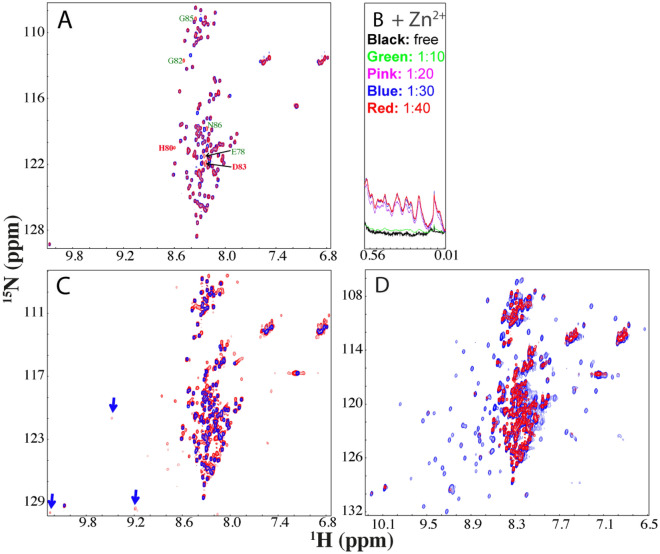
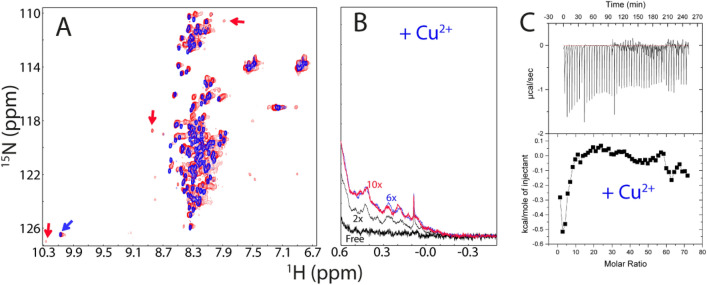
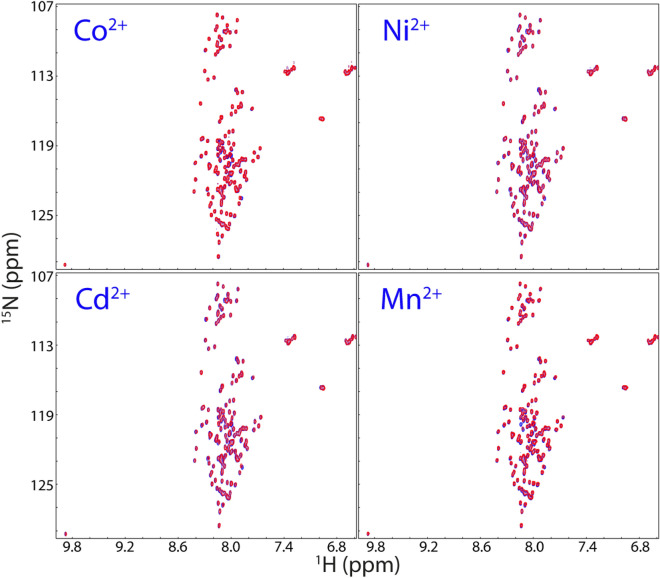
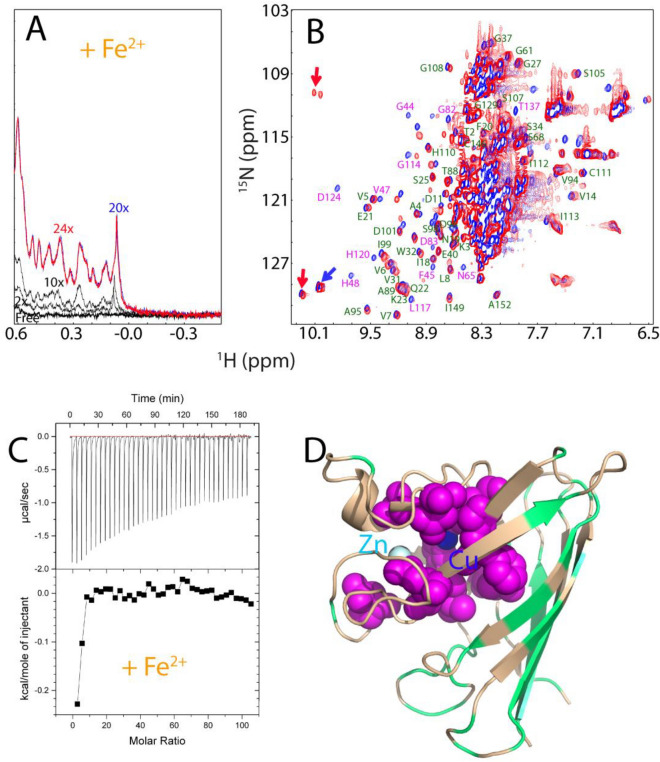
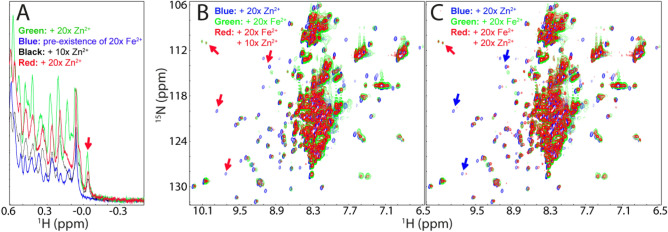
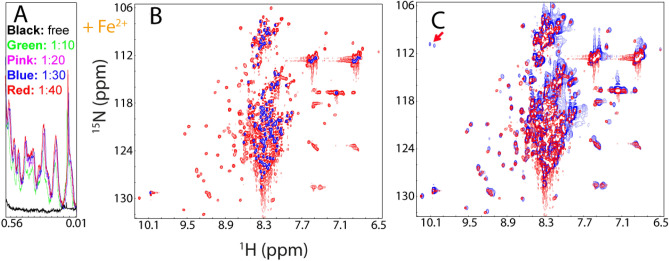
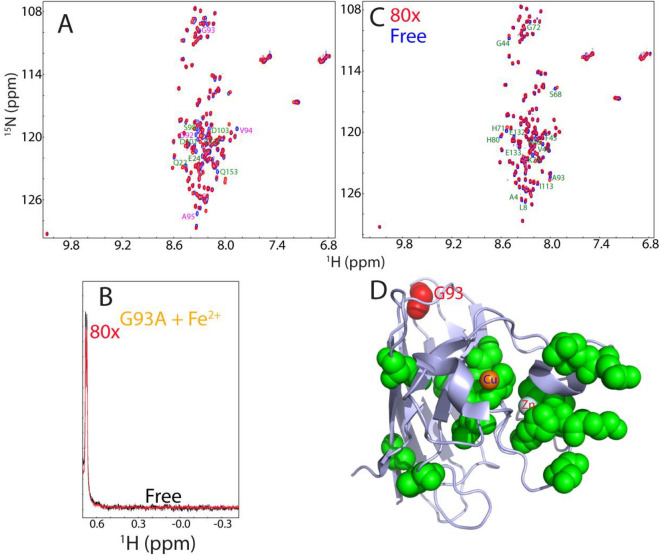
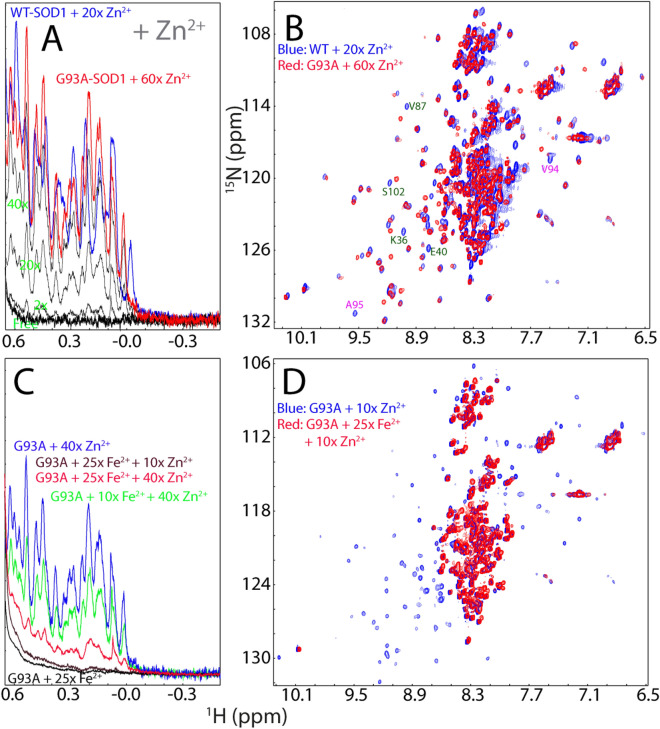
153-Residue copper-zinc superoxide dismutase 1 (hSOD1) is the first gene whose mutation was linked to FALS. To date, > 180 ALS-causing mutations have been identified within hSOD1, yet the underlying mechanism still remains mysterious. Mature hSOD1 is exceptionally stable constrained by a disulfide bridge to adopt a Greek-key β-barrel fold that accommodates copper/zinc cofactors. Conversely, nascent hSOD1 is unfolded and susceptible to aggregation and amyloid formation, requiring Zn to initiate folding to a coexistence of folded and unfolded states. Recent studies demonstrate mutations that disrupt Zn-binding correlate with their ability to form toxic aggregates. Therefore, to decode the role of cations in hSOD1 folding provides not only mechanistic insights, but may bear therapeutic implications for hSOD1-linked ALS. Here by NMR, we visualized the effect of 12 cations: 8 essential for humans (Na, K, Ca, Zn, Mg, Mn, Cu, Fe), 3 mimicking zinc (Ni, Cd, Co), and environmentally abundant Al. Surprisingly, most cations, including Zn-mimics, showed negligible binding or induction for folding of nascent hSOD1. Cu exhibited extensive binding to the unfolded state but led to severe aggregation. Unexpectedly, for the first time Fe was deciphered to have Zn-like folding-inducing capacity. Zn was unable to induce folding of H80S/D83S-hSOD1, while Fe could. In contrast, Zn could trigger folding of G93A-hSOD1, but Fe failed. Notably, pre-existing Fe disrupted the Zn-induced folding of G93A-hSOD1. Comparing with the ATP-induced folded state, our findings delineate that hSOD1 maturation requires: (1) intrinsic folding capacity encoded by the sequence; (2) specific Zn-coordination; (3) disulfide formation and Cu-load catalyzed by hCCS. This study unveils a previously-unknown interplay of cations in governing the initial folding of hSOD1, emphasizing the pivotal role of Zn in hSOD1-related ALS and implying new hSOD1-dependent mechanisms for Cu/Fe-induced cytotoxicity, likely relevant to aging and other diseases.
153-残基铜锌超氧化物歧化酶 1(hSOD1)是第一个被发现与 FALS 相关的突变基因。迄今为止,在 hSOD1 中已经发现了超过 180 种导致 ALS 的突变,但潜在的机制仍然神秘莫测。成熟的 hSOD1 非常稳定,受二硫键的限制,采用希腊钥匙β桶折叠结构来容纳铜/锌辅因子。相反,新生的 hSOD1 是未折叠的,容易聚集和形成淀粉样纤维,需要 Zn 来启动折叠,从而形成折叠和未折叠状态的共存。最近的研究表明,破坏 Zn 结合的突变与它们形成毒性聚集的能力相关。因此,解析阳离子在 hSOD1 折叠中的作用不仅提供了机制上的见解,而且可能对 hSOD1 相关 ALS 的治疗具有重要意义。在这里,通过 NMR,我们观察到了 12 种阳离子的影响:人类必需的 8 种阳离子(Na、K、Ca、Zn、Mg、Mn、Cu、Fe)、3 种模拟锌的阳离子(Ni、Cd、Co)和环境中丰富的 Al。令人惊讶的是,大多数阳离子,包括 Zn 模拟物,对新生 hSOD1 的折叠几乎没有结合或诱导作用。Cu 对未折叠状态表现出广泛的结合,但导致严重的聚集。出乎意料的是,Fe 首次被解析具有类似于 Zn 的折叠诱导能力。Zn 不能诱导 H80S/D83S-hSOD1 的折叠,而 Fe 可以。相反,Zn 可以触发 G93A-hSOD1 的折叠,但 Fe 不能。值得注意的是,预先存在的 Fe 会破坏 Zn 诱导的 G93A-hSOD1 折叠。与 ATP 诱导的折叠状态相比,我们的发现描绘了 hSOD1 成熟需要:(1)由序列编码的内在折叠能力;(2)特定的 Zn 配位;(3)hCCS 催化的二硫键形成和 Cu 加载。这项研究揭示了阳离子在调控 hSOD1 初始折叠中的一种以前未知的相互作用,强调了 Zn 在 hSOD1 相关 ALS 中的关键作用,并暗示了新的 hSOD1 依赖机制,用于 Cu/Fe 诱导的细胞毒性,可能与衰老和其他疾病有关。