Systems Biotechnology group, Helmholtz Centre for Environmental Research - UFZ, Leipzig, Germany.
Institute of Systems Biotechnology, Saarland University, Saarbrücken, Germany.
Microb Biotechnol. 2024 Jan;17(1):e14375. doi: 10.1111/1751-7915.14375. Epub 2023 Nov 22.
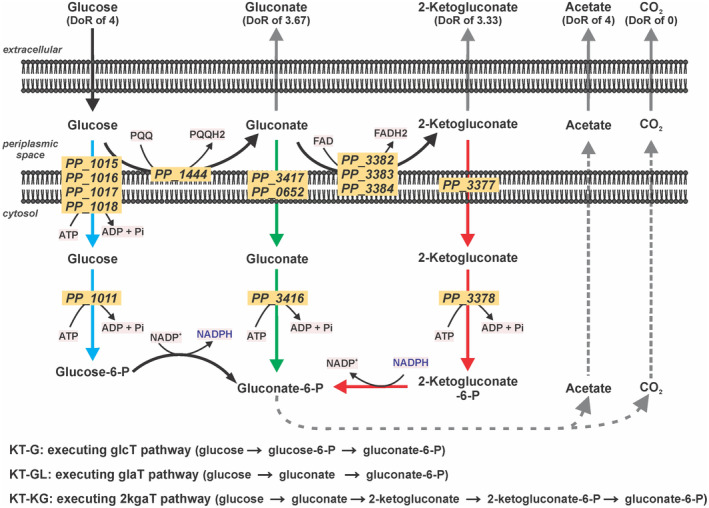
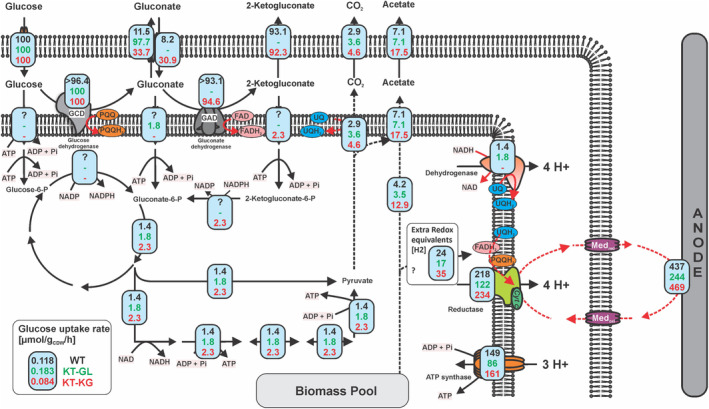
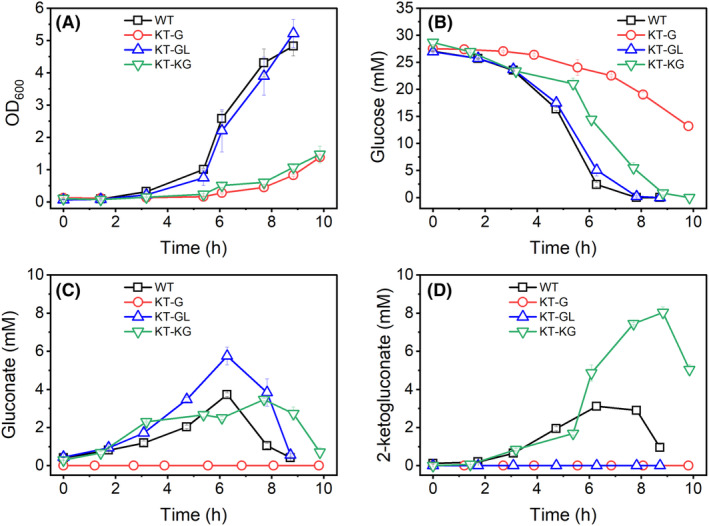
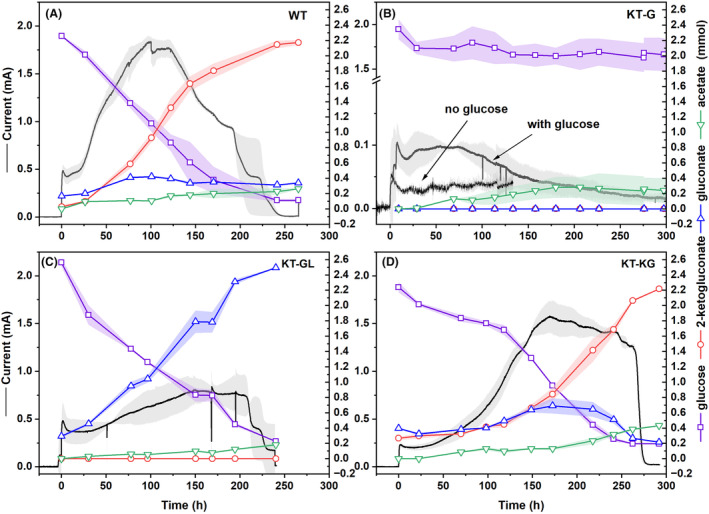
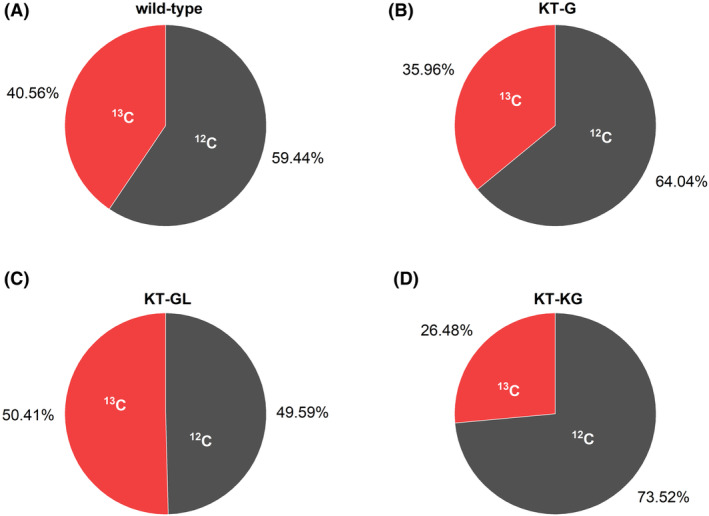
Providing an anodic potential in a bio-electrochemical system to the obligate aerobe Pseudomonas putida enables anaerobic survival and allows the cells to overcome redox imbalances. In this setup, the bacteria could be exploited to produce chemicals via oxidative pathways at high yield. However, the absence of anaerobic growth and low carbon turnover rates remain as obstacles for the application of such an electro-fermentation technology. Growth and carbon turnover start with carbon uptake into the periplasm and cytosol. P. putida KT2440 has three native transporting systems for glucose, each differing in energy and redox demand. This architecture previously led to the hypothesis that internal redox and energy constraints ultimately limit cytoplasmic carbon utilization in a bio-electrochemical system. However, it remains largely unclear which uptake route is predominantly used by P. putida under electro-fermentative conditions. To elucidate this, we created three gene deletion mutants of P. putida KT2440, forcing the cells to exclusively utilize one of the routes. When grown in a bio-electrochemical system, the pathway mutants were heavily affected in terms of sugar consumption, current output and product formation. Surprisingly, however, we found that about half of the acetate formed in the cytoplasm originated from carbon that was put into the system via the inoculation biomass, while the other half came from the consumption of substrate. The deletion of individual sugar uptake routes did not alter significantly the secreted acetate concentrations among different strains even with different carbon sources. This means that the stoichiometry of the sugar uptake routes is not a limiting factor during electro-fermentation and that the low rates might be caused by other reasons, for example energy limitations or a yet-to-be-identified oxygen-dependent regulatory mechanism.
在需氧严格的假单胞菌(Pseudomonas putida)的生物电化学系统中提供阳极电势,使其能够在厌氧条件下存活并克服氧化还原失衡。在这种设置下,可以利用细菌通过氧化途径以高产率生产化学品。然而,缺乏厌氧生长和低碳转化速率仍然是该电发酵技术应用的障碍。生长和碳转化始于细胞周质和细胞质中碳的摄取。假单胞菌 KT2440 有三种天然的葡萄糖转运系统,每种系统在能量和氧化还原需求上都有所不同。这种结构以前导致了这样的假设,即内部氧化还原和能量限制最终限制了生物电化学系统中细胞质碳的利用。然而,在电发酵条件下,假单胞菌主要使用哪种摄取途径仍然很大程度上不清楚。为了阐明这一点,我们创建了假单胞菌 KT2440 的三个基因缺失突变体,迫使细胞仅利用其中一种途径。当在生物电化学系统中生长时,途径突变体在糖消耗、电流输出和产物形成方面受到严重影响。然而,令人惊讶的是,我们发现细胞质中形成的约一半的乙酸来自通过接种生物量进入系统的碳,而另一半来自底物的消耗。单独糖摄取途径的缺失并没有显著改变不同菌株甚至不同碳源的分泌乙酸浓度。这意味着糖摄取途径的化学计量在电发酵过程中不是一个限制因素,低速率可能是由其他原因引起的,例如能量限制或尚未确定的依赖于氧气的调节机制。