Department of Biophysics, Jagiellonian University, Krakow, Poland.
Department of Biochemistry, Medical College of Wisconsin, Milwaukee, WI, 53226, USA.
Cell Biochem Biophys. 2024 Mar;82(1):213-222. doi: 10.1007/s12013-023-01194-5. Epub 2023 Nov 23.
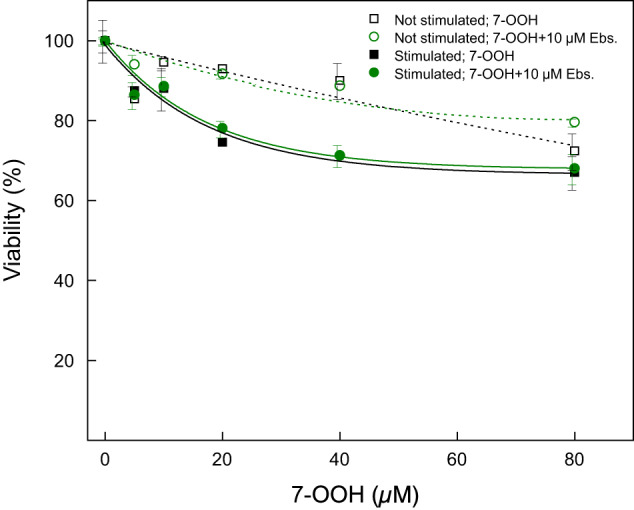
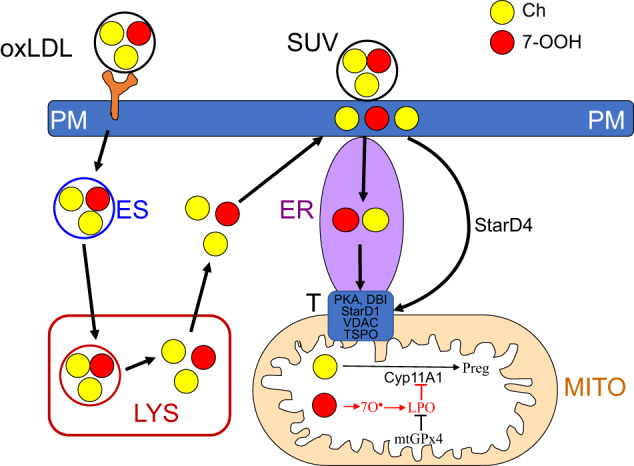
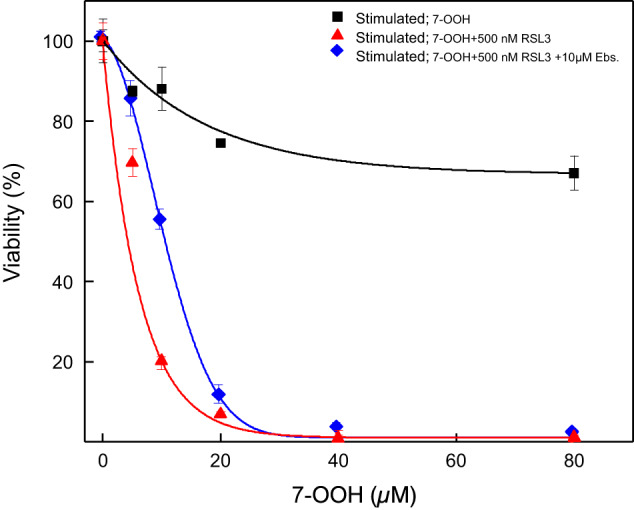
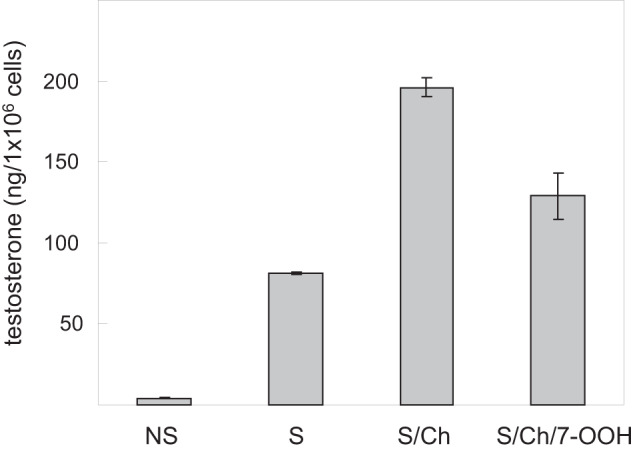
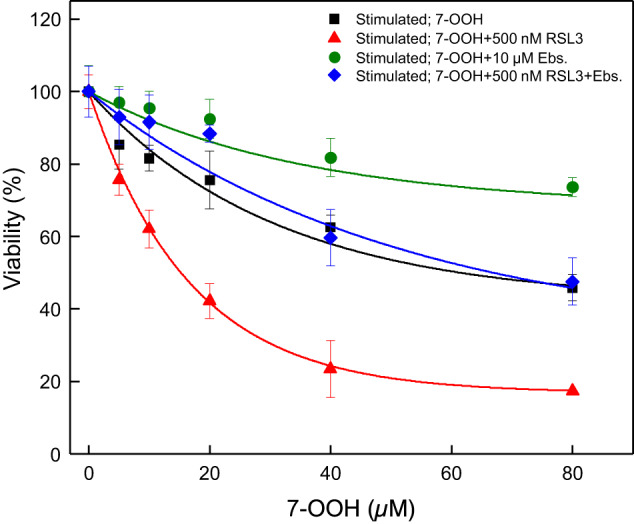
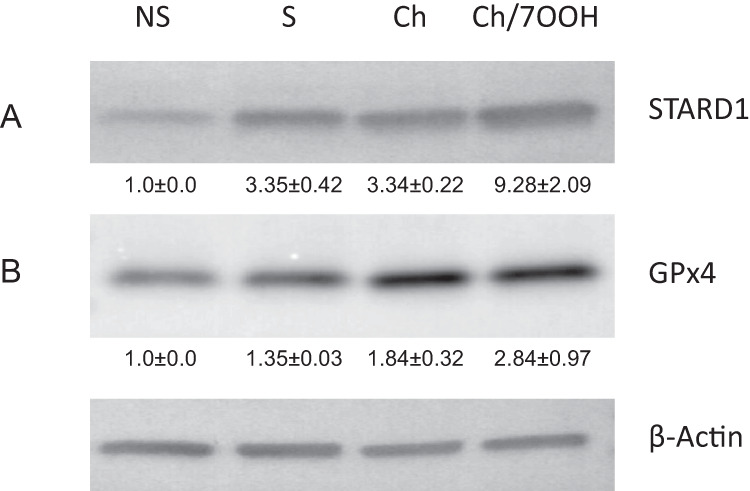
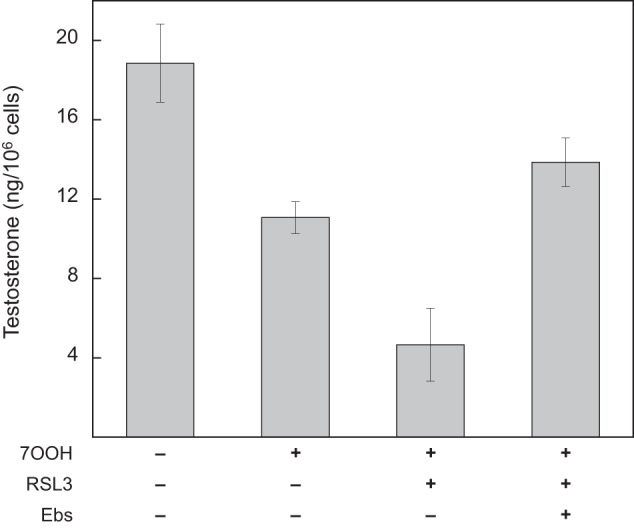
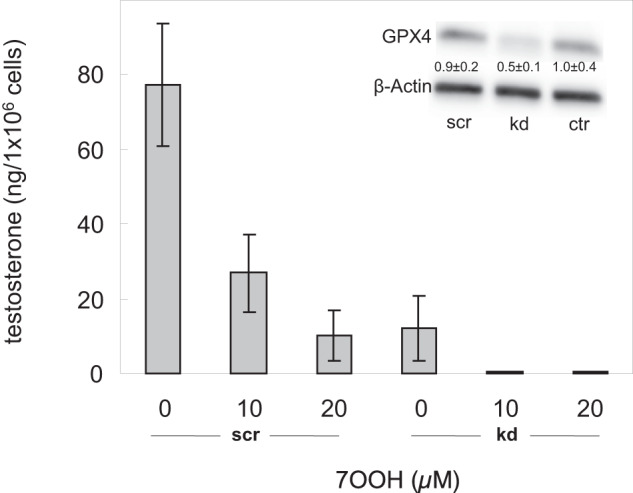
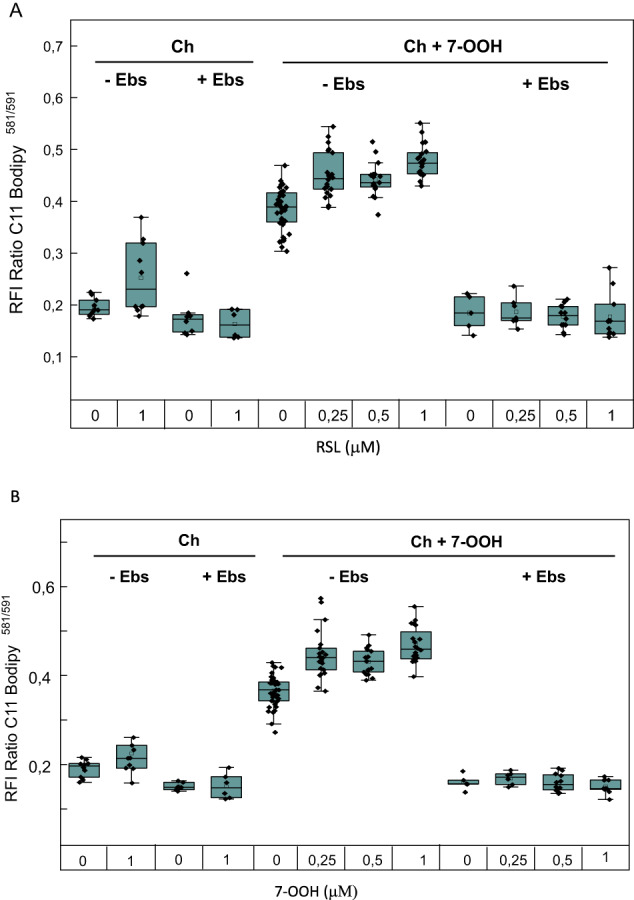
Trafficking of intracellular cholesterol (Ch) to and into mitochondria of steroidogenic cells is required for steroid hormone biosynthesis. This trafficking is typically mediated by one or more proteins of the steroidogenic acute regulatory (StAR) family. Our previous studies revealed that 7-OOH, a redox-active cholesterol hydroperoxide, could be co-trafficked with Ch to/into mitochondria of MA-10 Leydig cells, thereby inducing membrane lipid peroxidation (LPO) which impaired progesterone biosynthesis. These negative effects of 7-OOH were inhibited by endogenous selenoperoxidase GPx4, indicating that this enzyme could protect against 7-OOH-induced oxidative damage/dysfunction. In the present study, we advanced our Leydig focus to cultured murine TM3 cells and then to primary cells from rat testis, both of which produce testosterone. Using a fluorescent probe, we found that extensive free radical-mediated LPO occurred in mitochondria of stimulated primary Leydig cells during treatment with liposomal Ch+7-OOH, resulting in a significant decline in testosterone output relative to that with Ch alone. Strong enhancement of LPO and testosterone shortfall by RSL3 (a GPx4 inhibitor) and reversal thereof by Ebselen (a GPx4 mimetic), suggested that endogenous GPx4 was playing a key antioxidant role. 7-OOH in increasing doses was also cytotoxic to these cells, RSL3 exacerbating this in Ebselen-reversable fashion. Moreover, GPx4 knockdown increased cell sensitivity to LPO with reduced testosterone output. These findings, particularly with primary Leydigs (which best represent cells in intact testis) suggest that GPx4 plays a key protective role against peroxidative damage/dysfunction induced by 7-OOH co-trafficking with Ch.
细胞内胆固醇(Ch)向类固醇生成细胞的线粒体转运和进入线粒体是类固醇激素生物合成所必需的。这种转运通常由类固醇生成急性调节蛋白(StAR)家族的一个或多个蛋白介导。我们之前的研究表明,7-OOH,一种氧化活性的胆固醇氢过氧化物,可以与 Ch 一起共同转运到 MA-10 黄体瘤细胞的线粒体中,从而诱导膜脂质过氧化(LPO),损害孕酮的生物合成。7-OOH 的这些负面影响被内源性硒代过氧化物酶 GPx4 抑制,表明该酶可以防止 7-OOH 诱导的氧化损伤/功能障碍。在本研究中,我们将黄体瘤研究的焦点推进到培养的 TM3 细胞和大鼠睾丸的原代细胞,这两种细胞都产生睾酮。使用荧光探针,我们发现在含有 liposomal Ch+7-OOH 的刺激的原代黄体瘤细胞的线粒体中发生了广泛的自由基介导的 LPO,导致与仅含有 Ch 相比,睾酮的产生显著下降。RSL3(GPx4 抑制剂)强烈增强 LPO 和睾酮不足,Ebselen(GPx4 模拟物)逆转这一现象,表明内源性 GPx4 发挥了关键的抗氧化作用。增加剂量的 7-OOH 对这些细胞也具有细胞毒性,RSL3 以 Ebselen 可逆转的方式加剧了这种情况。此外,GPx4 敲低增加了细胞对 LPO 的敏感性,导致睾酮产量减少。这些发现,特别是对于原代黄体瘤细胞(最能代表完整睾丸中的细胞),表明 GPx4 对 7-OOH 与 Ch 共同转运诱导的过氧化损伤/功能障碍起着关键的保护作用。