Laboratory of Molecular Biology, Cluster of Plant Development, Plant Science Group, Wageningen University, Droevendaalsesteeg 1, 6708 PB, Wageningen, The Netherlands.
Biological Sciences Department, College of Science, King Faisal University, 31982, Al-Ahsa, Saudi Arabia.
BMC Plant Biol. 2023 Nov 24;23(1):587. doi: 10.1186/s12870-023-04594-0.
Nitrogen-fixing nodules occur in ten related taxonomic lineages interspersed with lineages of non-nodulating plant species. Nodules result from an endosymbiosis between plants and diazotrophic bacteria; rhizobia in the case of legumes and Parasponia and Frankia in the case of actinorhizal species. Nodulating plants share a conserved set of symbiosis genes, whereas related non-nodulating sister species show pseudogenization of several key nodulation-specific genes. Signalling and cellular mechanisms critical for nodulation have been co-opted from the more ancient plant-fungal arbuscular endomycorrhizal symbiosis. Studies in legumes and actinorhizal plants uncovered a key component in symbiotic signalling, the LRR-type SYMBIOSIS RECEPTOR KINASE (SYMRK). SYMRK is essential for nodulation and arbuscular endomycorrhizal symbiosis. To our surprise, however, despite its arbuscular endomycorrhizal symbiosis capacities, we observed a seemingly critical mutation in a donor splice site in the SYMRK gene of Trema orientalis, the non-nodulating sister species of Parasponia. This led us to investigate the symbiotic functioning of SYMRK in the Trema-Parasponia lineage and to address the question of to what extent a single nucleotide polymorphism in a donor splice site affects the symbiotic functioning of SYMRK.
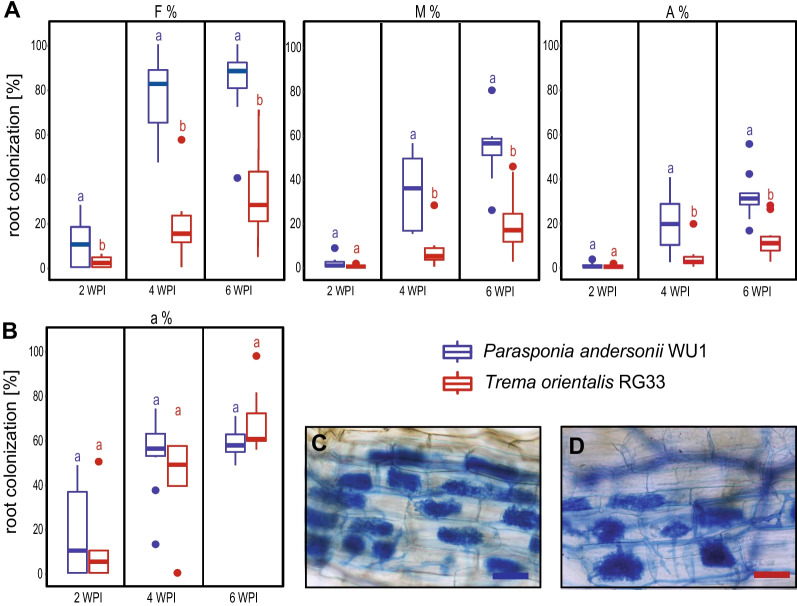
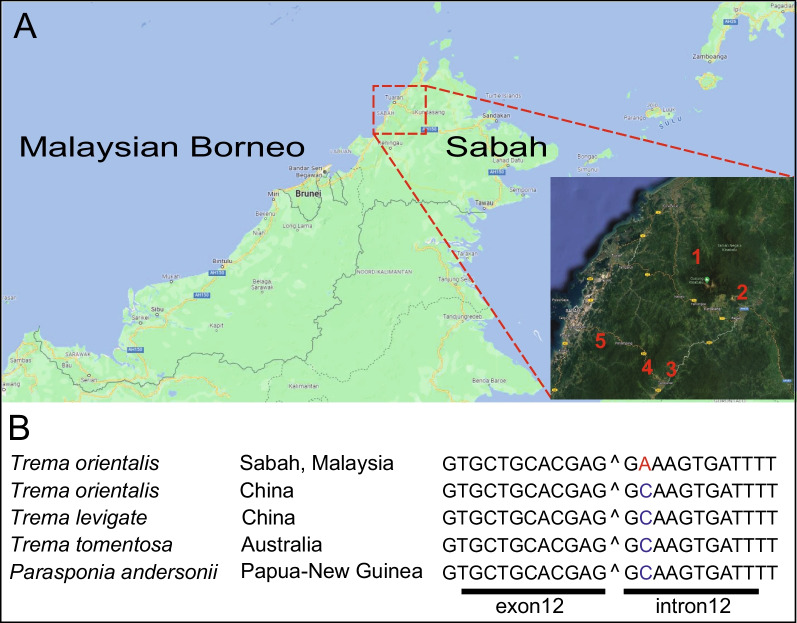
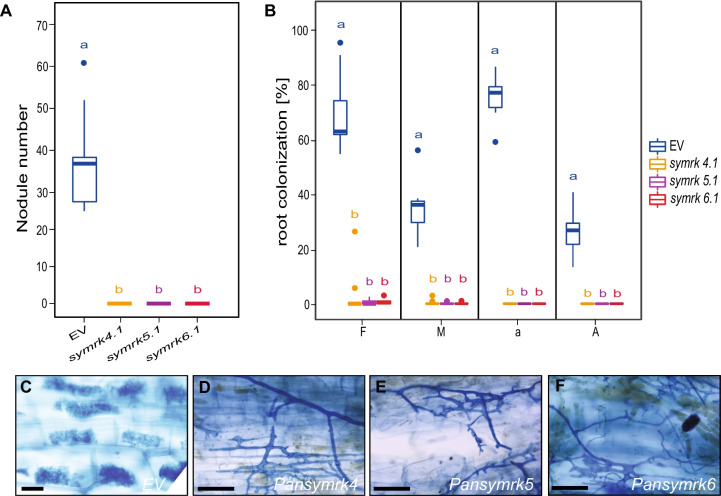
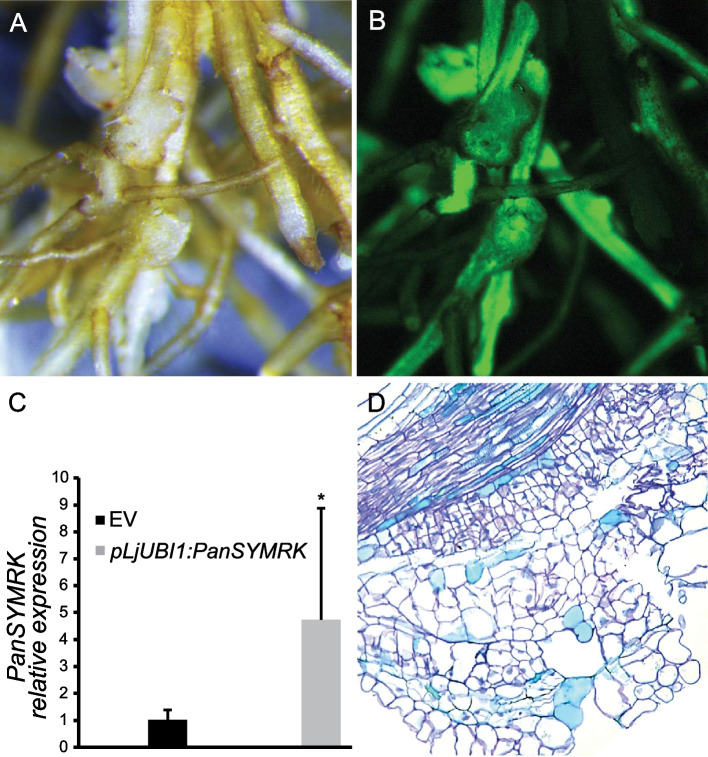
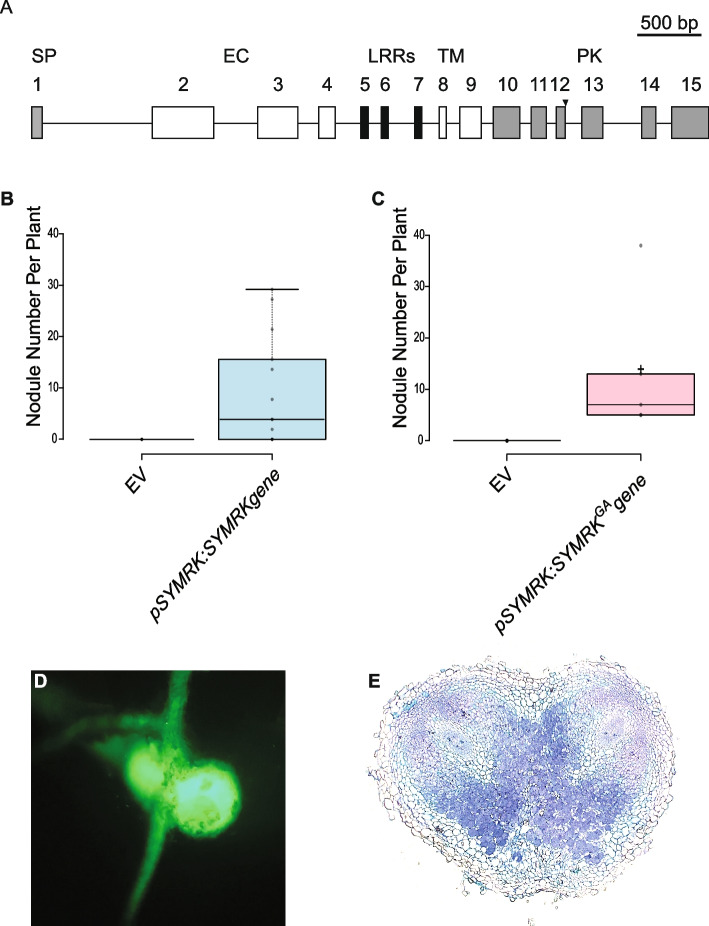
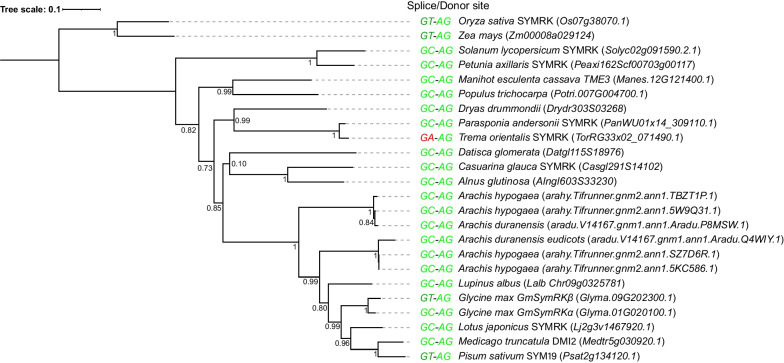
We show that SYMRK is essential for nodulation and endomycorrhization in Parasponia andersonii. Subsequently, it is revealed that the 5'-intron donor splice site of SYMRK intron 12 is variable and, in most dicotyledon species, doesn't contain the canonical dinucleotide 'GT' signature but the much less common motif 'GC'. Strikingly, in T. orientalis, this motif is converted into a rare non-canonical 5'-intron donor splice site 'GA'. This SYMRK allele, however, is fully functional and spreads in the T. orientalis population of Malaysian Borneo. A further investigation into the occurrence of the non-canonical GA-AG splice sites confirmed that these are extremely rare.
SYMRK functioning is highly conserved in legumes, actinorhizal plants, and Parasponia. The gene possesses a non-common 5'-intron GC donor splice site in intron 12, which is converted into a GA in T. orientalis accessions of Malaysian Borneo. The discovery of this functional GA-AG splice site in SYMRK highlights a gap in our understanding of splice donor sites.
固氮结瘤发生在十个相关的分类群中,散布在非结瘤植物物种的分类群中。结瘤是植物与固氮细菌之间的内共生作用的结果;在豆科植物中是根瘤菌,在放线菌根瘤植物中是 Parasponia 和 Frankia。结瘤植物共享一套保守的共生基因,而相关的非结瘤姐妹种则显示出几个关键的结瘤特异性基因的假基因化。对结瘤至关重要的信号和细胞机制已经从更古老的植物-真菌丛枝菌根共生中被共同选择。在豆科植物和放线菌根植物中的研究揭示了共生信号中的一个关键组成部分,即 LRR 型共生受体激酶 (SYMRK)。SYMRK 对于结瘤和丛枝菌根共生是必不可少的。然而,令我们惊讶的是,尽管它具有丛枝菌根共生的能力,但我们在 Parasponia 的非结瘤姐妹种 Trema orientalis 的 SYMRK 基因的供体位点剪接中观察到一个看似关键的突变。这促使我们研究 SYMRK 在 Trema-Parasponia 谱系中的共生功能,并解决单个供体位点剪接点的核苷酸多态性在多大程度上影响 SYMRK 的共生功能的问题。
我们表明,SYMRK 对于 Parasponia andersonii 的结瘤和内共生是必不可少的。随后,揭示了 SYMRK 内含子 12 的 5' 内含子供体位点是可变的,并且在大多数双子叶植物物种中,不包含典型的二核苷酸“GT”特征,但具有少得多的常见基序“GC”。引人注目的是,在 T. orientalis 中,该基序转换为罕见的非典型 5' 内含子供体位点“GA”。然而,这种 SYMRK 等位基因是完全功能性的,并在马来西亚婆罗洲的 T. orientalis 种群中传播。对非典型 GA-AG 剪接位点的进一步研究证实,这些位点极为罕见。
SYMRK 在豆科植物、放线菌根植物和 Parasponia 中的功能高度保守。该基因在内含子 12 中具有非常见的 5' 内含子 GC 供体位点,在马来西亚婆罗洲的 T. orientalis 中被转换为 GA。在 SYMRK 中发现这种功能性的 GA-AG 剪接位点突出了我们对剪接供体位点理解的一个差距。