Chen Yu-Shiue, Sung Pi-Shan, Lai Ming-Chi, Huang Chin-Wei
Department of Neurology, National Cheng Kung University Hospital, College of Medicine, National Cheng Kung University, Tainan, Taiwan.
Department of Pediatrics, Chi-Mei Medical Center, Tainan, Taiwan.
JMIR Res Protoc. 2023 Nov 24;12:e49412. doi: 10.2196/49412.
Poststroke epilepsy poses a significant clinical challenge for individuals recovering from strokes, leading to a less favorable long-term outlook and increased mortality rates. Existing studies have primarily concentrated on administering antiseizure or anticonvulsant treatments only after the onset of late-onset seizures, without intervening during the epileptogenesis phase following a stroke.
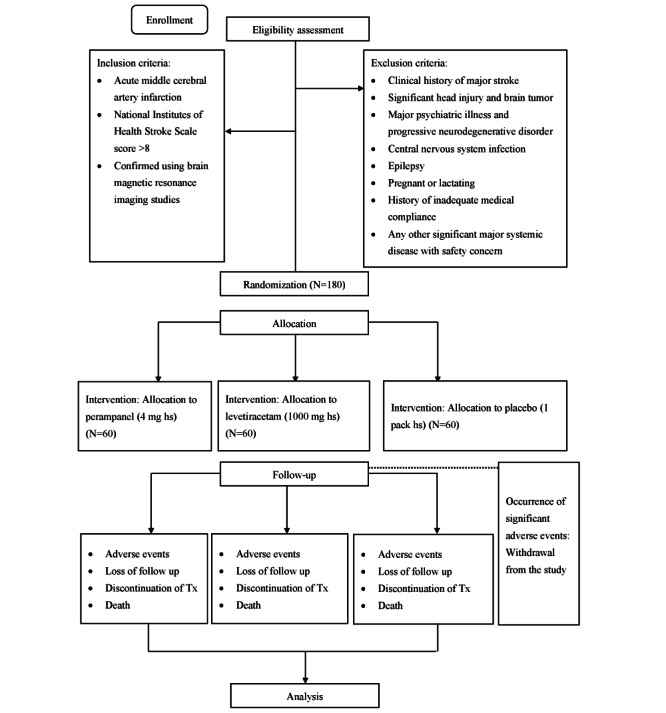
This research protocol is designed to conduct a randomized controlled trial to assess whether the early, preventive introduction of low-dose antiepileptic drug therapy (levetiracetam [LEV] or perampanel [PER]) in patients who have experienced middle cerebral artery (MCA) infarction can reduce the risk of developing poststroke epilepsy (primary prevention).
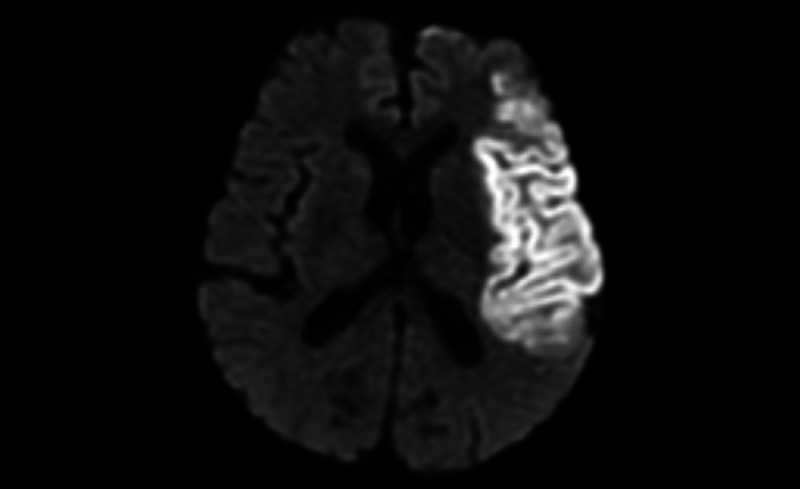
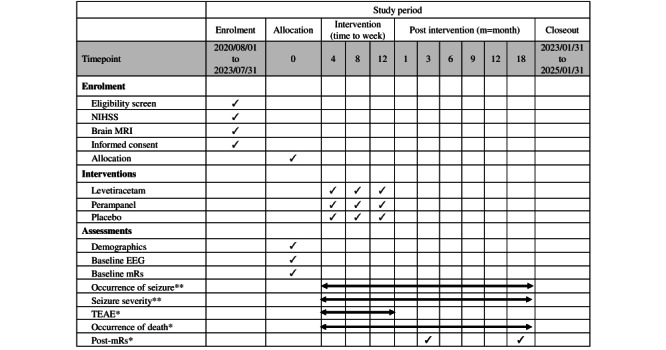
Participants with MCA infarction, either with or without reperfusion treatments, will be recruited and promptly receive preventive intervention within 72 hours of the stroke occurrence. These participants will be randomly assigned to receive either PER (4 mg per day), LEV (1000 mg per day), or a placebo that matches the active drugs. This treatment will continue for 12 weeks after allocation. Brain magnetic resonance imaging will be used to confirm the presence of MCA territory infarction, and an electroencephalography will be used to ensure the absence of epileptiform discharges or electrographic seizures at the time of the stroke. All participants will undergo follow-up assessments for 72 weeks after allocation.
The primary outcome under evaluation will be the incidence of poststroke epilepsy in the 3 groups following the 18-month study period. Secondary outcomes will encompass the time to the occurrence of the first seizure, the severity of seizures, any treatment-related adverse events, and the modified Rankin scale score at 3 and 18 months. Exploratory outcomes will involve comparing the effectiveness and safety of PER and LEV.
We anticipate that the intervention groups will experience a lower incidence and reduced severity of poststroke epilepsy compared to the control group after 18 months. We aim to establish evidence supporting the potential preventive effects of LEV and PER on poststroke seizures and epilepsy in patients with MCA infarction, as well as to explore the antiepileptogenic potential of both LEV and PER in patients with major ischemic strokes.
ClinicalTrials.gov NCT04858841; https://clinicaltrials.gov/study/NCT04858841.
INTERNATIONAL REGISTERED REPORT IDENTIFIER (IRRID): DERR1-10.2196/49412.
中风后癫痫给中风康复患者带来了重大的临床挑战,导致长期预后较差且死亡率增加。现有研究主要集中在迟发性癫痫发作后才给予抗癫痫或抗惊厥治疗,而在中风后的癫痫发生阶段未进行干预。
本研究方案旨在进行一项随机对照试验,以评估在经历大脑中动脉(MCA)梗死的患者中早期预防性引入低剂量抗癫痫药物治疗(左乙拉西坦[LEV]或吡仑帕奈[PER])是否可以降低中风后癫痫的发生风险(一级预防)。
招募有或无再灌注治疗的MCA梗死患者,并在中风发生后72小时内迅速接受预防性干预。这些参与者将被随机分配接受PER(每天4毫克)、LEV(每天1000毫克)或与活性药物匹配的安慰剂。分配后这种治疗将持续12周。将使用脑磁共振成像来确认MCA区域梗死的存在,并使用脑电图来确保中风时不存在癫痫样放电或脑电图癫痫发作。所有参与者在分配后将接受72周的随访评估。
评估的主要结局将是18个月研究期后3组中风后癫痫的发生率。次要结局将包括首次发作的时间、发作的严重程度、任何与治疗相关的不良事件以及3个月和18个月时的改良Rankin量表评分。探索性结局将涉及比较PER和LEV的有效性和安全性。
我们预计18个月后,与对照组相比,干预组中风后癫痫的发生率和严重程度将更低。我们旨在建立证据支持LEV和PER对MCA梗死患者中风后癫痫发作和癫痫的潜在预防作用,并探索LEV和PER对主要缺血性中风患者的抗癫痫发生潜力。
ClinicalTrials.gov NCT04858841;https://clinicaltrials.gov/study/NCT04858841。
国际注册报告标识符(IRRID):DERR1-10.2196/49412。