Department of Technology and Innovation Management, School of Environment and Society, Tokyo Institute of Technology, Tokyo, Japan.
Graduate School of Interdisciplinary Information Studies, The University of Tokyo, Tokyo, Japan.
J Med Internet Res. 2023 Nov 24;25:e47505. doi: 10.2196/47505.
There has been a surge in academic and business interest in software as a medical device (SaMD). SaMD enables medical professionals to streamline existing medical practices and make innovative medical processes such as digital therapeutics a reality. Furthermore, SaMD is a billion-dollar market. However, SaMD is not clearly understood as a technological change and emerging industry.
This study aims to review the landscape of SaMD in response to increasing interest in SaMD within health systems and regulation. The objectives of the study are to (1) clarify the innovation process of SaMD, (2) identify the prevailing typology of such innovation, and (3) elucidate the underlying mechanisms driving the SaMD innovation process.
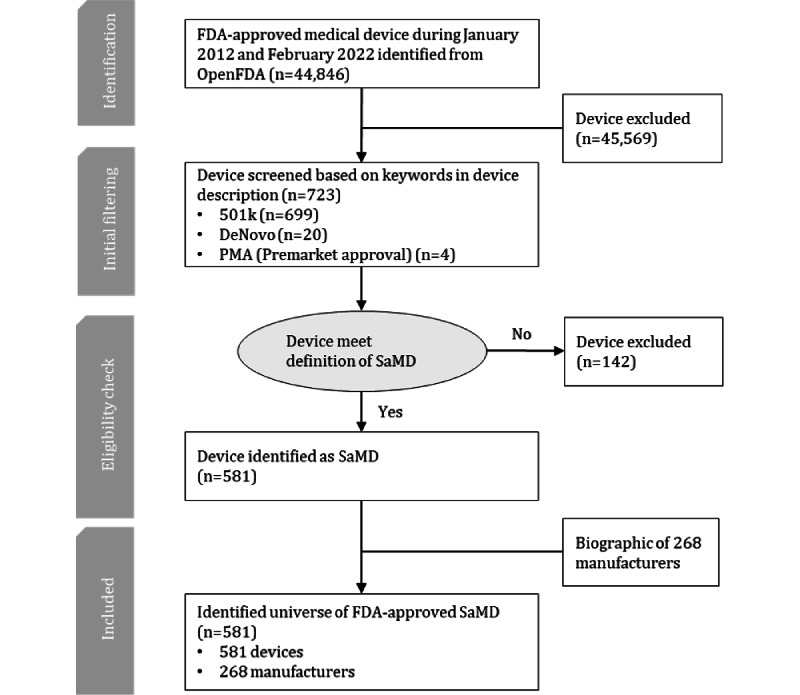
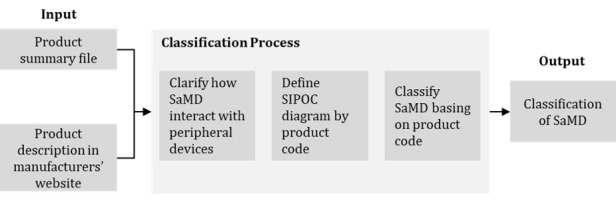
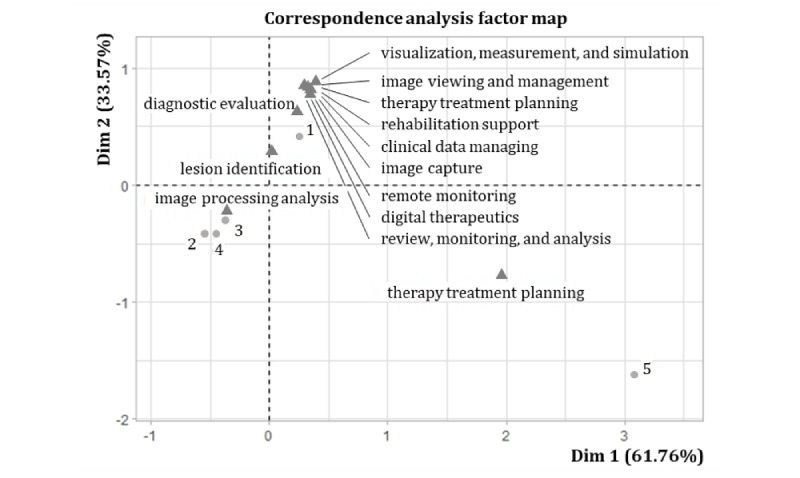
We collected product information on 581 US Food and Drug Administration-approved SaMDs from the OpenFDA website and 268 company profiles of the corresponding manufacturers from Crunchbase, Bloomberg, PichBook.com, and other company websites. In addition to assessing the metadata of SaMD, we used correspondence and business process analysis to assess the distribution of intended use and how SaMDs interact with other devices in the medical process.
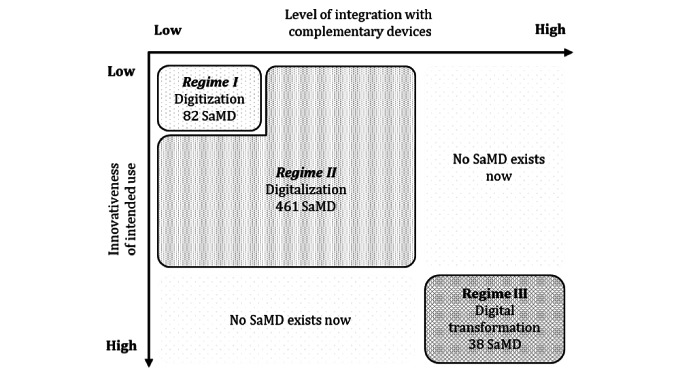
The current SaMD industry is highly concentrated in medical image processing and radiological analysis. Incumbents in the medical device industry currently lead the market and focus on incremental innovation, whereas new entrants, particularly startups, produce more disruptive innovation. We found that hardware medical device functions as a complementary asset for SaMD, whereas how SaMD interacts with the complementary asset differs according to its intended use. Based on these findings, we propose a regime map that illustrates the SaMD innovation process.
SaMD, as an industry, is nascent and dominated by incremental innovation. The innovation process of the present SaMD industry is shaped by data accessibility, which is key to building disruptive innovation.
学术和商业界对软件即医疗器械(SaMD)的兴趣激增。SaMD 使医疗专业人员能够简化现有的医疗实践,并使数字疗法等创新的医疗流程成为现实。此外,SaMD 是一个价值数十亿美元的市场。然而,作为一种技术变革和新兴产业,SaMD 尚未被清晰理解。
本研究旨在审查 SaMD 的现状,以应对医疗系统和监管对 SaMD 日益增长的兴趣。本研究的目的是:(1)阐明 SaMD 的创新过程;(2)确定此类创新的普遍类型;(3)阐明推动 SaMD 创新过程的潜在机制。
我们从 OpenFDA 网站上收集了 581 种获得美国食品和药物管理局批准的 SaMD 的产品信息,并从 Crunchbase、Bloomberg、PichBook.com 和其他公司网站上收集了 268 家制造商的公司简介。除了评估 SaMD 的元数据外,我们还使用了对应分析和业务流程分析来评估预期用途的分布以及 SaMD 如何与医疗流程中的其他设备相互作用。
当前的 SaMD 行业高度集中在医学图像处理和放射学分析领域。医疗器械行业的现有企业目前主导着市场,专注于增量创新,而新进入者,特别是初创企业,则产生更多的颠覆性创新。我们发现,硬件医疗器械是 SaMD 的互补资产,而 SaMD 与互补资产的相互作用方式则因其预期用途而异。基于这些发现,我们提出了一个制度图来阐明 SaMD 的创新过程。
作为一个行业,SaMD 还处于萌芽阶段,以增量创新为主。当前 SaMD 行业的创新过程受到数据可访问性的影响,这是建立颠覆性创新的关键。