Zhang Jin, Xu Haiyun, Ba Bin, Mei Fengtong
School of Information Systems Engineering, PLA Strategic Support Force Information Engineering University, Zhengzhou 450001, China.
Sensors (Basel). 2023 Nov 11;23(22):9116. doi: 10.3390/s23229116.
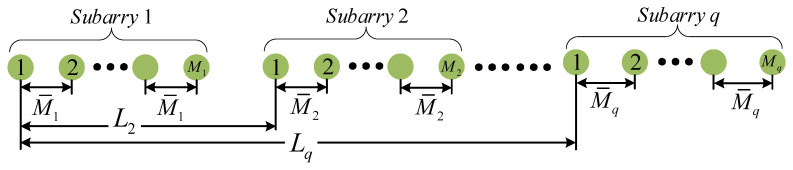
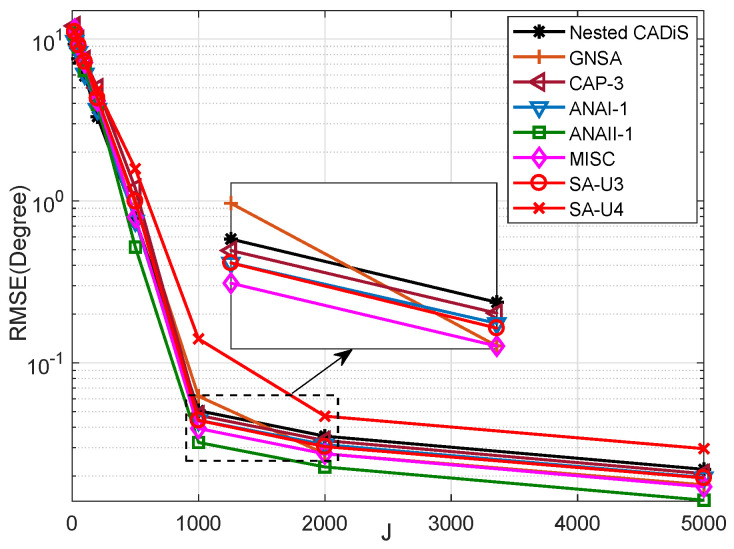
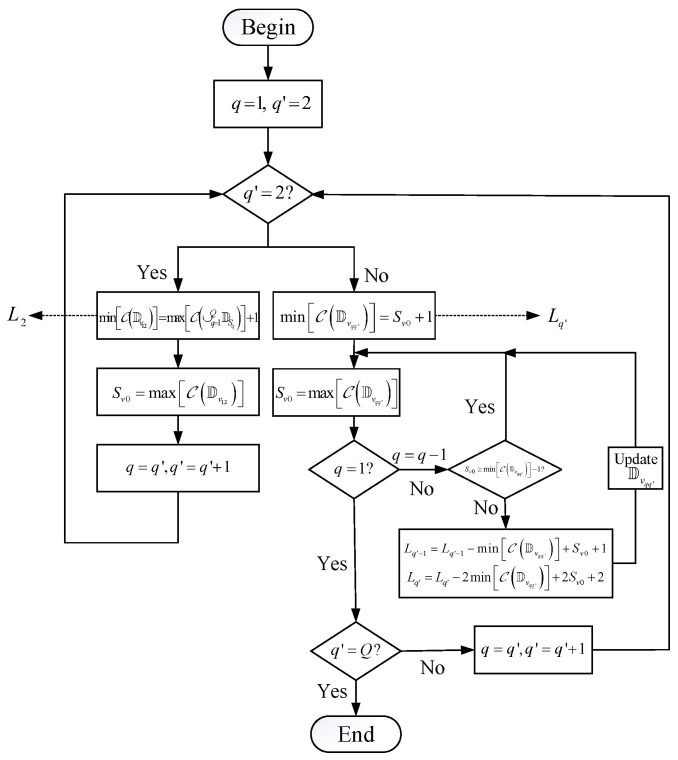
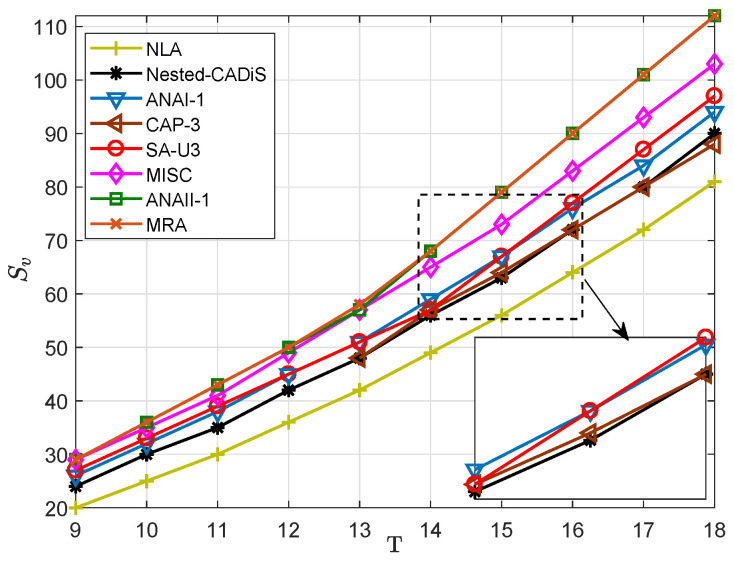
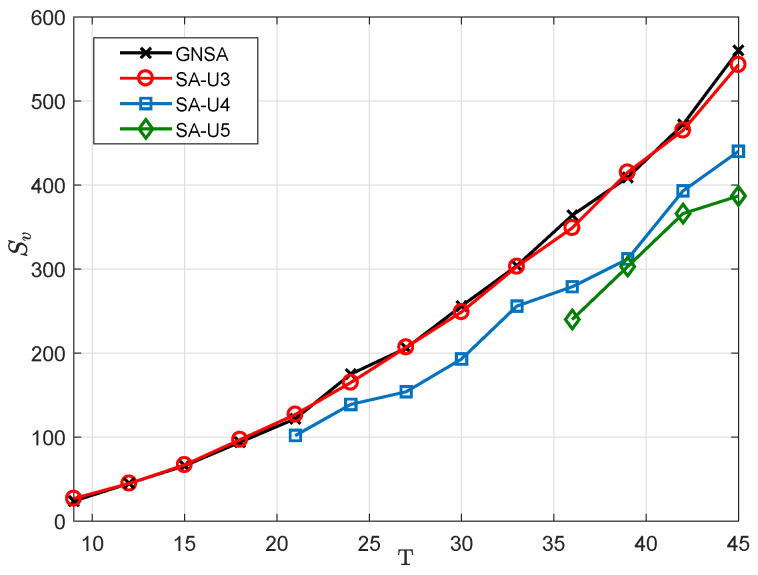
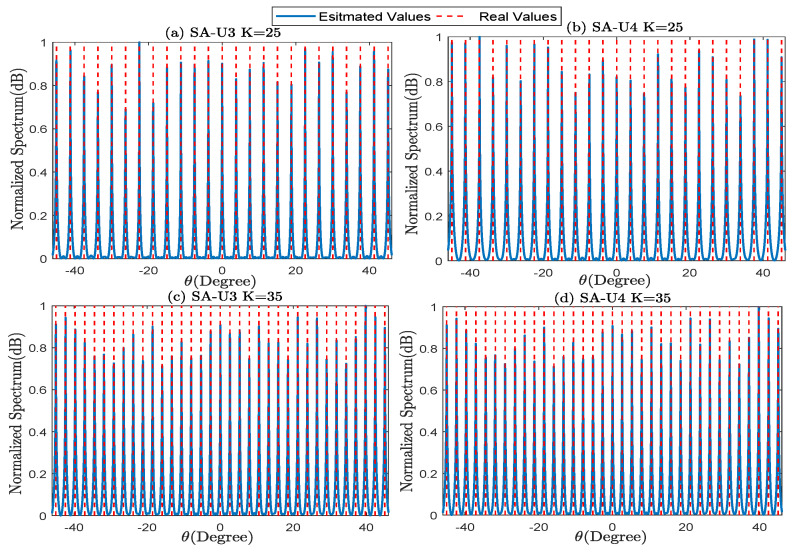
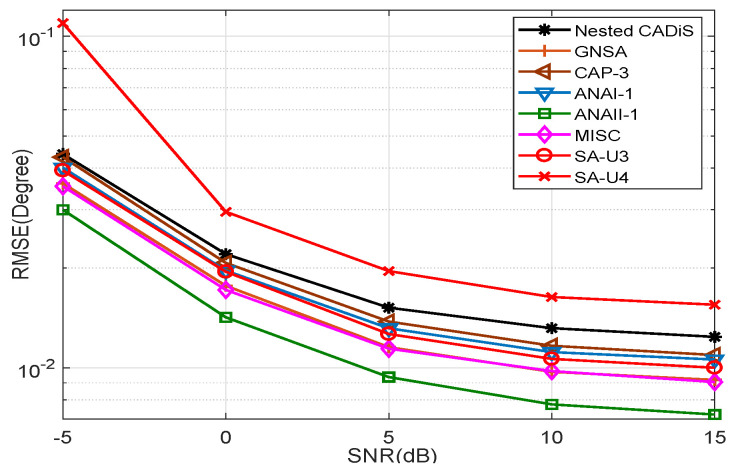
Nowadays, sparse arrays have been a hotspot for research in the direction of arrival (DOA). In order to achieve a big value for degrees of freedom (DOFs) using spatial smoothing methods, researchers try to use multiple uniform linear arrays (ULAs) to construct sparse arrays. But, with the number of subarrays increasing, the complexity also increases. Hence, in this paper, a design method, named as the cross-coarray consecutive-connected (4C) criterion, and the sparse array using Q ULAs (SA-UQ) are proposed. We first analyze the virtual sensor distribution of SA-U2 and extend the conclusions to SA-UQ, which is the 4C criterion. Then, we give an algorithm to solve the displacement between subarrays under the given Q ULAs. At last, we consider a special case, SA-U3. Through the analysis of DOFs, SA-UQ can find underdetermined signals. Moreover, SA-U3 can obtain DOFs close to other sparse arrays using three ULAs. The simulation experiments prove the performance of SA-UQ.
如今,稀疏阵列已成为波达方向(DOA)研究的热点。为了使用空间平滑方法获得较大的自由度(DOF)值,研究人员尝试使用多个均匀线性阵列(ULA)来构建稀疏阵列。但是,随着子阵列数量的增加,复杂度也会增加。因此,本文提出了一种名为交叉协方差连续连接(4C)准则的设计方法以及使用Q个ULA的稀疏阵列(SA-UQ)。我们首先分析了SA-U2的虚拟传感器分布,并将结论扩展到SA-UQ,即4C准则。然后,我们给出了一种算法来求解给定Q个ULA下子阵列之间的位移。最后,我们考虑一种特殊情况,即SA-U3。通过对自由度的分析,SA-UQ可以找到欠定信号。此外,SA-U3可以获得与使用三个ULA的其他稀疏阵列相近的自由度。仿真实验证明了SA-UQ的性能。