Department of Lymphoma and Myeloma, The University of Texas MD Anderson Cancer Center, Houston, Texas, USA.
Department of Immunology, The University of Texas MD Anderson Cancer Center, Houston, Texas, USA.
J Immunother Cancer. 2023 Nov 24;11(11):e007515. doi: 10.1136/jitc-2023-007515.
Chimeric antigen receptor (CAR) T cells targeting CD19 mediate potent and durable effects in B-cell malignancies. However, antigen loss or downregulation is a frequent cause of resistance. Here, we report development of a novel CAR T-cell therapy product to target CD79b, a pan B-cell antigen, widely expressed in most B-cell lymphomas.
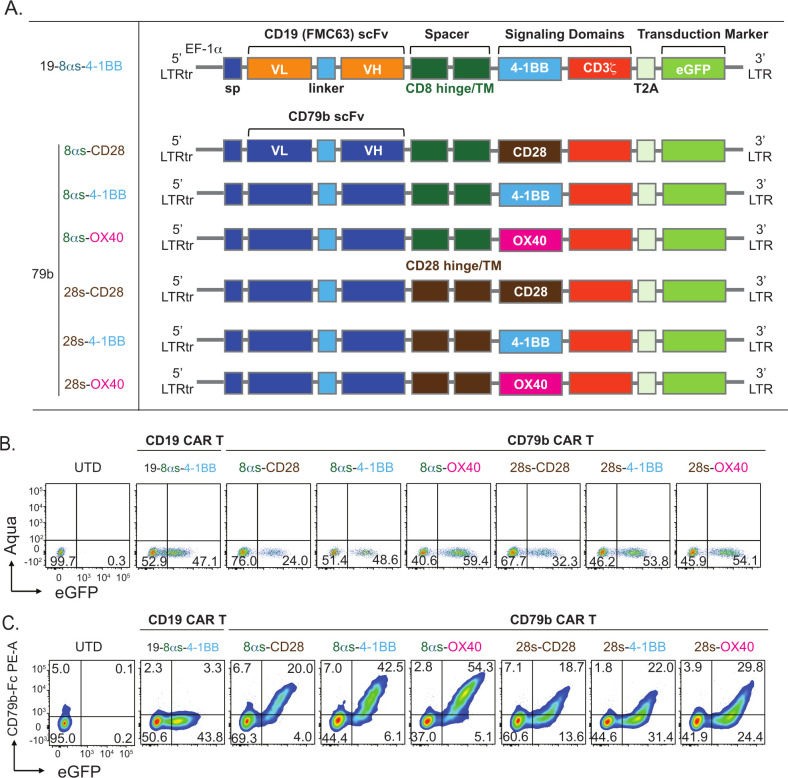
We generated a novel anti-CD79b monoclonal antibody by hybridoma method. The specificity of the antibody was determined by testing against isogenic cell lines with human CD79b knock-in or knock-out. A single-chain variable fragment derived from the monoclonal antibody was used to make a panel of CD79b-targeting CAR molecules containing various hinge, transmembrane, and co-stimulatory domains. These were lentivirally transduced into primary T cells and tested for antitumor activity in in vitro and in vivo B-cell lymphoma models.
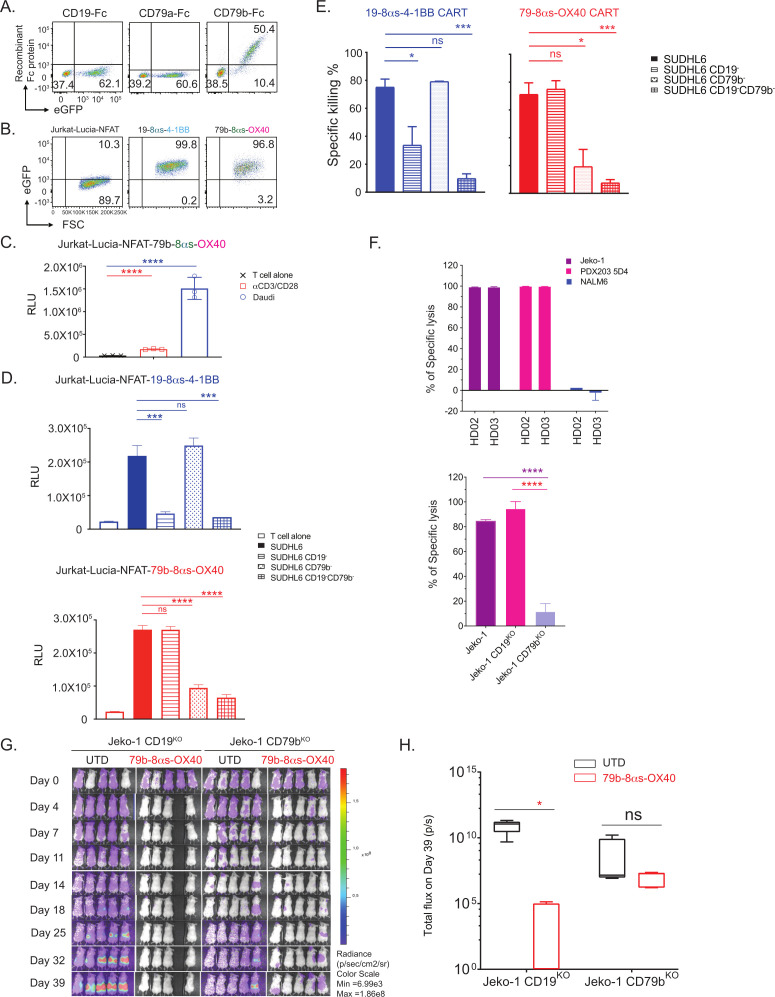
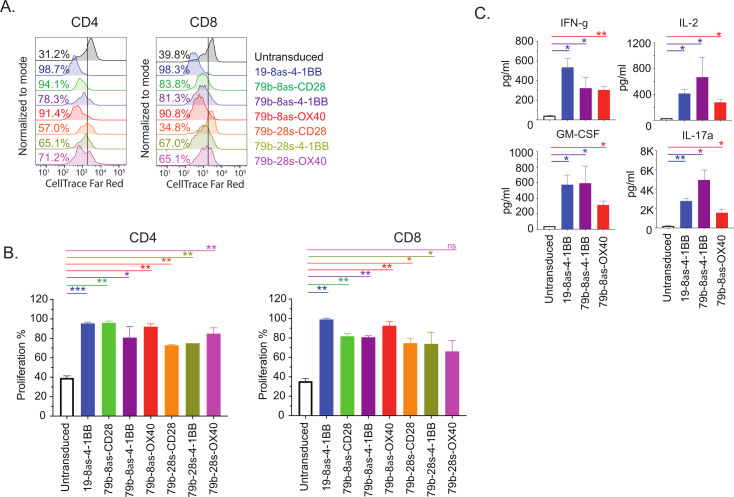
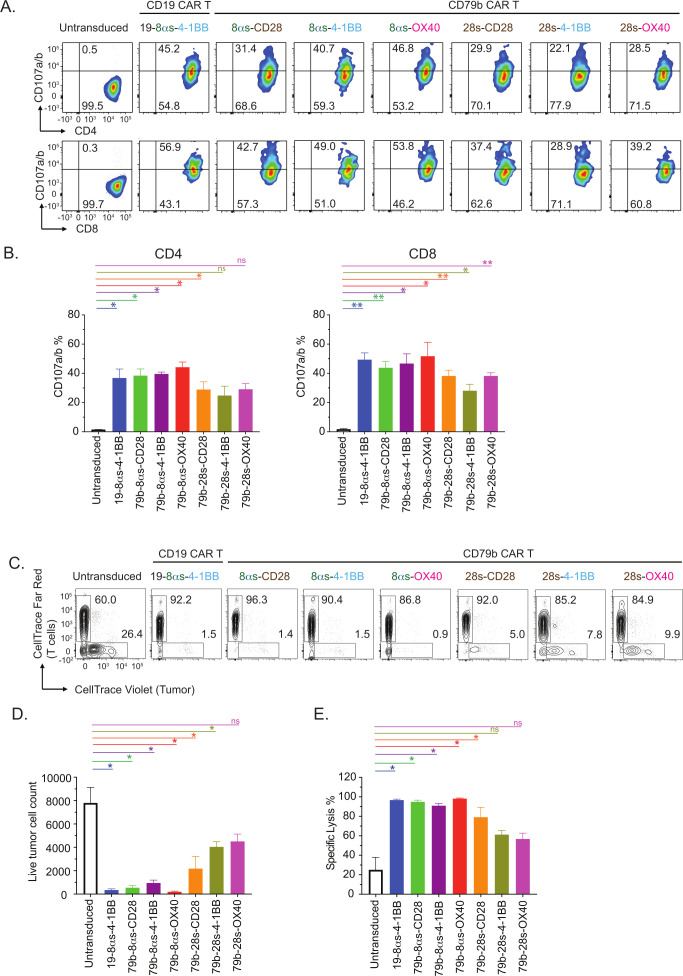
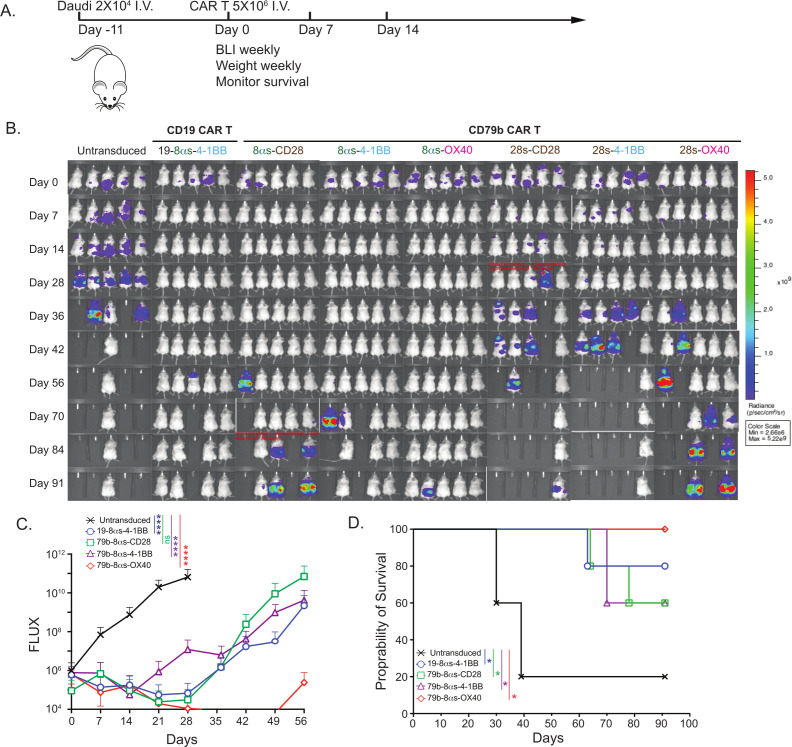
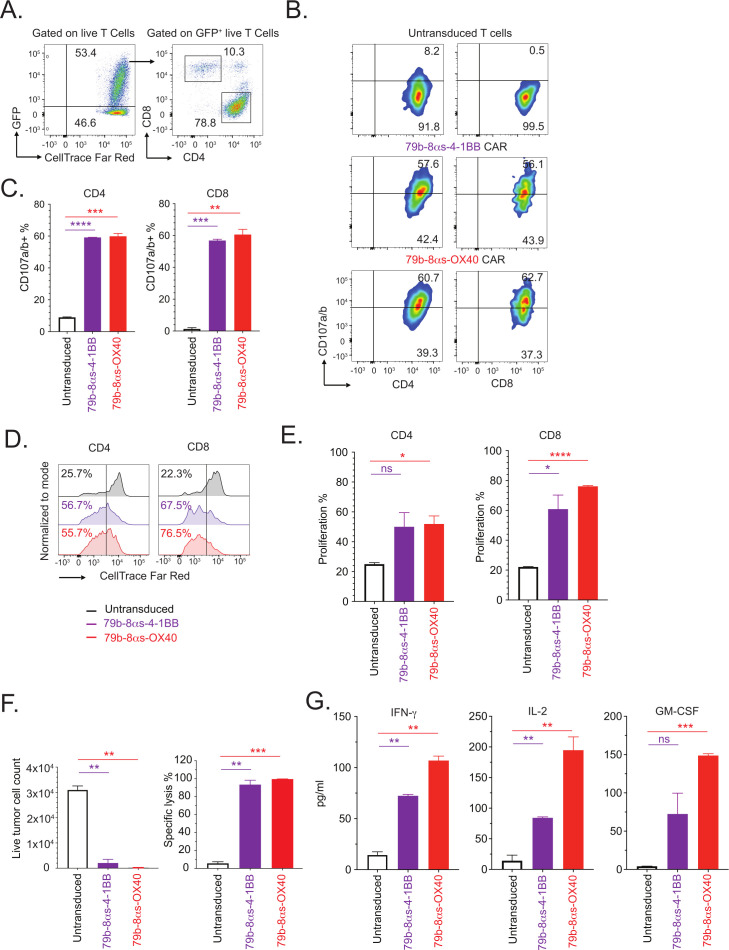
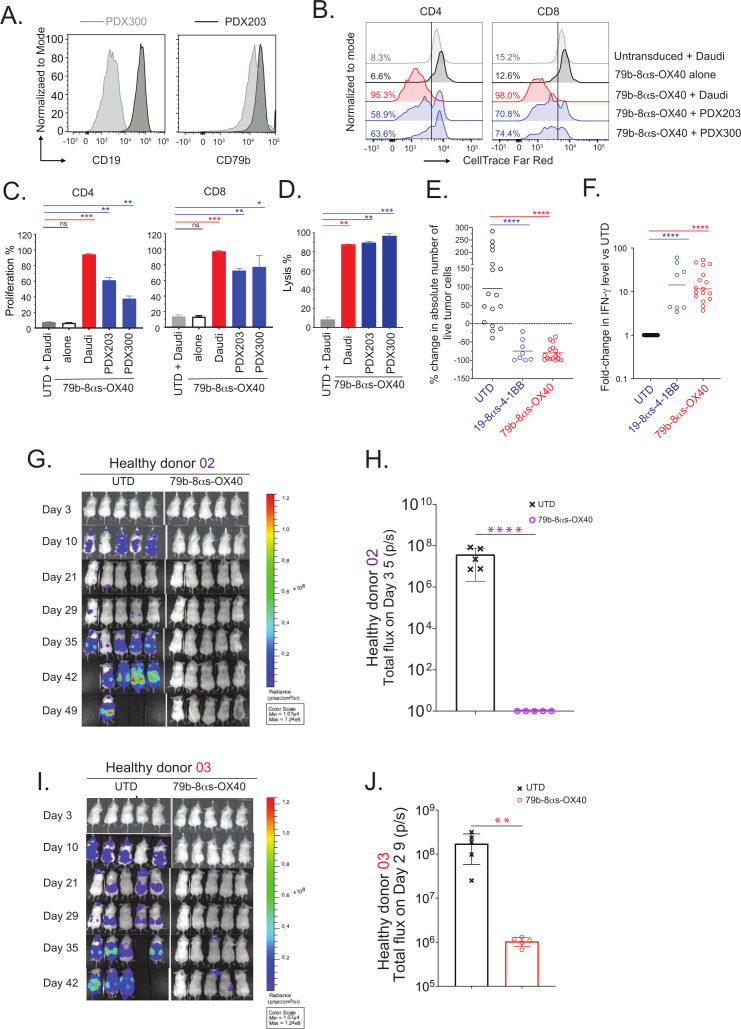
We found that the novel anti-CD79b monoclonal antibody was highly specific and bound only to human CD79b and no other cell surface protein. In testing the various CD79b-targeting CAR molecules, superior antitumor efficacy in vitro and in vivo was found for a CAR consisting CD8α hinge and transmembrane domains, an OX40 co-stimulatory domain, and a CD3ζ signaling domain. This CD79b CAR specifically recognized human CD79b-expressing lymphoma cell lines but not CD79b knock-out cell lines. CD79b CAR T cells, generated from T cells from either healthy donors or patients with lymphoma, proliferated, produced cytokines, degranulated, and exhibited robust cytotoxic activity in vitro against CD19 and CD19 lymphoma cell lines and patient-derived lymphoma tumors relapsing after prior CD19 CAR T-cell therapy. Furthermore, CD79b CAR T cells were highly efficient at eradicating pre-established lymphoma tumors in vivo in three aggressive lymphoma xenograft models, including two cell line-derived xenografts and one patient-derived xenograft. Notably, these CAR T cells did not demonstrate any significant tonic signaling activity or markers of exhaustion.
Our results indicated that this novel CD79b CAR T-cell therapy product has robust antitumor activity against B-cell lymphomas. These results supported initiation of a phase 1 clinical trial to evaluate this product in patients with relapsed or refractory B-cell lymphomas.
靶向 CD19 的嵌合抗原受体 (CAR) T 细胞在 B 细胞恶性肿瘤中具有强大且持久的疗效。然而,抗原丢失或下调是耐药的常见原因。在这里,我们报告了一种新型 CAR T 细胞疗法产品的开发,该产品旨在靶向 CD79b,一种广泛表达于大多数 B 细胞淋巴瘤的泛 B 细胞抗原。
我们通过杂交瘤方法生成了一种新型抗 CD79b 单克隆抗体。通过测试具有人 CD79b 敲入或敲除的同基因细胞系,确定了该抗体的特异性。从单克隆抗体衍生的单链可变片段被用于制造一系列包含各种铰链、跨膜和共刺激结构域的 CD79b 靶向 CAR 分子。这些分子被慢病毒转导到原代 T 细胞中,并在体外和体内 B 细胞淋巴瘤模型中测试其抗肿瘤活性。
我们发现新型抗 CD79b 单克隆抗体具有高度特异性,仅与人类 CD79b 结合,而不与其他细胞表面蛋白结合。在测试各种 CD79b 靶向 CAR 分子时,我们发现一种由 CD8α 铰链和跨膜结构域、OX40 共刺激结构域和 CD3ζ 信号结构域组成的 CAR 在体外和体内均具有优越的抗肿瘤疗效。这种 CD79b CAR 特异性识别表达人类 CD79b 的淋巴瘤细胞系,但不识别 CD79b 敲除细胞系。从健康供体或淋巴瘤患者的 T 细胞中生成的 CD79b CAR T 细胞在体外对 CD19 和 CD19 淋巴瘤细胞系以及先前接受过 CD19 CAR T 细胞治疗后复发的患者源性淋巴瘤肿瘤具有增殖、产生细胞因子、脱颗粒和强大的细胞毒性活性。此外,CD79b CAR T 细胞在三种侵袭性淋巴瘤异种移植模型(包括两种细胞系衍生的异种移植和一种患者源性异种移植)中能够高效根除已建立的淋巴瘤肿瘤。值得注意的是,这些 CAR T 细胞没有表现出任何明显的紧张信号活性或衰竭标志物。
我们的结果表明,这种新型 CD79b CAR T 细胞疗法产品对 B 细胞淋巴瘤具有强大的抗肿瘤活性。这些结果支持启动一项 I 期临床试验,以评估该产品在复发或难治性 B 细胞淋巴瘤患者中的疗效。