Cholico Giovan N, Fling Russell R, Sink Warren J, Nault Rance, Zacharewski Tim
Biochemistry and Molecular Biology, Michigan State University, East Lansing, Michigan, USA; Institute for Integrative Toxicology, Michigan State University, East Lansing, Michigan, USA.
Institute for Integrative Toxicology, Michigan State University, East Lansing, Michigan, USA; Microbiology & Molecular Genetics, Michigan State University, East Lansing, Michigan, USA.
J Biol Chem. 2024 Jan;300(1):105500. doi: 10.1016/j.jbc.2023.105500. Epub 2023 Nov 25.
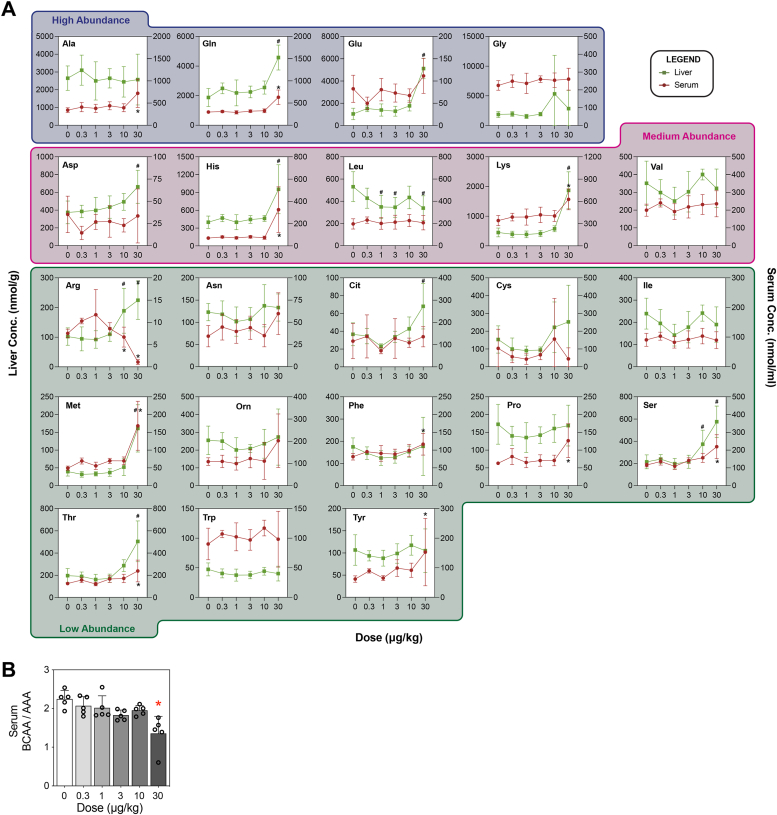
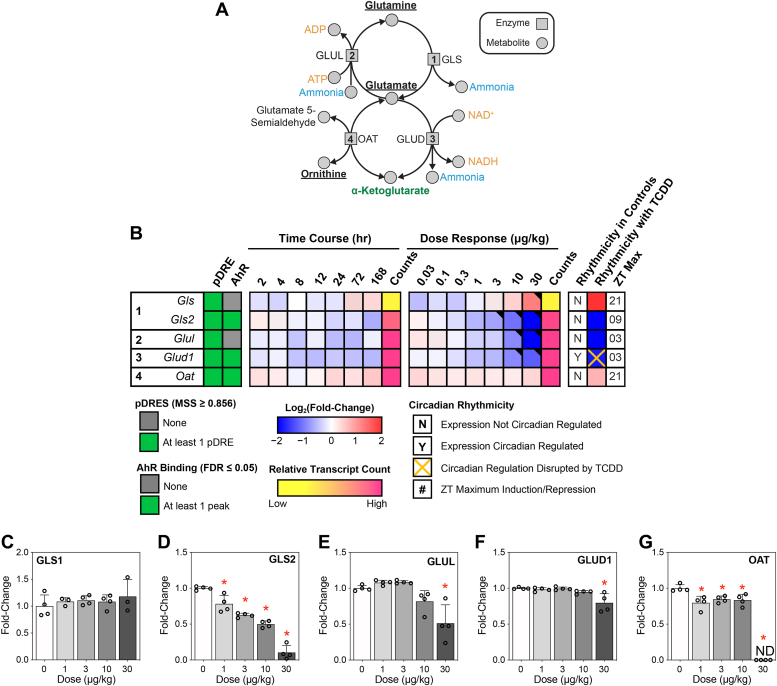
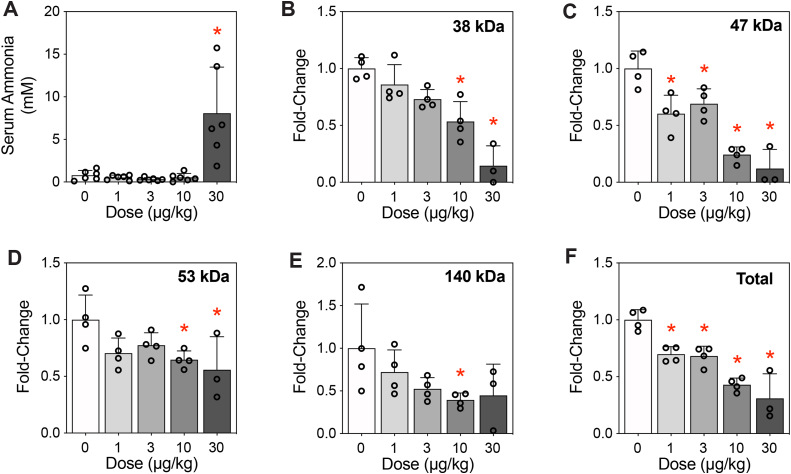
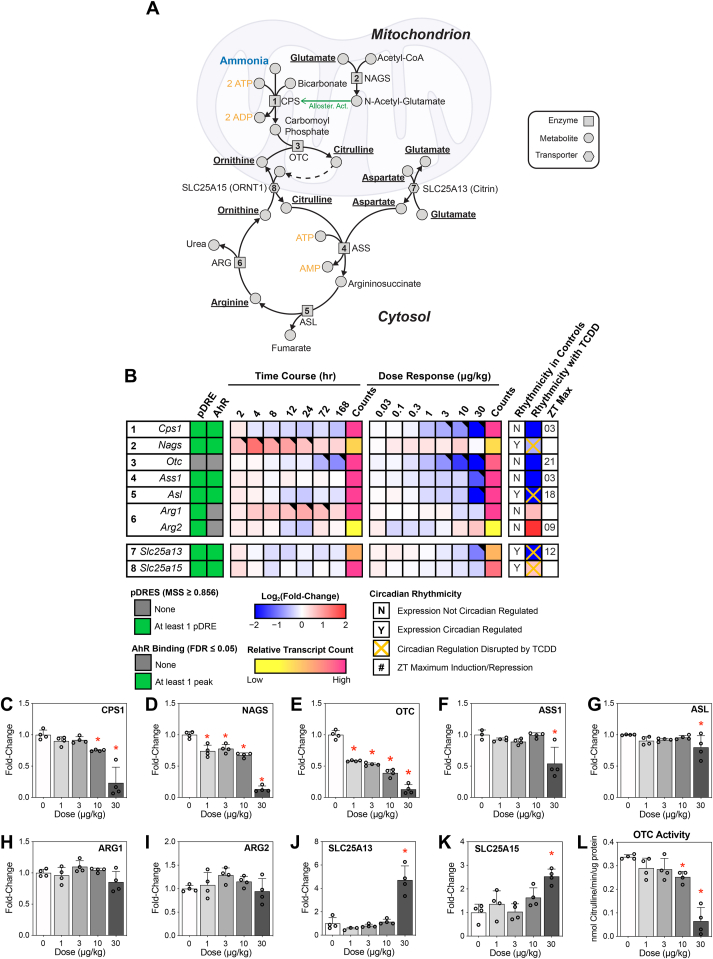
The aryl hydrocarbon receptor is a ligand-activated transcription factor known for mediating the effects of 2,3,7,8-tetrachlorodibenzo-p-dioxin (TCDD) and related compounds. TCDD induces nonalcoholic fatty liver disease (NAFLD)-like pathologies including simple steatosis that can progress to steatohepatitis with fibrosis and bile duct proliferation in male mice. Dose-dependent progression of steatosis to steatohepatitis with fibrosis by TCDD has been associated with metabolic reprogramming, including the disruption of amino acid metabolism. Here, we used targeted metabolomic analysis to reveal dose-dependent changes in the level of ten serum and eleven hepatic amino acids in mice upon treatment with TCDD. Bulk RNA-seq and protein analysis showed TCDD repressed CPS1, OTS, ASS1, ASL, and GLUL, all of which are associated with the urea cycle and glutamine biosynthesis. Urea and glutamine are end products of the detoxification and excretion of ammonia, a toxic byproduct of amino acid catabolism. Furthermore, we found that the catalytic activity of OTC, a rate-limiting step in the urea cycle was also dose dependently repressed. These results are consistent with an increase in circulating ammonia. Collectively, the repression of the urea and glutamate-glutamine cycles increased circulating ammonia levels and the toxicity of TCDD.
芳烃受体是一种配体激活的转录因子,以介导2,3,7,8-四氯二苯并对二恶英(TCDD)及相关化合物的作用而闻名。TCDD可诱导雄性小鼠出现非酒精性脂肪性肝病(NAFLD)样病变,包括单纯性脂肪变性,后者可进展为伴有纤维化和胆管增生的脂肪性肝炎。TCDD导致脂肪变性剂量依赖性地进展为伴有纤维化的脂肪性肝炎,这与代谢重编程有关,包括氨基酸代谢的紊乱。在此,我们使用靶向代谢组学分析来揭示TCDD处理后小鼠血清中10种氨基酸和肝脏中11种氨基酸水平的剂量依赖性变化。大量RNA测序和蛋白质分析表明,TCDD抑制了CPS1、OTS、ASS1、ASL和GLUL,所有这些都与尿素循环和谷氨酰胺生物合成有关。尿素和谷氨酰胺是氨解毒和排泄的终产物,氨是氨基酸分解代谢的有毒副产物。此外,我们发现尿素循环限速步骤中的鸟氨酸转氨甲酰酶(OTC)的催化活性也呈剂量依赖性抑制。这些结果与循环氨的增加一致。总体而言,尿素循环和谷氨酸-谷氨酰胺循环的抑制增加了循环氨水平以及TCDD的毒性。