van den Bosch Merijn, Kellner Kenneth F, Mkasanga Imani, Mwampeta Stanslaus B, Fyumagwa Robert, Gantchoff Mariela G, Patterson Brent R, Belant Jerrold L
Department of Fisheries and Wildlife Michigan State University East Lansing Michigan USA.
Wildlife Conservation Initiative Arusha Tanzania.
Ecol Evol. 2023 Nov 7;13(11):e10718. doi: 10.1002/ece3.10718. eCollection 2023 Nov.
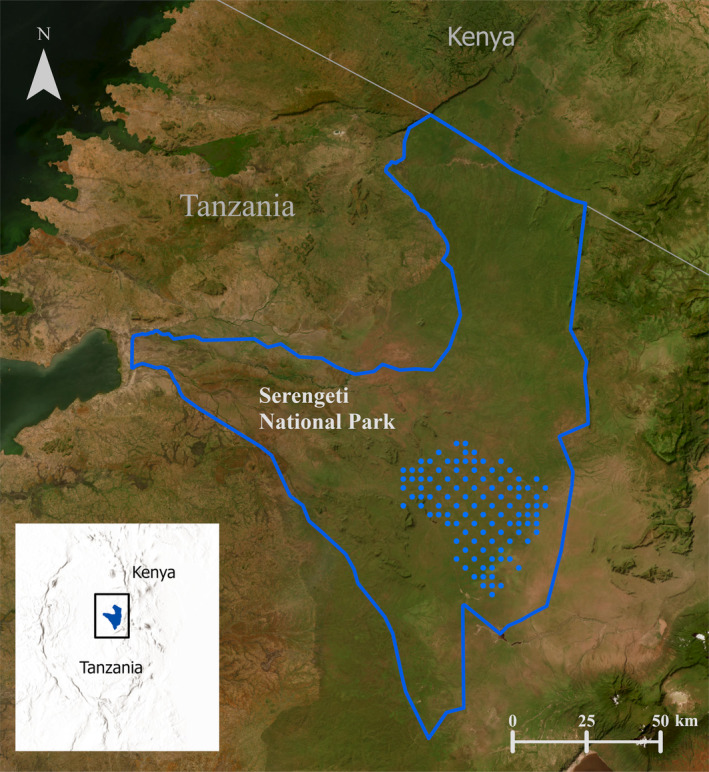
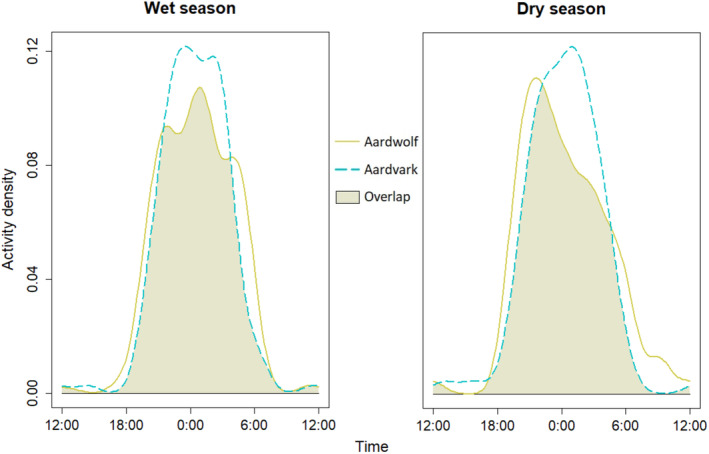
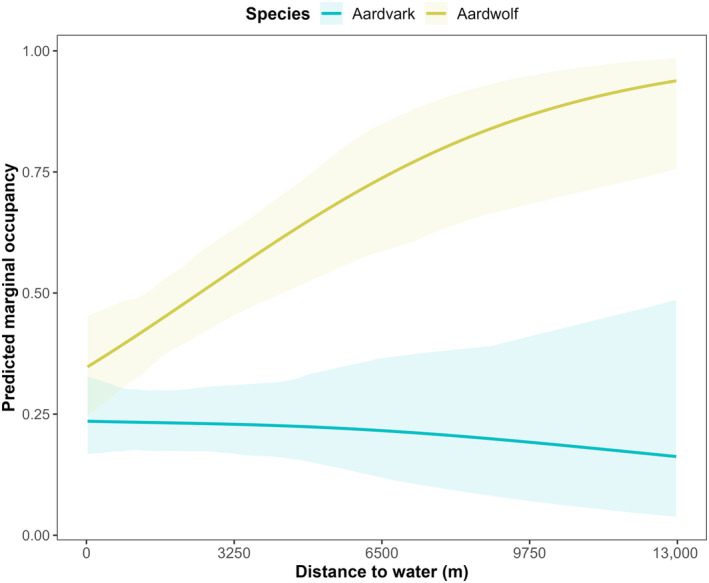
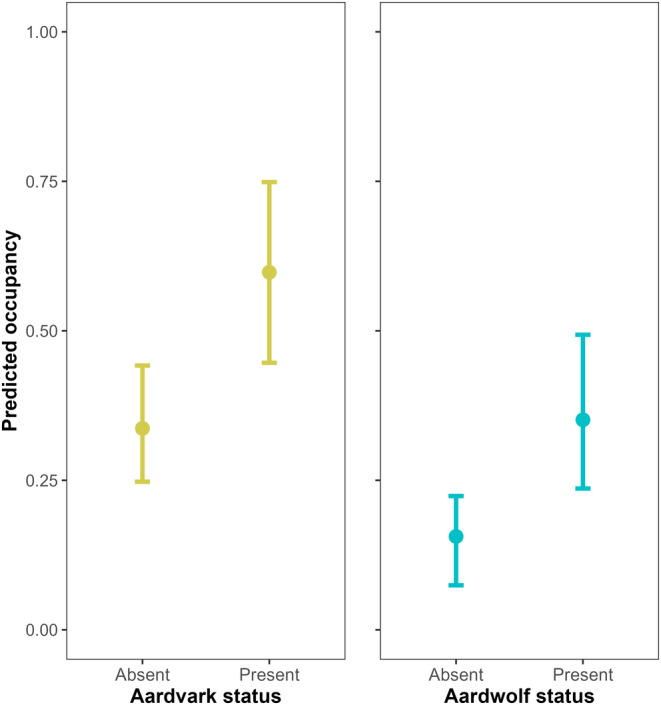
Species interactions can influence species distributions, but mechanisms mitigating competition or facilitating positive interactions between ecologically similar species are often poorly understood. Aardwolves () and aardvarks () are nocturnal, insectivorous mammals that co-occur in eastern and southern Africa, and knowledge of these species is largely limited to their nutritional biology. We used aardwolf and aardvark detections from 105 remote cameras during 2016-2018 to assess their spatial and temporal niche overlap in the grasslands of Serengeti National Park, Tanzania. Using a multispecies occupancy model, we identified a positive interaction between occupancy probabilities for aardwolves and aardvarks. Slope, proportion of grassland and termite mound density did not affect the occupancy probabilities of either species. The probability of aardwolf, but not aardvark, occupancy increased with distance to permanent water sources, which may relate to predation risk avoidance. Diel activity overlap between aardwolves and aardvarks was high during wet and dry seasons, with both species being largely nocturnal. Aardwolves and aardvarks have an important ecological role as termite consumers, and aardvarks are suggested to be ecosystem engineers. Our results contribute to a better understanding of the spatial and temporal niche of insectivores like aardwolves and aardvarks, suggesting high spatial and temporal niche overlap in which commensalism occurs, whereby aardwolves benefit from aardvark presence through increased food accessibility.
物种间的相互作用会影响物种分布,但对于缓解竞争或促进生态相似物种间积极相互作用的机制,人们往往了解甚少。土狼(Proteles cristatus)和土豚(Orycteropus afer)是在非洲东部和南部共同出现的夜行性食虫哺乳动物,而关于这些物种的知识很大程度上仅限于它们的营养生物学。我们利用2016年至2018年期间105台远程摄像机对土狼和土豚的监测数据,评估它们在坦桑尼亚塞伦盖蒂国家公园草原上的空间和时间生态位重叠情况。通过多物种占有模型,我们发现土狼和土豚的占有概率之间存在积极的相互作用。坡度(Slope)、草原比例和白蚁丘密度均未影响这两个物种的占有概率。土狼的占有概率随与永久性水源距离的增加而上升,而土豚则不然,这可能与避免被捕食的风险有关。在雨季和旱季,土狼和土豚的昼夜活动重叠度都很高,两个物种基本都在夜间活动。土狼和土豚作为白蚁消费者具有重要的生态作用,并且有人认为土豚是生态系统工程师。我们的研究结果有助于更好地理解土狼和土豚等食虫动物的空间和时间生态位,表明它们在空间和时间上存在高度的生态位重叠,并发生共生现象,即土狼通过更容易获取食物而从土豚的存在中受益。