Buck L T, Menéndez L P, De Groote I, Hassett B R, Matsumura H, Stock J T
Research Centre for Evolutionary Anthropology and Palaeoecology, Liverpool John Moores University, Byrom Street, Liverpool, L3 3AF UK.
Department of Anthropology of the Americas, University of Bonn, Oxfordstrasse 15, 53111 Bonn, Germany.
Archaeol Anthropol Sci. 2024;16(1):3. doi: 10.1007/s12520-023-01901-6. Epub 2023 Dec 13.
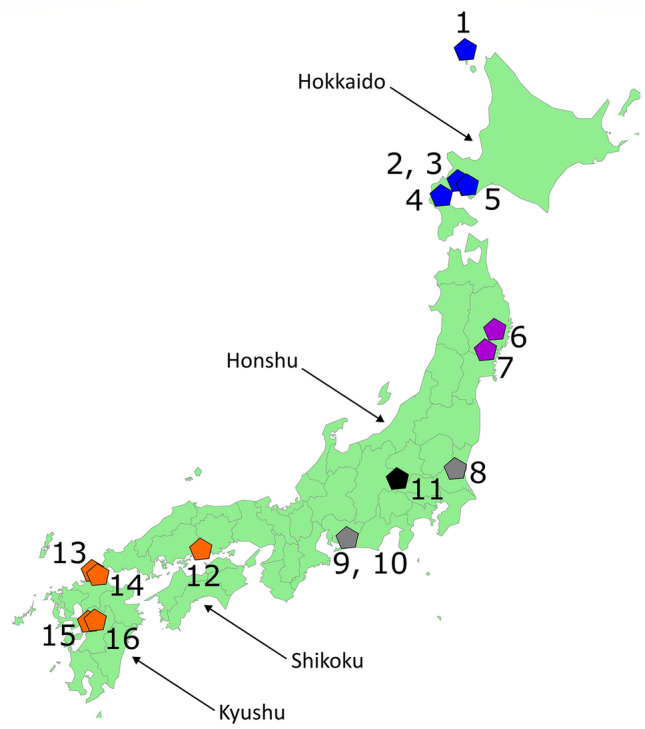
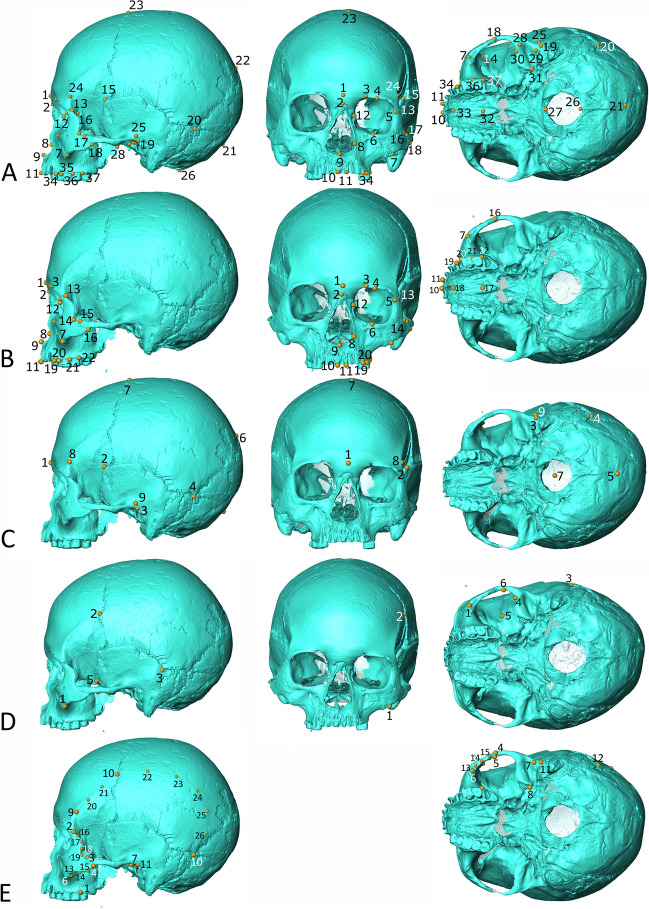
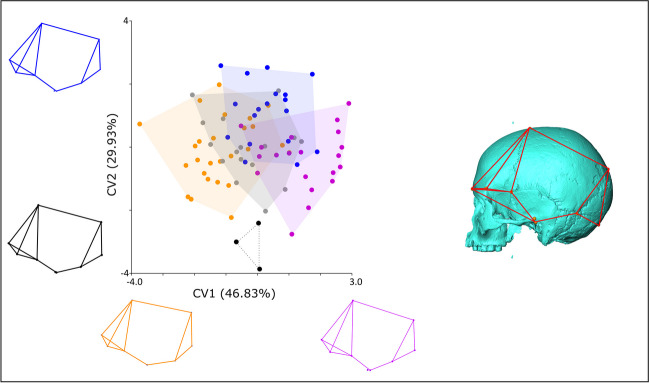
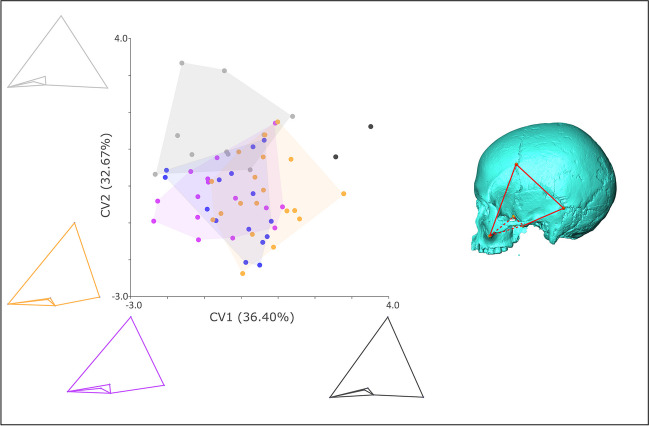
Understanding the factors shaping human crania has long been a goal of biological anthropology, and climate, diet, and population history are three of the most well-established influences. The effects of these factors are, however, rarely compared within a single, variable population, limiting interpretations of their relative contribution to craniofacial form. Jomon prehistoric foragers inhabited Japan throughout its climatic and ecological range and developed correspondingly varied modes of subsistence. We have previously demonstrated that a large sample of Jomon crania showed no clear climatic pattern; here, we examine variation in Jomon crania in more detail to determine if dietary factors and/or population history influence human intrapopulation variation at this scale. Based on well-established archaeological differences, we divide the Jomon into dietary groups and use geometric morphometric methods to analyse relationships between cranial shape, diet, and population history. We find evidence for diet-related influences on the shape of the neurocranium, particularly in the temporalis region. These shape differences may be interpreted in the context of regional variation in the biomechanical requirements of different diets. More experimental biomechanical and nutritional evidence is needed, however, to move suggested links between dietary content and cranial shape from plausible to well-supported. In contrast with the global scale of human variation, where neutral processes are the strongest influence on cranial shape, we find no pattern of population history amongst individuals from these Jomon sites. The determinants of cranial morphology are complex and the effect of diet is likely mediated by factors including sex, social factors, and chronology. Our results underline the subtlety of the effects of dietary variation beyond the forager/farmer dichotomy on cranial morphology and contribute to our understanding of the complexity of selective pressures shaping human phenotypes on different geographic scales.
The online version contains supplementary material available at 10.1007/s12520-023-01901-6.
长期以来,了解塑造人类颅骨的因素一直是生物人类学的目标,气候、饮食和人口历史是其中三个最确定的影响因素。然而,这些因素的影响很少在单一可变人群中进行比较,这限制了对它们对颅面形态相对贡献的解释。绳纹史前觅食者在日本的整个气候和生态范围内居住,并发展出相应多样的生存方式。我们之前已经证明,大量绳纹颅骨样本没有明显的气候模式;在这里,我们更详细地研究绳纹颅骨的变异,以确定饮食因素和/或人口历史是否会在这个尺度上影响人类群体内部的变异。基于已确定的考古差异,我们将绳纹人分为不同的饮食群体,并使用几何形态测量方法来分析颅骨形状、饮食和人口历史之间的关系。我们发现了饮食对脑颅骨形状有影响的证据,特别是在颞肌区域。这些形状差异可以在不同饮食的生物力学需求的区域变异背景下进行解释。然而,需要更多的实验生物力学和营养证据,才能将饮食内容与颅骨形状之间的推测联系从合理变为有充分支持。与全球范围内人类变异的中性过程对颅骨形状影响最强不同,我们在这些绳纹遗址的个体中没有发现人口历史模式。颅骨形态的决定因素很复杂,饮食的影响可能由包括性别、社会因素和年代学等因素介导。我们的结果强调了饮食变异在觅食者/农耕者二分法之外对颅骨形态影响的微妙性,并有助于我们理解在不同地理尺度上塑造人类表型的选择压力的复杂性。
在线版本包含可在10.1007/s12520-023-01901-6获取的补充材料。