University Health Care Center, Faculty of Medicine and Health, Örebro University, Örebro, SE-701 82, Sweden.
Department of Health Sciences, Lund University, Lund, Sweden.
BMC Psychiatry. 2023 Dec 18;23(1):952. doi: 10.1186/s12888-023-05440-1.
Continuity of care is considered important for results of treatment of serious mental illness (SMI). Yet, evidence of associations between relational continuity and different medical and social outcomes is sparse. Research approaches differ considerably regarding how to best assess continuity as well as which outcome to study. It has hitherto been difficult to evaluate the importance of relational continuity of care. The aim of this systematic review was to investigate treatment outcomes, including effects on resource use and costs associated with receiving higher relational continuity of care for patients with SMI.
Eleven databases were searched between January 2000 and February 2021 for studies investigating associations between some measure of relational continuity and health outcomes and costs. All eligible studies were assessed for study relevance and risk of bias by at least two independent reviewers. Only studies with acceptable risk of bias were included. Due to study heterogeneity the synthesis was made narratively, without meta-analysis. The certainty of the summarized result was assessed using GRADE. Study registration number in PROSPERO: CRD42020196518.
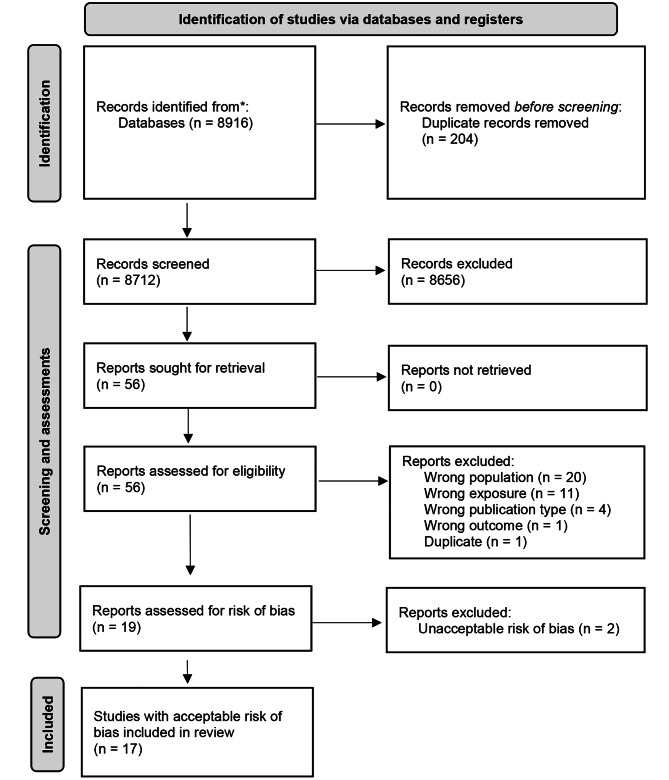
We identified 8 916 unique references and included 17 studies comprising around 300 000 patients in the review. The results were described with regard to seven outcomes. The results indicated that higher relational continuity of care for patients with serious mental illness may prevent premature deaths and suicide, may lower the number of emergency department (ED) visits and may contribute to a better quality of life compared to patients receiving lower levels of relational continuity of care. The certainty of the evidence was assessed as low or very low for all outcomes. The certainty of results for the outcomes hospitalization, costs, symptoms and functioning, and adherence to drug treatment was very low with the result that no reliable conclusions could be drawn in these areas.
The results of this systematic review indicate that having higher relational continuity of care may have beneficial effects for patients with severe mental illness, and no results have indicated the opposite relationship. There is a need for better studies using clear and distinctive measures of exposure for relational continuity of care.
连续性护理被认为对严重精神疾病(SMI)治疗结果很重要。然而,关联性连续性护理与不同的医疗和社会结果之间关联的证据很少。关于如何最好地评估连续性以及研究哪种结果,研究方法存在很大差异。迄今为止,评估关系连续性护理的重要性一直很困难。本系统评价的目的是调查治疗结果,包括对接受更高关系连续性护理的 SMI 患者的资源利用和成本相关影响。
2000 年 1 月至 2021 年 2 月期间,11 个数据库被检索以调查与关系连续性的某种衡量标准与健康结果和成本之间的关联的研究。所有符合条件的研究都由至少两名独立审查员评估研究相关性和偏倚风险。只有具有可接受偏倚风险的研究才被纳入。由于研究异质性,综合采用叙述性方法,没有进行荟萃分析。使用 GRADE 评估总结结果的确定性。PROSPERO 中的研究注册号:CRD42020196518。
我们确定了 8916 个独特的参考文献,并将包括大约 300000 名患者的 17 项研究纳入了综述。结果根据七个结果进行了描述。结果表明,与接受较低关系连续性护理的患者相比,为患有严重精神疾病的患者提供更高水平的关系连续性护理可能预防过早死亡和自杀,可能降低急诊室(ED)就诊次数,并有助于改善生活质量。所有结果的证据确定性均评估为低或极低。对于住院、成本、症状和功能以及药物治疗依从性等结果的确定性非常低,以至于在这些领域无法得出可靠的结论。
本系统评价的结果表明,较高的关系连续性护理可能对严重精神疾病患者有有益的影响,没有结果表明相反的关系。需要使用更明确和独特的关系连续性护理暴露措施进行更好的研究。