Mayr Hermann O, Regenbrecht Nina, Mayr Moritz Florian, Riedel Bianca, Hart Melanie L, Schmal Hagen, Seidenstuecker Michael
Department of Orthopedics and Trauma Surgery, Medical Center-Albert-Ludwigs-University of Freiburg, Faculty of Medicine, Albert-Ludwigs-University of Freiburg, Hugstetter Straße 55, 79106 Freiburg, Germany.
G.E.R.N. Tissue Replacement, Regeneration & Neogenesis, Department of Orthopedics and Trauma Surgery, Medical Center-Albert-Ludwigs-University of Freiburg, Faculty of Medicine, Albert-Ludwigs-University of Freiburg, Hugstetter Straße 55, 79106 Freiburg, Germany.
Biomedicines. 2023 Nov 25;11(12):3143. doi: 10.3390/biomedicines11123143.
The treatment of grafts with vancomycin for ligament reconstruction in knee surgery is the current standard. However, high antibiotic concentrations have chondrotoxic effects.
To test the chondrotoxicity of clindamycin, gentamicin and vancomycin in comparable concentrations. In vitro and in vivo effective concentrations hugely vary from drug to drug. To allow for comparisons between these three commonly used antibiotics, the concentration ranges frequently used in orthopedic surgical settings were tested.
Controlled laboratory study.
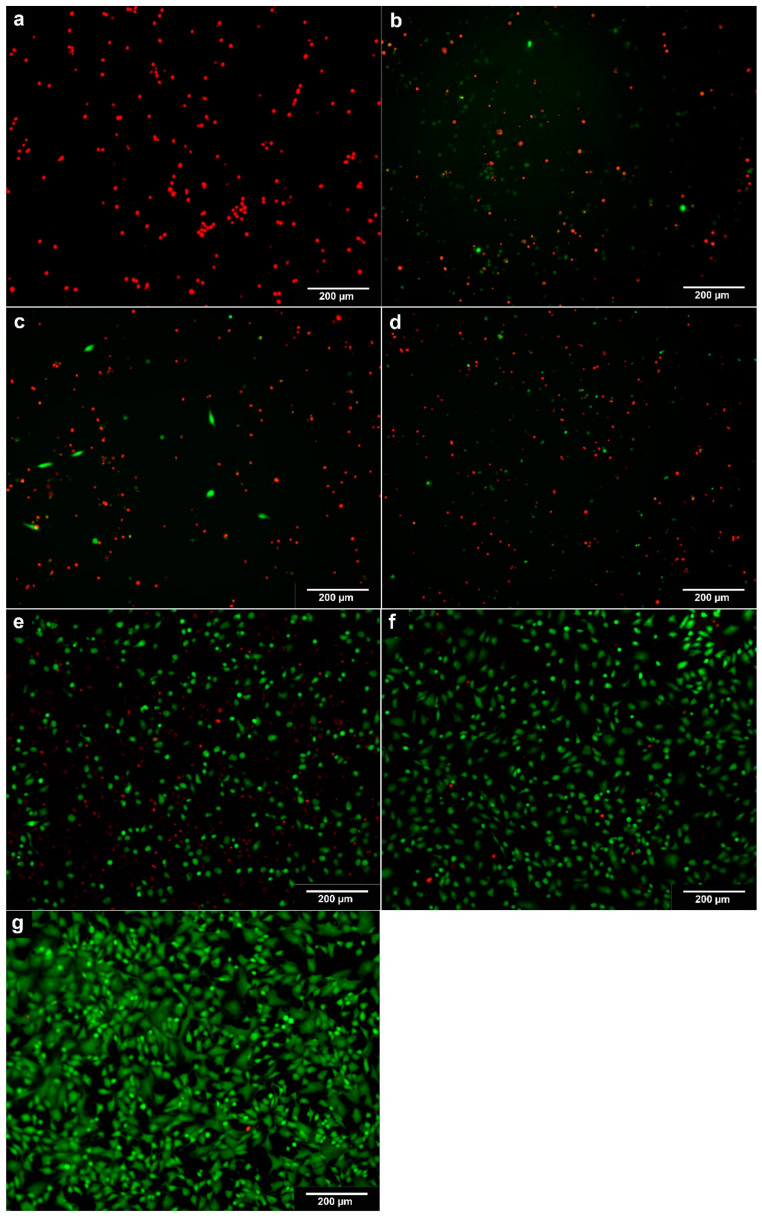
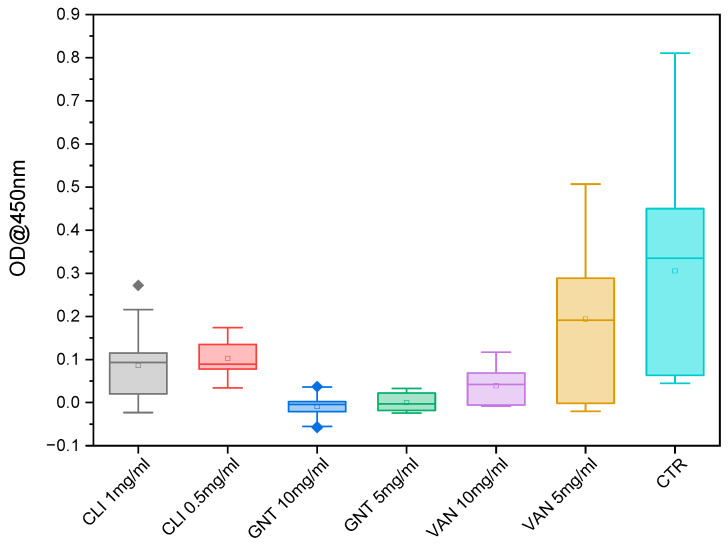
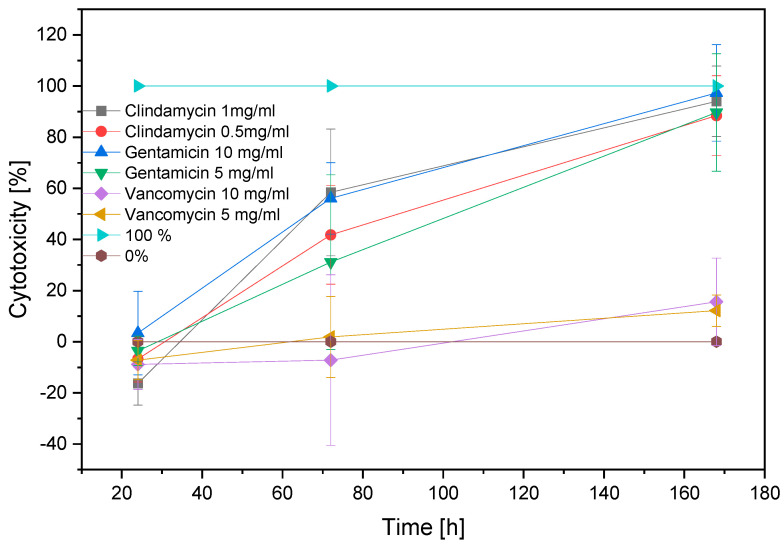
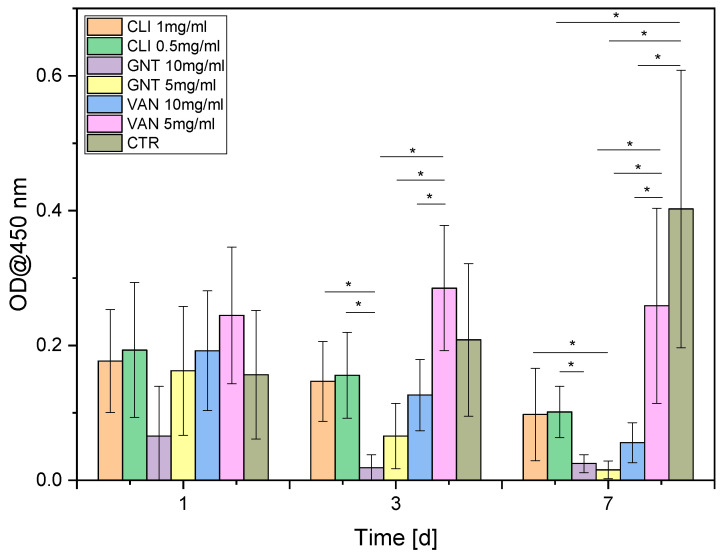
Human cartilage from 10 specimens was used to isolate chondrocytes. The chondrocytes were treated with clindamycin (1 mg/mL and 0.5 mg/mL), gentamicin (10 mg/mL and 5 mg/mL) or vancomycin (10 mg/mL and 5 mg/mL), at concentrations used for preoperative infection prophylaxis in ligament surgery. Observations were taken over a period of 7 days. A control of untreated chondrocytes was included. To test the chondrotoxicity, a lactate dehydrogenase (LDH) test and a water-soluble tetrazolium salt (WST-1) assay were performed on days 1, 3 and 7. In addition, microscopic examinations were performed after fluorescence staining of the cells at the same time intervals.
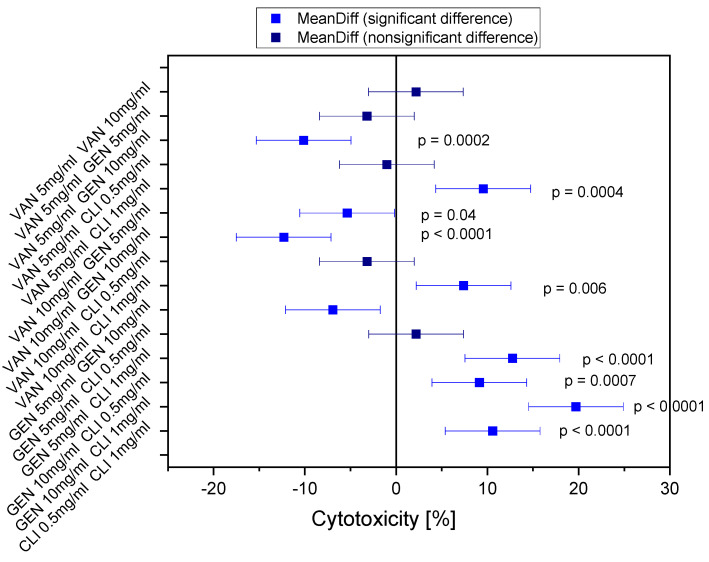
All samples showed a reasonable vitality of the cartilage cells after 72 h. However, clindamycin and gentamicin both showed higher chondrotoxicity in all investigations compared to vancomycin. After a period of 7 days, only chondrocytes treated with vancomycin showed reasonable vitality.
The preoperative treatment of ligament grafts with vancomycin is the most reasonable method for infection prophylaxis, in accordance with the current study results regarding chondrotoxicity; however, clindamycin and gentamicin cover a wider anti-bacterial spectrum.
The prophylactic antibiotic treatment of ligament grafts at concentrations of 5 mg/mL or 10 mg/mL vancomycin is justifiable and reasonable. In specific cases, even the use of gentamicin and clindamycin is appropriate.
膝关节手术中使用万古霉素处理移植物进行韧带重建是当前的标准做法。然而,高抗生素浓度具有软骨毒性作用。
测试克林霉素、庆大霉素和万古霉素在可比浓度下的软骨毒性。体外和体内有效浓度因药物而异。为了对这三种常用抗生素进行比较,测试了骨科手术环境中常用的浓度范围。
对照实验室研究。
使用来自10个标本的人软骨分离软骨细胞。软骨细胞分别用克林霉素(1mg/mL和0.5mg/mL)、庆大霉素(10mg/mL和5mg/mL)或万古霉素(10mg/mL和5mg/mL)处理,这些浓度用于韧带手术的术前感染预防。观察期为7天。纳入未处理软骨细胞的对照组。为测试软骨毒性,在第1、3和7天进行乳酸脱氢酶(LDH)测试和水溶性四氮唑盐(WST-1)测定。此外,在相同时间间隔对细胞进行荧光染色后进行显微镜检查。
72小时后所有样本的软骨细胞均显示出合理的活力。然而,在所有研究中,克林霉素和庆大霉素均比万古霉素表现出更高的软骨毒性。7天后,只有用万古霉素处理的软骨细胞显示出合理的活力。
根据目前关于软骨毒性的研究结果,术前用万古霉素处理韧带移植物是预防感染最合理的方法;然而,克林霉素和庆大霉素的抗菌谱更广。
以5mg/mL或10mg/mL万古霉素浓度对韧带移植物进行预防性抗生素治疗是合理且正当的。在特定情况下,甚至使用庆大霉素和克林霉素也是合适的。