Gamida-Cell, Jerusalem 34670, Israel.
Institute of Nanotechnology and Advanced Materials, The Mina and Everard Goodman Faculty of Life Sciences, Bar-Ilan University, Ramat-Gan 52900, Israel.
Int J Mol Sci. 2023 Dec 7;24(24):17231. doi: 10.3390/ijms242417231.
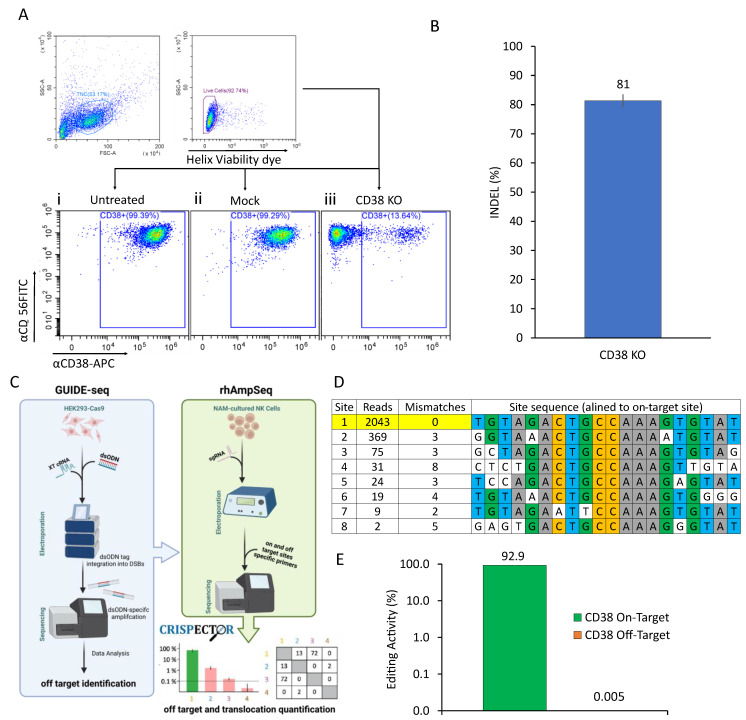
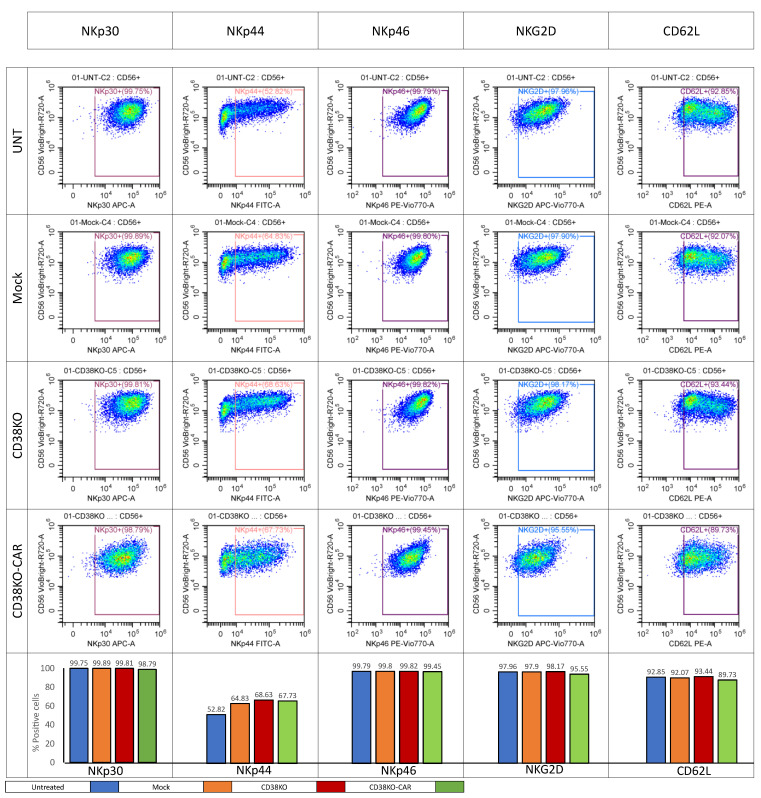
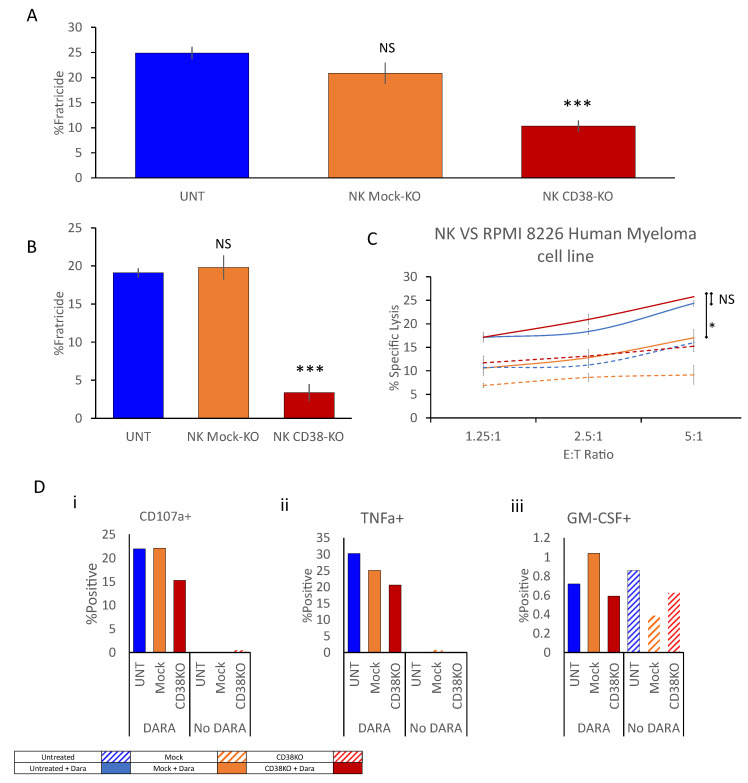
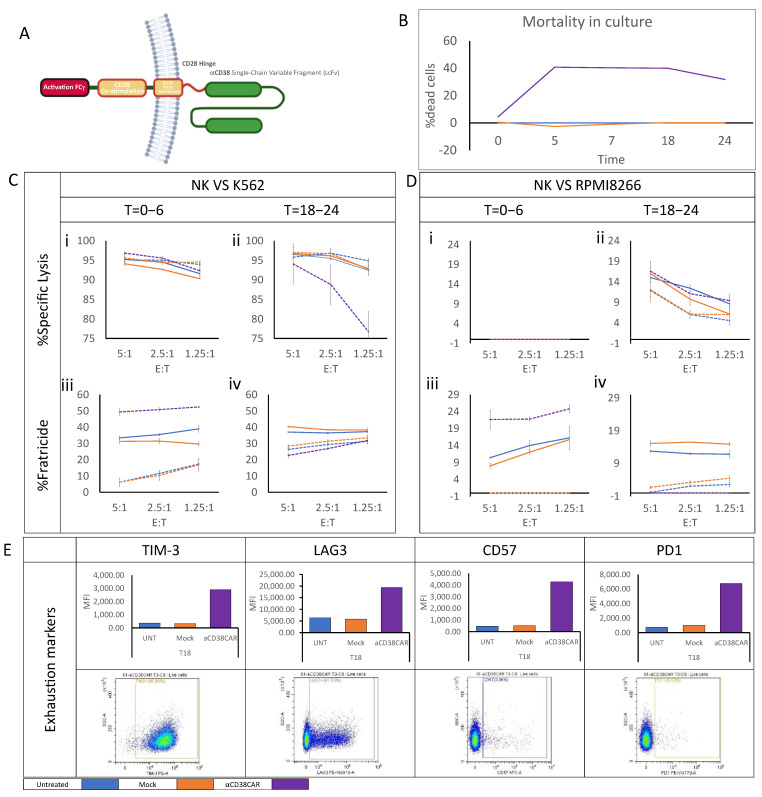
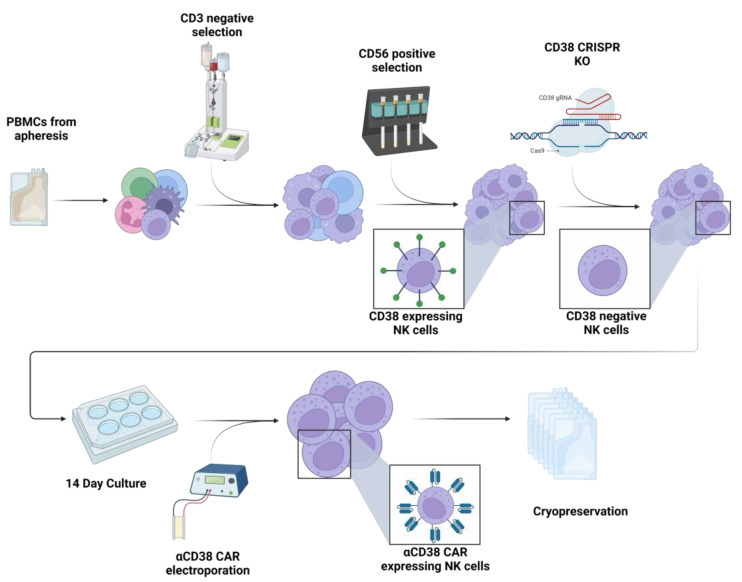
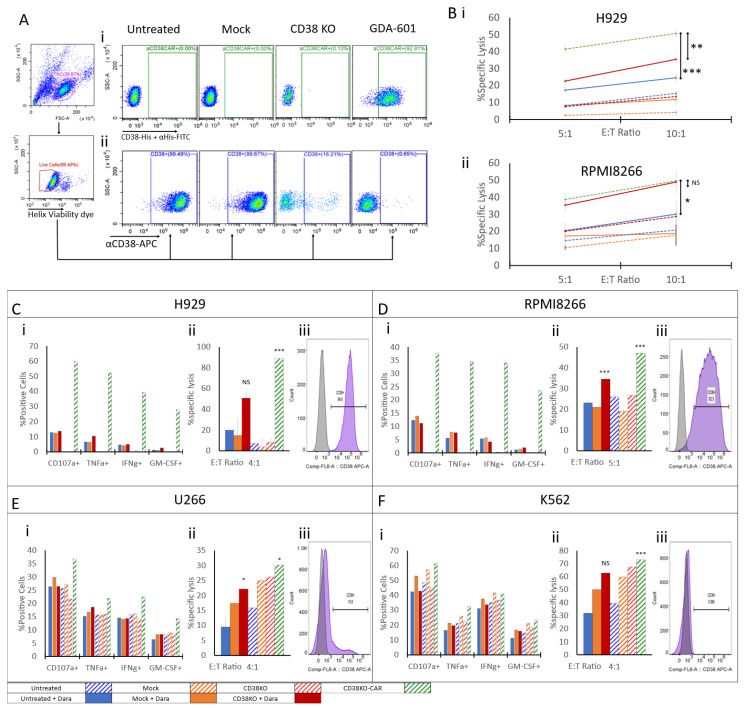
Natural killer (NK) cells are a vital component of cancer immune surveillance. They provide a rapid and potent immune response, including direct cytotoxicity and mobilization of the immune system, without the need for antigen processing and presentation. NK cells may also be better tolerated than T cell therapy approaches and are susceptible to various gene manipulations. Therefore, NK cells have become the focus of extensive translational research. Gamida Cell's nicotinamide (NAM) platform for cultured NK cells provides an opportunity to enhance the therapeutic potential of NK cells. CD38 is an ectoenzyme ubiquitously expressed on the surface of various hematologic cells, including multiple myeloma (MM). It has been selected as a lead target for numerous monoclonal therapeutic antibodies against MM. Monoclonal antibodies target CD38, resulting in the lysis of MM plasma cells through various antibody-mediated mechanisms such as antibody-dependent cellular cytotoxicity (ADCC), complement-dependent cytotoxicity, and antibody-dependent cellular phagocytosis, significantly improving the outcomes of patients with relapsed or refractory MM. However, this therapeutic strategy has inherent limitations, such as the anti-CD38-induced depletion of CD38-expressing NK cells, thus hindering ADCC. We have developed genetically engineered NK cells tailored to treat MM, in which CD38 was knocked-out using CRISPR-Cas9 technology and an enhanced chimeric antigen receptor (CAR) targeting CD38 was introduced using mRNA electroporation. This combined genetic approach allows for an improved cytotoxic activity directed against CD38-expressing MM cells without self-inflicted NK-cell-mediated fratricide. Preliminary results show near-complete abolition of fratricide with a 24-fold reduction in self-lysis from 19% in mock-transfected and untreated NK cells to 0.8% of self-lysis in CD38 knock-out CAR NK cells. Furthermore, we have observed significant enhancements in CD38-mediated activity in vitro, resulting in increased lysis of MM target cell lines. CD38 knock-out CAR NK cells also demonstrated significantly higher levels of NK activation markers in co-cultures with both untreated and αCD38-treated MM cell lines. These NAM-cultured NK cells with the combined genetic approach of CD38 knockout and addition of CD38 CAR represent a promising immunotherapeutic tool to target MM.
自然杀伤 (NK) 细胞是癌症免疫监测的重要组成部分。它们提供快速而有效的免疫反应,包括直接细胞毒性和免疫系统的动员,而无需抗原处理和呈递。与 T 细胞治疗方法相比,NK 细胞可能更容易耐受,并且容易受到各种基因操作的影响。因此,NK 细胞已成为广泛转化研究的焦点。Gamida Cell 的烟酰胺 (NAM) 培养 NK 细胞平台为增强 NK 细胞的治疗潜力提供了机会。CD38 是一种广泛表达于各种血液细胞表面的外切酶,包括多发性骨髓瘤 (MM)。它已被选为针对多发性骨髓瘤的许多单克隆治疗抗体的主要靶标。单克隆抗体靶向 CD38,通过各种抗体介导的机制,如抗体依赖性细胞毒性 (ADCC)、补体依赖性细胞毒性和抗体依赖性细胞吞噬作用,导致 MM 浆细胞溶解,显著改善了复发性或难治性 MM 患者的预后。然而,这种治疗策略存在内在的局限性,例如抗 CD38 诱导的 CD38 表达 NK 细胞耗竭,从而阻碍了 ADCC。我们已经开发了针对 MM 的基因工程 NK 细胞,使用 CRISPR-Cas9 技术敲除 CD38,并使用 mRNA 电穿孔引入针对 CD38 的增强嵌合抗原受体 (CAR)。这种组合基因方法允许针对表达 CD38 的 MM 细胞进行改善的细胞毒性活性,而不会造成自身 NK 细胞介导的同型杀伤。初步结果显示,与 mock 转染和未处理的 NK 细胞相比,自我溶解减少了 24 倍,从 19%降至 CD38 敲除 CAR NK 细胞的 0.8%,几乎完全消除了同型杀伤。此外,我们观察到 CD38 介导的活性在体外显著增强,导致 MM 靶细胞系的裂解增加。CD38 敲除 CAR NK 细胞在与未经处理和 αCD38 处理的 MM 细胞系的共培养中也表现出明显更高水平的 NK 激活标志物。这些经过 NAM 培养的 NK 细胞采用 CD38 敲除和添加 CD38 CAR 的组合基因方法代表了一种有前途的针对 MM 的免疫治疗工具。