Faculty of Medicine, University of Sydney, Sydney, NSW, Australia.
Department of Immunopathology, Westmead Hospital, NSW Health Pathology, Westmead, Sydney, NSW, Australia.
J Clin Immunol. 2023 Dec 27;44(1):34. doi: 10.1007/s10875-023-01626-0.
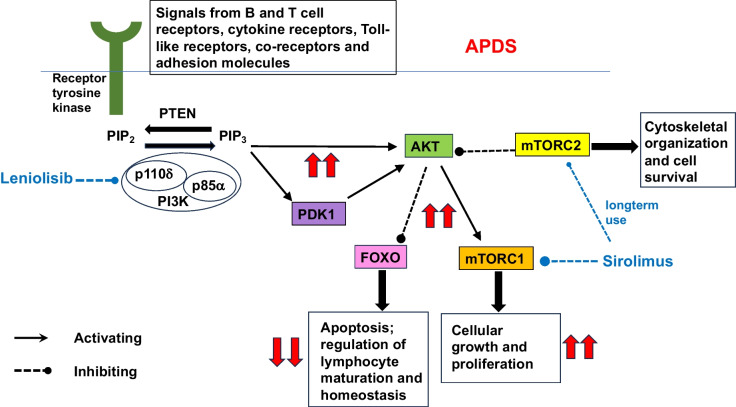
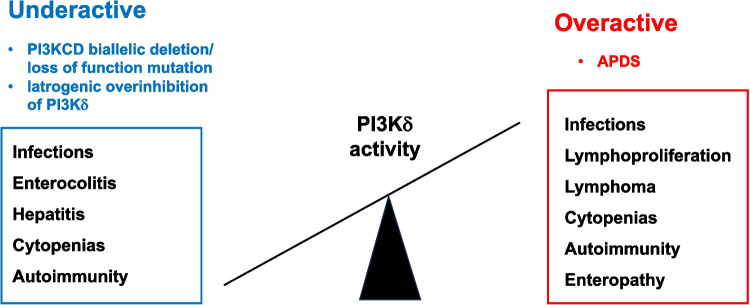
Activated phosphoinositide-3-kinase (PI3K) δ syndrome (APDS) is an inborn error of immunity characterised by immune dysregulation. Since the discovery of genetic mutations resulting in PI3Kδ overactivation, treatment of APDS patients has begun to focus on modulation of the PI3K pathway in addition to supportive therapies. The mTOR inhibitor sirolimus has been used effectively for some clinical manifestations of this condition, however the arrival of specific PI3Kδ inhibitor leniolisib has shown promising early results and may provide a more targeted approach. This review summarizes key aspects of PI3K pathway biology and discusses potential options for nuanced modulation of the PI3K pathway in APDS from a clinical perspective, highlighting differences from PI3K inhibition in haematological malignancies.
活化的磷酯酰肌醇-3-激酶(PI3K)δ 综合征(APDS)是一种免疫先天错误,其特征为免疫失调。自从发现导致 PI3Kδ 过度激活的基因突变以来,APDS 患者的治疗已开始除了支持性治疗外,还侧重于调节 PI3K 途径。雷帕霉素(mTOR 抑制剂)已有效地用于该疾病的某些临床表现,然而,特异性 PI3Kδ 抑制剂 leniolisib 的出现显示出有前途的早期结果,并且可能提供更具针对性的方法。这篇综述总结了 PI3K 途径生物学的关键方面,并从临床角度讨论了在 APDS 中精细调节 PI3K 途径的潜在选择,突出了与血液恶性肿瘤中 PI3K 抑制的差异。