
重复性扩散性去极化诱导与突触可塑性和神经保护途径相关的基因表达变化。
Repetitive spreading depolarization induces gene expression changes related to synaptic plasticity and neuroprotective pathways.
作者信息
Dell'Orco Michela, Weisend Jordan E, Perrone-Bizzozero Nora I, Carlson Andrew P, Morton Russell A, Linsenbardt David N, Shuttleworth C William
机构信息
Department of Neurosciences, The University of New Mexico School of Medicine, Albuquerque, NM, United States.
Department of Neurosurgery, The University of New Mexico School of Medicine, Albuquerque, NM, United States.
出版信息
Front Cell Neurosci. 2023 Dec 14;17:1292661. doi: 10.3389/fncel.2023.1292661. eCollection 2023.
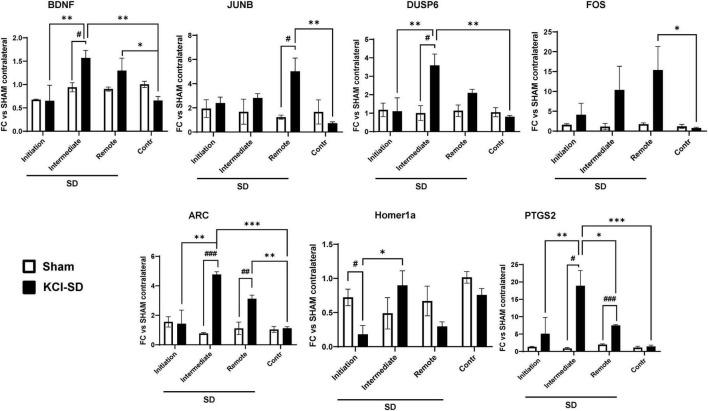
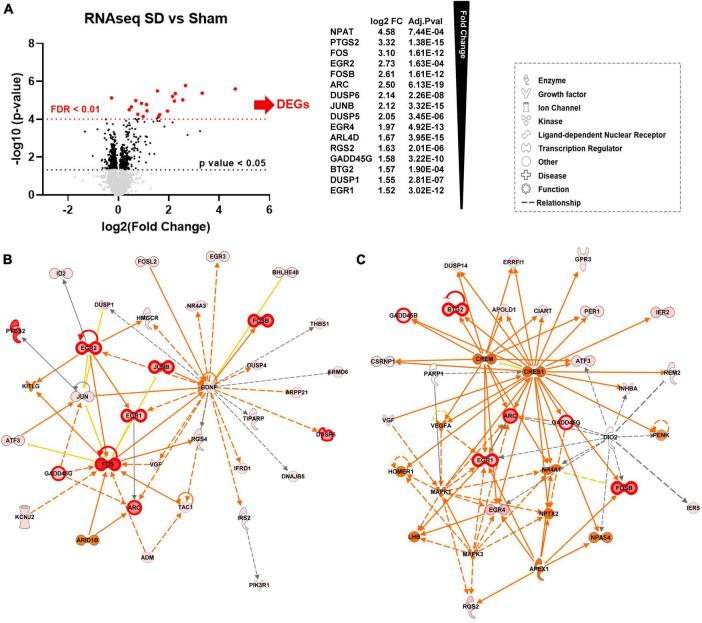
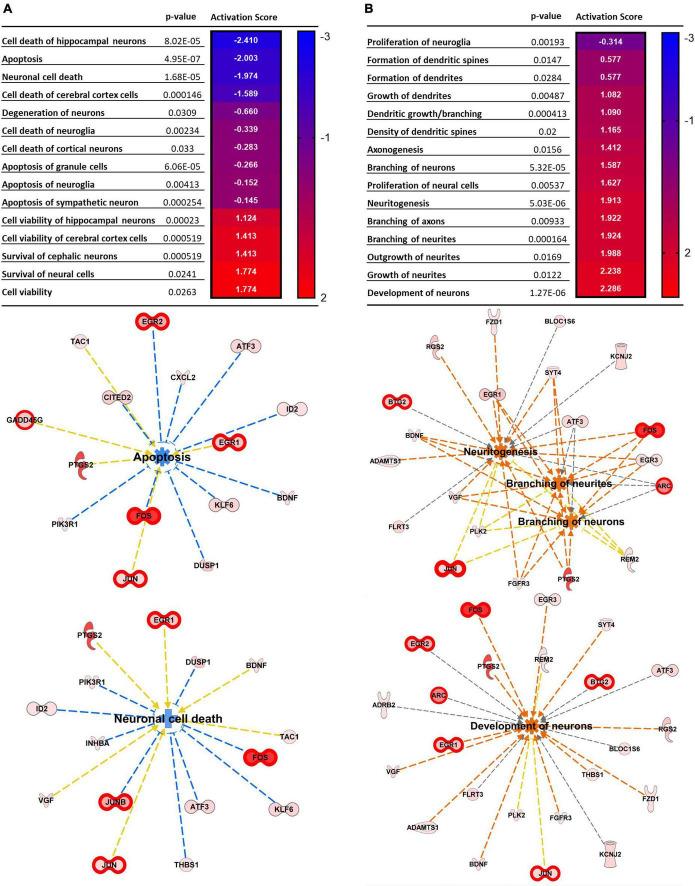
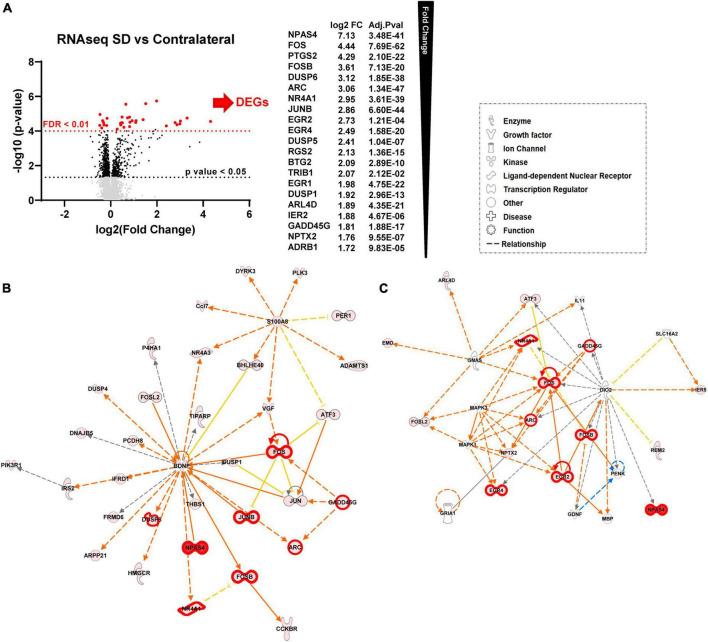
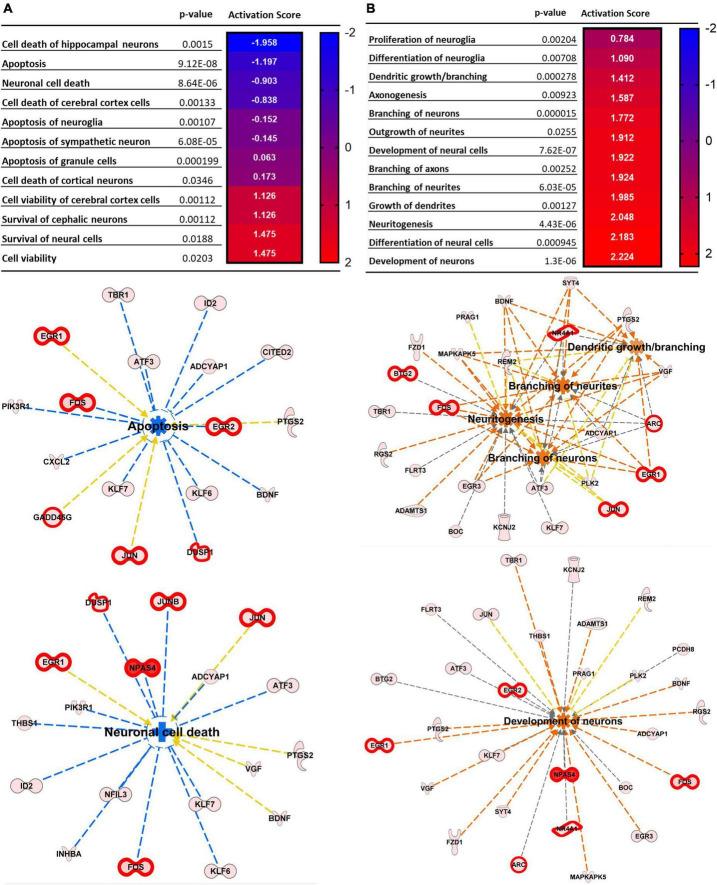
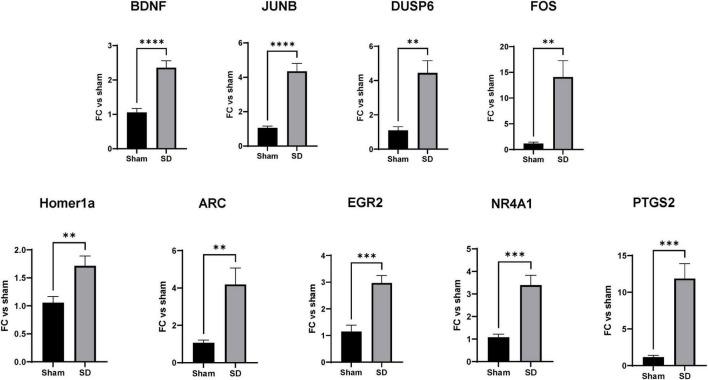
Spreading depolarization (SD) is a slowly propagating wave of profound depolarization that sweeps through cortical tissue. While much emphasis has been placed on the damaging consequences of SD, there is uncertainty surrounding the potential activation of beneficial pathways such as cell survival and plasticity. The present study used unbiased assessments of gene expression to evaluate that compensatory and repair mechanisms could be recruited following SD, regardless of the induction method, which prior to this work had not been assessed. We also tested assumptions of appropriate controls and the spatial extent of expression changes that are important for SD models. SD clusters were induced with either KCl focal application or optogenetic stimulation in healthy mice. Cortical RNA was extracted and sequenced to identify differentially expressed genes (DEGs). SDs using both induction methods significantly upregulated 16 genes (vs. sham animals) that included the cell proliferation-related genes FOS, JUN, and DUSP6, the plasticity-related genes ARC and HOMER1, and the inflammation-related genes PTGS2, EGR2, and NR4A1. The contralateral hemisphere is commonly used as control tissue for DEG studies, but its activity could be modified by near-global disruption of activity in the adjacent brain. We found 21 upregulated genes when comparing SD-involved cortex vs. tissue from the contralateral hemisphere of the same animals. Interestingly, there was almost complete overlap (21/16) with the DEGs identified using sham controls. Neuronal activity also differs in SD initiation zones, where sustained global depolarization is required to initiate propagating events. We found that gene expression varied as a function of the distance from the SD initiation site, with greater expression differences observed in regions further away. Functional and pathway enrichment analyses identified axonogenesis, branching, neuritogenesis, and dendritic growth as significantly enriched in overlapping DEGs. Increased expression of SD-induced genes was also associated with predicted inhibition of pathways associated with cell death, and apoptosis. These results identify novel biological pathways that could be involved in plasticity and/or circuit modification in brain tissue impacted by SD. These results also identify novel functional targets that could be tested to determine potential roles in the recovery and survival of peri-infarct tissues.
扩散性去极化(SD)是一种缓慢传播的深度去极化波,它席卷皮质组织。虽然人们非常关注SD的破坏性后果,但围绕细胞存活和可塑性等有益途径的潜在激活仍存在不确定性。本研究使用无偏差的基因表达评估来评估,无论采用何种诱导方法,SD后是否可以启动补偿和修复机制,而在此之前尚未对此进行评估。我们还测试了适当对照的假设以及对SD模型很重要的表达变化的空间范围。在健康小鼠中通过氯化钾局部应用或光遗传学刺激诱导SD簇。提取皮质RNA并进行测序以鉴定差异表达基因(DEG)。使用两种诱导方法的SD均显著上调了16个基因(与假手术动物相比),这些基因包括细胞增殖相关基因FOS、JUN和DUSP6,可塑性相关基因ARC和HOMER1,以及炎症相关基因PTGS2、EGR2和NR4A1。对侧半球通常用作DEG研究的对照组织,但其活性可能会因相邻脑区几乎全脑的活动中断而改变。当比较涉及SD的皮质与同一只动物对侧半球的组织时,我们发现了21个上调基因。有趣的是,与使用假手术对照鉴定的DEG几乎完全重叠(21/16)。在SD起始区,神经元活动也有所不同,在该区域需要持续的全脑去极化来启动传播事件。我们发现基因表达随距SD起始位点的距离而变化,在更远的区域观察到更大的表达差异。功能和通路富集分析确定轴突发生、分支、神经突发生和树突生长在重叠的DEG中显著富集。SD诱导基因的表达增加也与预测的与细胞死亡和凋亡相关通路的抑制有关。这些结果确定了可能参与受SD影响的脑组织可塑性和/或电路修饰的新生物学途径。这些结果还确定了新的功能靶点,可对其进行测试以确定在梗死周围组织恢复和存活中的潜在作用。
 Zotero 插件