School of Optometry and Vision Science, Faculty of Medicine and Health, UNSW, Sydney, Australia.
School of Health and Life Sciences, University of the West of Scotland, Blantyre, Scotland, United Kingdom.
PLoS Negl Trop Dis. 2024 Jan 2;18(1):e0011878. doi: 10.1371/journal.pntd.0011878. eCollection 2024 Jan.
Acanthamoeba is an environmental host for various microorganisms. Acanthamoeba is also becoming an increasingly important pathogen as a cause of keratitis. In Acanthamoeba keratitis (AK), coinfections involving pathogenic bacteria have been reported, potentially attributed to the carriage of microbes by Acanthamoeba. This study assessed the presence of intracellular bacteria in Acanthamoeba species recovered from domestic tap water and corneas of two different AK patients and examined the impact of naturally occurring intracellular bacteria within Acanthamoeba on the severity of corneal infections in rats.
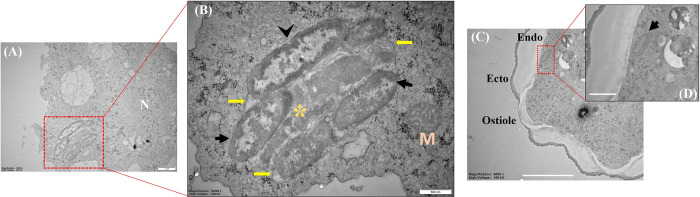
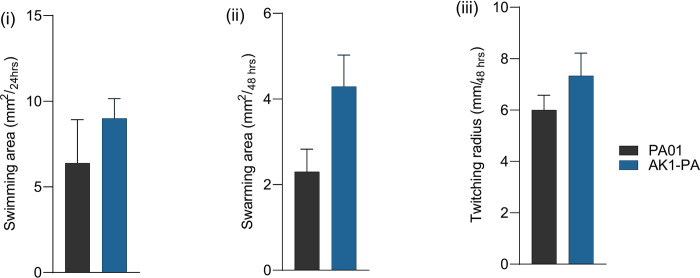
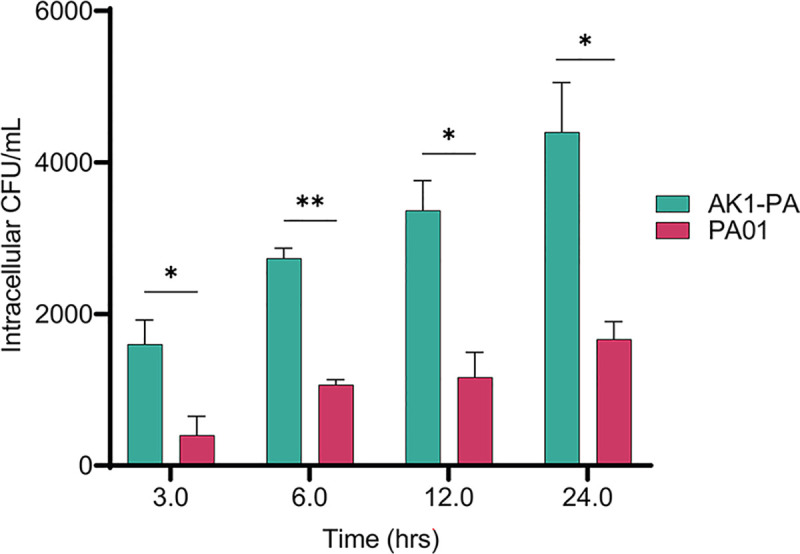
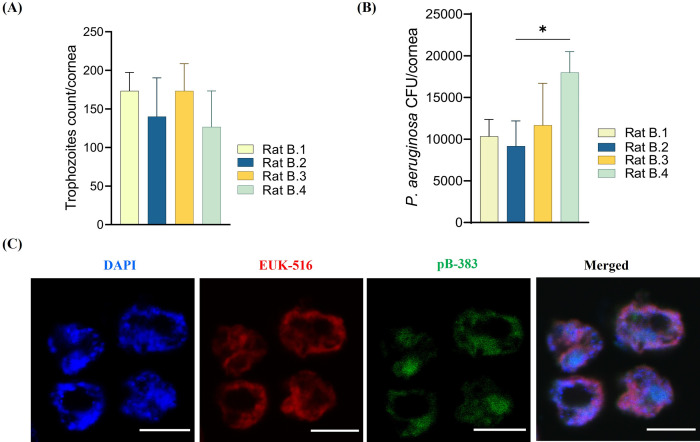
METHODOLOGY/PRINCIPAL FINDINGS: Household water and corneal swabs were collected from AK patients. Acanthamoeba strains and genotypes were confirmed by sequencing. Acanthamoeba isolates were assessed for the presence of intracellular bacteria using sequencing, fluorescence in situ hybridization (FISH), and electron microscopy. The viability of the bacteria in Acanthamoeba was assessed by labelling with alkyne-functionalized D-alanine (alkDala). Primary human macrophages were used to compare the intracellular survival and replication of the endosymbiotic Pseudomonas aeruginosa and a wild type strain. Eyes of rats were challenged intrastromally with Acanthamoeba containing or devoid of P. aeruginosa and evaluated for the clinical response. Domestic water and corneal swabs were positive for Acanthamoeba. Both strains belonged to genotype T4F. One of the Acanthamoeba isolates harboured P. aeruginosa which was seen throughout the Acanthamoeba's cytoplasm. It was metabolically active and could be seen undergoing binary fission. This motile strain was able to replicate in macrophage to a greater degree than strain PAO1 (p<0.05). Inoculation of Acanthamoeba containing the intracellular P. aeruginosa in rats eyes resulted in a severe keratitis with increased neutrophil response. Acanthamoeba alone induced milder keratitis.
CONCLUSIONS/SIGNIFICANCE: Our findings indicate the presence of live intracellular bacteria in Acanthamoeba can increase the severity of acute keratitis in vivo. As P. aeruginosa is a common cause of keratitis, this may indicate the potential for these intracellular bacteria in Acanthamoeba to lead to severe polymicrobial keratitis.
棘阿米巴是多种微生物的环境宿主。棘阿米巴也正成为一种越来越重要的病原体,可导致角膜炎。在棘阿米巴角膜炎(AK)中,已报道有致病性细菌的合并感染,这可能归因于棘阿米巴携带微生物。本研究评估了从家庭自来水中和两名不同 AK 患者的角膜中分离出的棘阿米巴物种中是否存在细胞内细菌,并研究了自然存在于棘阿米巴内的细胞内细菌对大鼠角膜感染严重程度的影响。
方法/主要发现:从 AK 患者处采集家庭用水和角膜拭子。通过测序确认棘阿米巴株和基因型。使用测序、荧光原位杂交(FISH)和电子显微镜评估棘阿米巴分离株中是否存在细胞内细菌。通过用炔基功能化 D-丙氨酸(alkDala)标记来评估细菌在棘阿米巴内的活力。原代人巨噬细胞用于比较内共生铜绿假单胞菌和野生型菌株的细胞内存活和复制。用含有或不含铜绿假单胞菌的棘阿米巴感染大鼠的基质内,评估临床反应。家庭用水和角膜拭子均为棘阿米巴阳性。两种菌株均属于 T4F 基因型。其中一种棘阿米巴分离株携带铜绿假单胞菌,可在整个棘阿米巴细胞质中看到。它具有代谢活性,并且可以看到正在进行二分分裂。这种运动菌株在巨噬细胞中的复制能力比 PAO1 菌株更强(p<0.05)。在大鼠眼睛中接种含有细胞内铜绿假单胞菌的棘阿米巴会导致严重的角膜炎,伴有中性粒细胞反应增加。单独接种棘阿米巴会引起较轻的角膜炎。
结论/意义:我们的研究结果表明,棘阿米巴内存在活的细胞内细菌会增加体内急性角膜炎的严重程度。由于铜绿假单胞菌是角膜炎的常见病因,这可能表明棘阿米巴内这些细胞内细菌有导致严重多微生物角膜炎的潜力。