Department of Hematology, Jiangnan University Medical Center, No. 68 Zhongshan Road, Wuxi, Jiangsu, China.
Sci Rep. 2024 Jan 2;14(1):196. doi: 10.1038/s41598-023-50794-x.
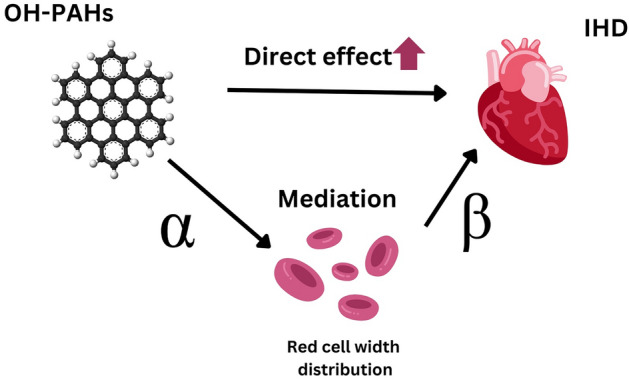
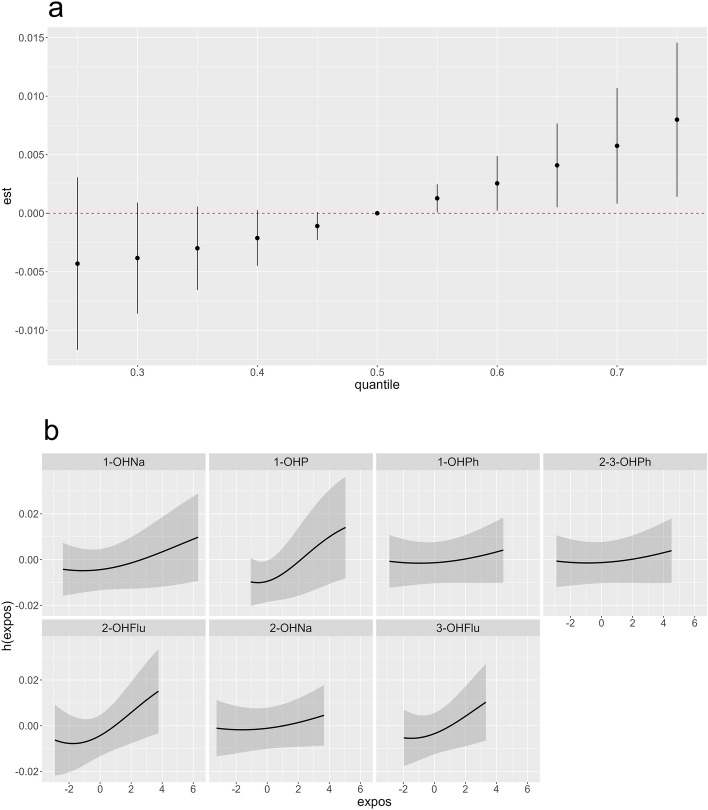
This study investigates the association between polycyclic aromatic hydrocarbon (PAH) exposure, red blood cell distribution width (RDW), and ischemic heart disease (IHD) in a sample of 3003 participants from the National Health and Nutrition Examination Survey (NHANES). We hypothesize that RDW may mediate the effect of hydroxylated PAHs (OH-PAH) on IHD. Logistic regression models reveal significant associations between increased urinary PAH metabolite concentrations and IHD, as well as positive associations between PAH metabolites and RDW. Weighted Quantile Sum (WQS) regression and Bayesian Kernel Machine Regression (BKMR) analyses confirm the significant associations of the OH-PAH mixture with IHD and RDW. Mediation analysis demonstrates that RDW partially mediates the relationship between PAH exposure and IHD, accounting for 2-4.6% of the total effects. Our findings highlight the potential underlying mechanisms linking PAH exposure, RDW, and IHD and emphasize the importance of addressing environmental pollutants like PAHs in maintaining cardiovascular health and informing public health policies.
本研究调查了 3003 名来自国家健康和营养检查调查(NHANES)参与者样本中多环芳烃(PAH)暴露、红细胞分布宽度(RDW)与缺血性心脏病(IHD)之间的关联。我们假设 RDW 可能介导了羟基多环芳烃(OH-PAH)对 IHD 的影响。逻辑回归模型揭示了尿中 PAH 代谢物浓度升高与 IHD 之间的显著关联,以及 PAH 代谢物与 RDW 之间的正相关关系。加权分位数总和(WQS)回归和贝叶斯核机器回归(BKMR)分析证实了 OH-PAH 混合物与 IHD 和 RDW 的显著关联。中介分析表明,RDW 部分介导了 PAH 暴露与 IHD 之间的关系,占总效应的 2-4.6%。我们的研究结果突出了 PAH 暴露、RDW 和 IHD 之间潜在的关联机制,并强调了在维持心血管健康和制定公共卫生政策方面,解决 PAH 等环境污染物的重要性。