Department of Clinical Laboratory, State Key Laboratory of Complex Severe and Rare Diseases, Peking Union Medical College Hospital, Chinese Academy of Medical Sciences and Peking Union Medical College, Beijing, China.
Biomedical Engineering Facility of National Infrastructures for Translational Medicine, Peking Union Medical College Hospital, Chinese Academy of Medical Sciences and Peking Union Medical College, Beijing, China.
Antimicrob Agents Chemother. 2024 Feb 7;68(2):e0093723. doi: 10.1128/aac.00937-23. Epub 2024 Jan 3.
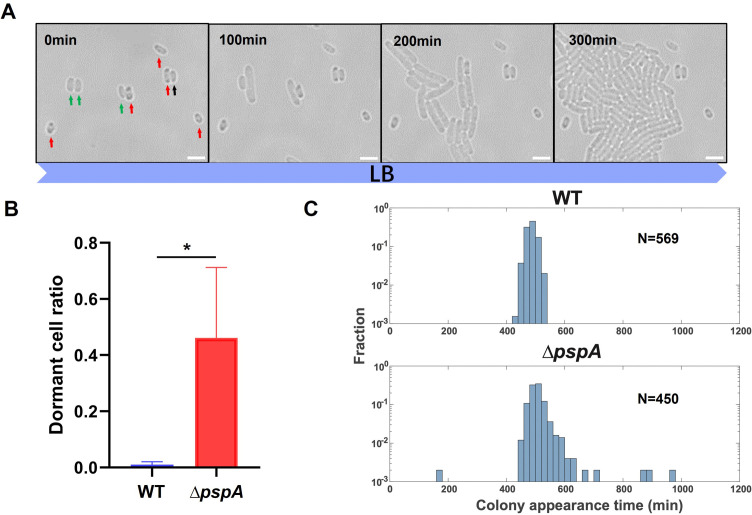
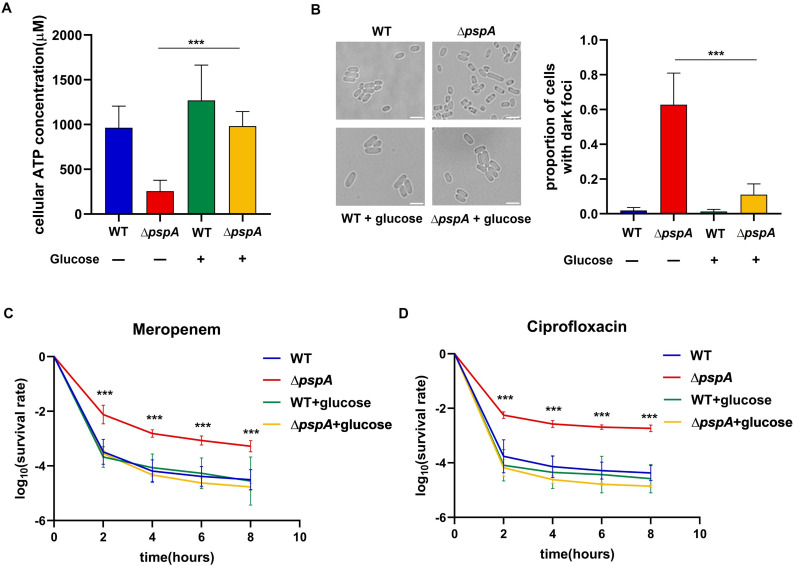
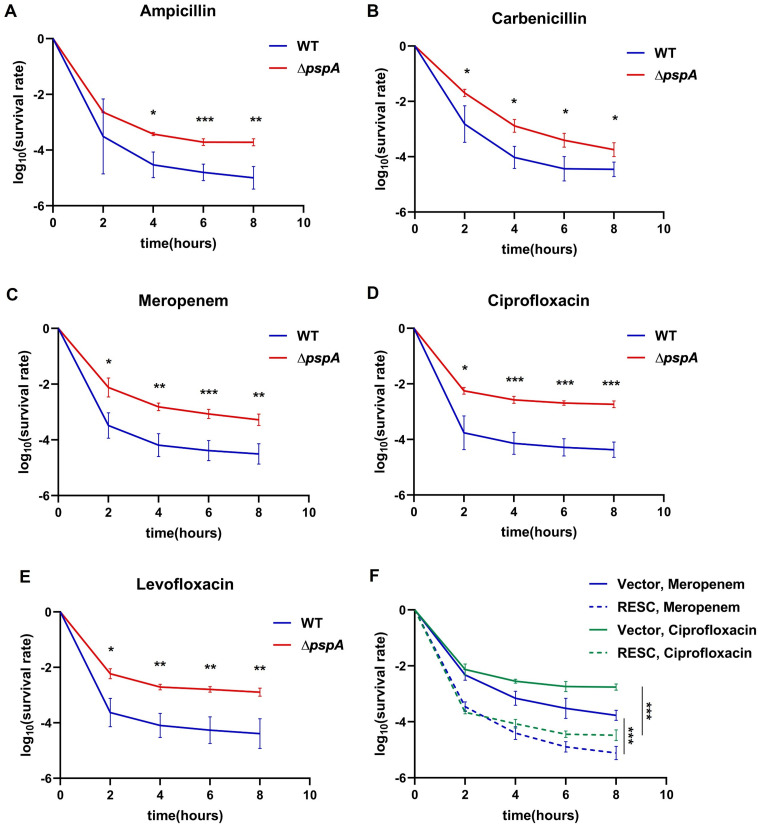
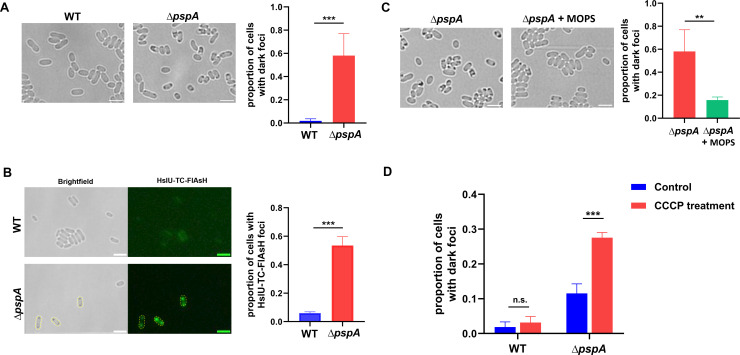
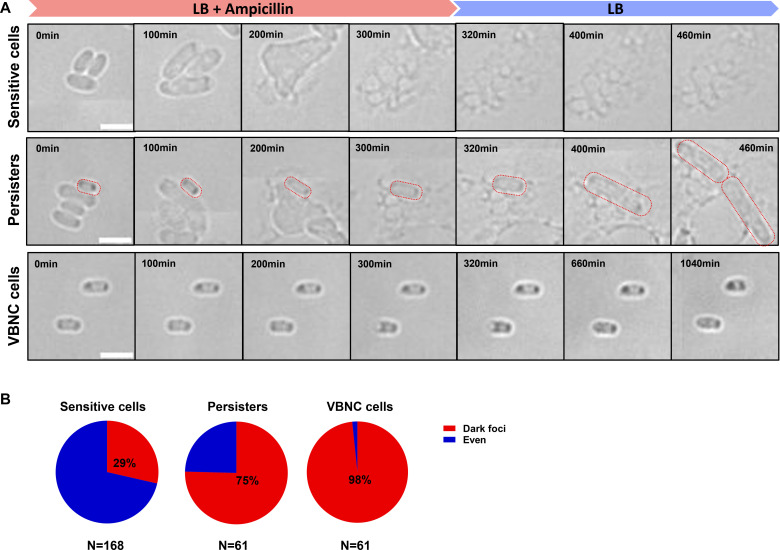
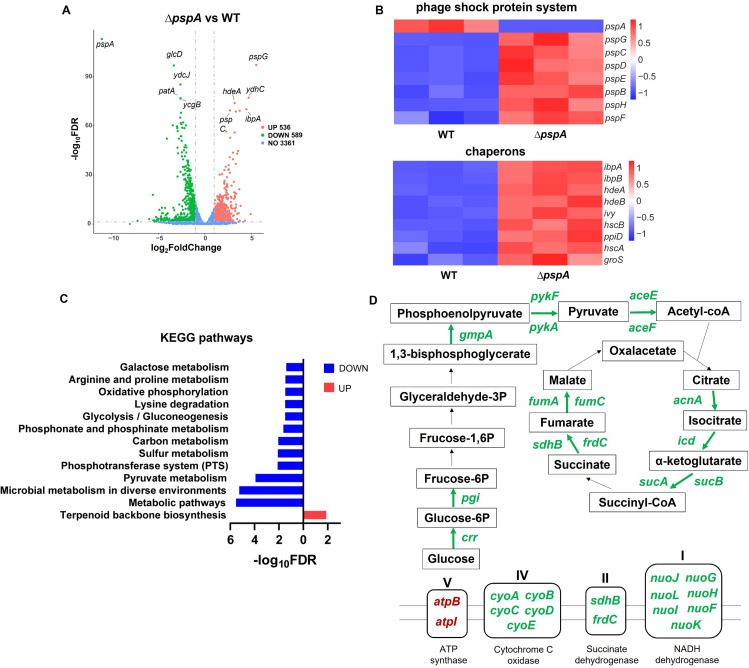
Entering a dormant state is a prevailing mechanism used by bacterial cells to transiently evade antibiotic attacks and become persisters. The dynamic progression of bacterial dormancy depths driven by protein aggregation has been found to be critical for antibiotic persistence in recent years. However, our current understanding of the endogenous genes that affects dormancy depth remains limited. Here, we discovered a novel role of phage shock protein A () gene in modulating bacterial dormancy depth. Deletion of of resulted in increased bacterial dormancy depths and prolonged lag times for resuscitation during the stationary phase. exhibited a higher persister ratio compared to the wild type when challenged with various antibiotics. Microscopic images revealed that showed accelerated formation of protein aggresomes, which were collections of endogenous protein aggregates. Time-lapse imaging established the positive correlation between protein aggregation and antibiotic persistence of at the single-cell level. To investigate the molecular mechanism underlying accelerated protein aggregation, we performed transcriptome profiling and found the increased abundance of chaperons and a general metabolic slowdown in the absence of . Consistent with the transcriptomic results, the strain showed a decreased cellular ATP level, which could be rescued by glucose supplementation. Then, we verified that replenishment of cellular ATP levels by adding glucose could inhibit protein aggregation and reduce persister formation in . This study highlights the novel role of in maintaining proteostasis, regulating dormancy depth, and affecting antibiotic persistence during stationary phase.
进入休眠状态是细菌细胞用来暂时逃避抗生素攻击并成为持久菌的一种主要机制。近年来,人们发现蛋白质聚集驱动的细菌休眠深度的动态变化对抗生素的持久性至关重要。然而,我们目前对影响休眠深度的内源性基因的了解仍然有限。在这里,我们发现噬菌体休克蛋白 A () 基因在调节细菌休眠深度方面有一个新的作用。缺失 导致细菌休眠深度增加,并且在静止期复苏时的滞后时间延长。与野生型相比,当受到各种抗生素的挑战时, 表现出更高的持久菌比例。显微镜图像显示,与野生型相比, 表现出加速形成蛋白聚集物的现象,这是内源性蛋白聚集物的集合。延时成像在单细胞水平上建立了 蛋白聚集与抗生素持久性之间的正相关关系。为了研究加速蛋白聚集的分子机制,我们进行了转录组谱分析,发现缺乏 时伴侣蛋白的丰度增加,并且一般代谢减缓。与转录组结果一致, 菌株的细胞 ATP 水平降低,通过添加葡萄糖可以得到挽救。然后,我们验证了通过添加葡萄糖补充细胞 ATP 水平可以抑制蛋白聚集并减少 中的持久菌形成。这项研究强调了 在维持蛋白质稳态、调节休眠深度以及影响静止期抗生素持久性方面的新作用。