Antonini Antonella, Harris Sheri L, Stryker Michael P
Kavli Center for Fundamental Neuroscience, Department of Physiology, University of California, San Francisco, California 94158.
bioRxiv. 2023 Dec 22:2023.12.20.572693. doi: 10.1101/2023.12.20.572693.
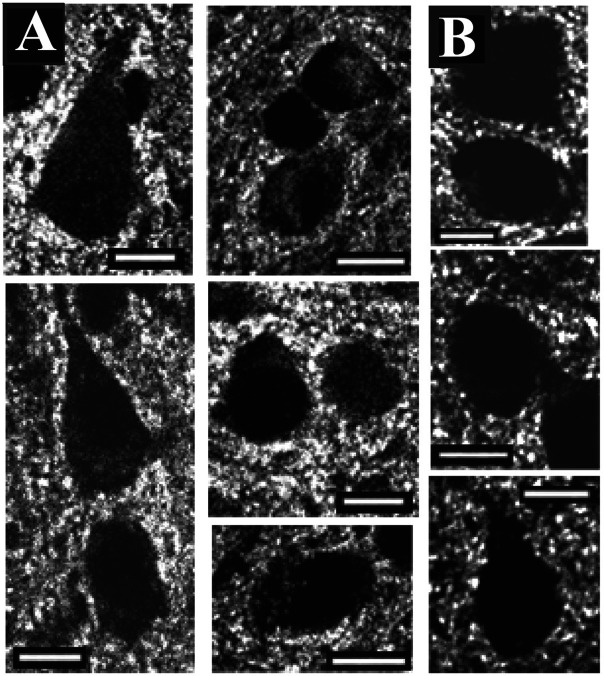
Current hypotheses on the mechanisms underlying the development and plasticity of the ocular dominance system through competitive interactions between pathways serving the two eyes strongly suggest the involvement of neurotrophins and their high affinity receptors. In the cat, infusion of the tyrosine kinase B ligand (trkB), neurotrophin-4/5 (NT-4/5), abolishes ocular dominance plasticity that follows monocular deprivation (Gillespie et al., 2000), while tyrosine kinase A and C ligands (trkA and trkC) do not have this effect. One interpretation of this finding is that NT-4/5 causes overgrowth and sprouting of thalamocortical and/or corticocortical terminals, leading to promiscuous neuronal connections which override the experience-dependent fine tuning of connections based on correlated activity. The present study tested whether neurons in cortical regions infused with NT-4/5 showed anatomical changes compatible with this hypothesis. Cats at the peak of the critical period received chronic infusion NT-4/5 into visual cortical areas 17/18 via an osmotic minipump. Visual cortical neurons were labeled in fixed slices using the DiOlistics methods (Gan et al., 2000) and analyzed in confocal microscopy. Infusion of NT-4/5 induced a significant increase of spine-like processes on primary dendrites and a distinctive sprouting of protuberances from neuronal somata in all layers. The increase of neuronal membrane was paralleled by an increase in density of the presynaptic marker synaptophysin in infused areas, suggesting an increase in the numbers of synapses. A contingent of these newly formed synapses may feed into inhibitory circuits, as suggested by an increase of GAD-65 immunostaining in NT-4/5 affected areas. These anatomical changes are consistent with the physiological changes in such animals, suggesting that excess trkB neurotrophin can stimulate the formation of promiscuous connections during the critical period.
目前关于双眼优势系统通过服务于双眼的通路之间的竞争性相互作用实现发育和可塑性的机制的假说,强烈提示神经营养因子及其高亲和力受体参与其中。在猫中,注入酪氨酸激酶B配体(trkB)、神经营养因子-4/5(NT-4/5)会消除单眼剥夺后出现的双眼优势可塑性(吉莱斯皮等人,2000年),而酪氨酸激酶A和C配体(trkA和trkC)则没有这种作用。对这一发现的一种解释是,NT-4/5导致丘脑皮质和/或皮质皮质终末的过度生长和出芽,导致杂乱的神经元连接,从而凌驾于基于相关活动的依赖经验的连接精细调节之上。本研究测试了注入NT-4/5的皮质区域中的神经元是否表现出与该假说相符的解剖学变化。处于关键期高峰期的猫通过渗透微型泵接受向视觉皮质区域17/18慢性注入NT-4/5。使用DiOlistics方法(甘等人,2000年)在固定切片中标记视觉皮质神经元,并在共聚焦显微镜下进行分析。注入NT-4/5导致所有层的初级树突上棘状突起显著增加,神经元胞体有明显的突起出芽。神经元膜的增加与注入区域中突触前标志物突触素密度的增加平行,表明突触数量增加。如NT-4/5影响区域中GAD-65免疫染色增加所提示的,这些新形成的突触中的一部分可能进入抑制性回路。这些解剖学变化与这类动物的生理学变化一致,表明过量的trkB神经营养因子可在关键期刺激形成杂乱的连接。