Mehic Dino, Pabinger Ingrid, Gebhart Johanna
Clinical Division of Hematology and Hemostaseology, Department of Medicine I, Medical University of Vienna, Vienna, Austria.
Res Pract Thromb Haemost. 2023 Oct 30;7(8):102242. doi: 10.1016/j.rpth.2023.102242. eCollection 2023 Nov.
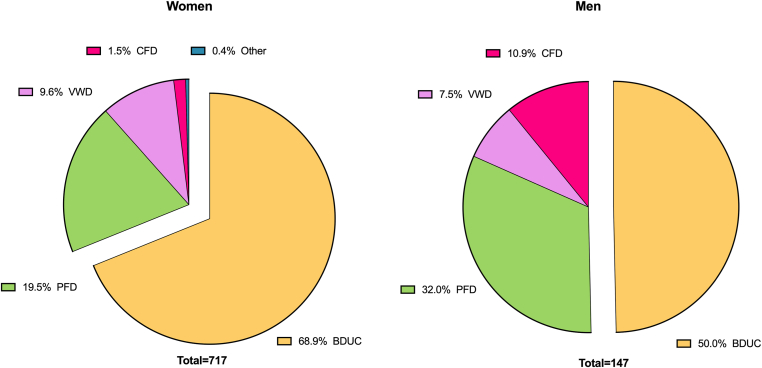
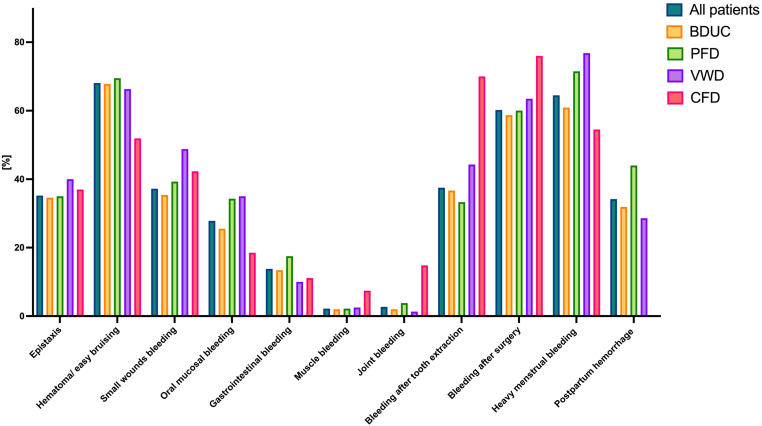
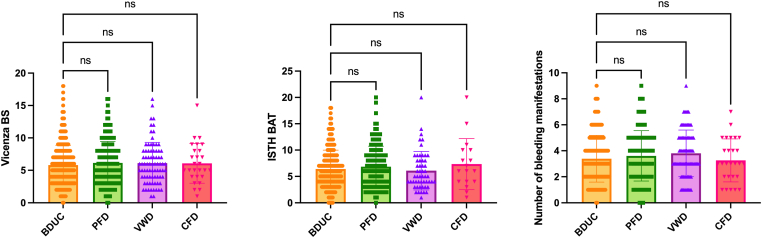
A State of the Art lecture titled "Investigating Patients for Bleeding Disorders When Most of the Usual Ones Have Been Ruled Out" was presented at the International Society on Thrombosis and Haemostasis Congress in 2023. Mild to moderate bleeding disorders (MBDs) in patients in whom no diagnosis of an established disorder, such as platelet function defect, von Willebrand disease, or a coagulation factor deficiency, can be identified are classified as bleeding disorders of unknown cause (BDUCs). Prospective data from the Vienna Bleeding Biobank and other studies have revealed a high proportion of BDUCs of up to 70% among patients with MBD who have a similar bleeding phenotype as other MBDs. As BDUC is a diagnosis of exclusion, the accuracy of the diagnostic workup is essential. For example, repeated testing for von Willebrand disease should be considered if von Willebrand factor values are <80 IU/dL. Current evidence does not support the clinical use of global assays such as thromboelastography, platelet function analyzer, or thrombin generation potential. Rare and novel bleeding disorders due to genetic variants in fibrinolytic factors or natural anticoagulants are rare and should only be analyzed in patients with specific phenotypes and a clear family history. In BDUC, blood group O was identified as a risk factor for increased bleeding severity and bleeding risk after hemostatic challenges. Future studies should improve the phenotypical characterization and ideally identify novel risk factors in BDUC, as a multifactorial pathogenesis is suspected. Finally, we summarize relevant new data on this topic presented during the 2023 International Society on Thrombosis and Haemostasis Congress.
一场题为“在排除大多数常见出血性疾病后对患者进行出血性疾病调查”的前沿讲座于2023年在国际血栓与止血学会大会上发表。在无法确诊为已确定疾病(如血小板功能缺陷、血管性血友病或凝血因子缺乏)的患者中,轻度至中度出血性疾病(MBD)被归类为病因不明的出血性疾病(BDUC)。来自维也纳出血生物样本库和其他研究的前瞻性数据显示,在具有与其他MBD相似出血表型的MBD患者中,高达70%的病因不明的出血性疾病比例很高。由于BDUC是一种排除性诊断,诊断检查的准确性至关重要。例如,如果血管性血友病因子值<80 IU/dL,应考虑重复检测血管性血友病。目前的证据不支持临床使用诸如血栓弹力图、血小板功能分析仪或凝血酶生成潜能等全局检测方法。由于纤维蛋白溶解因子或天然抗凝剂的基因变异导致的罕见和新型出血性疾病很少见,仅应在具有特定表型和明确家族史的患者中进行分析。在BDUC中,O型血被确定为止血挑战后出血严重程度增加和出血风险增加的危险因素。由于怀疑存在多因素发病机制,未来的研究应改善表型特征描述,并理想地确定BDUC中的新型危险因素。最后,我们总结了在2023年国际血栓与止血学会大会期间发表的关于该主题的相关新数据。